


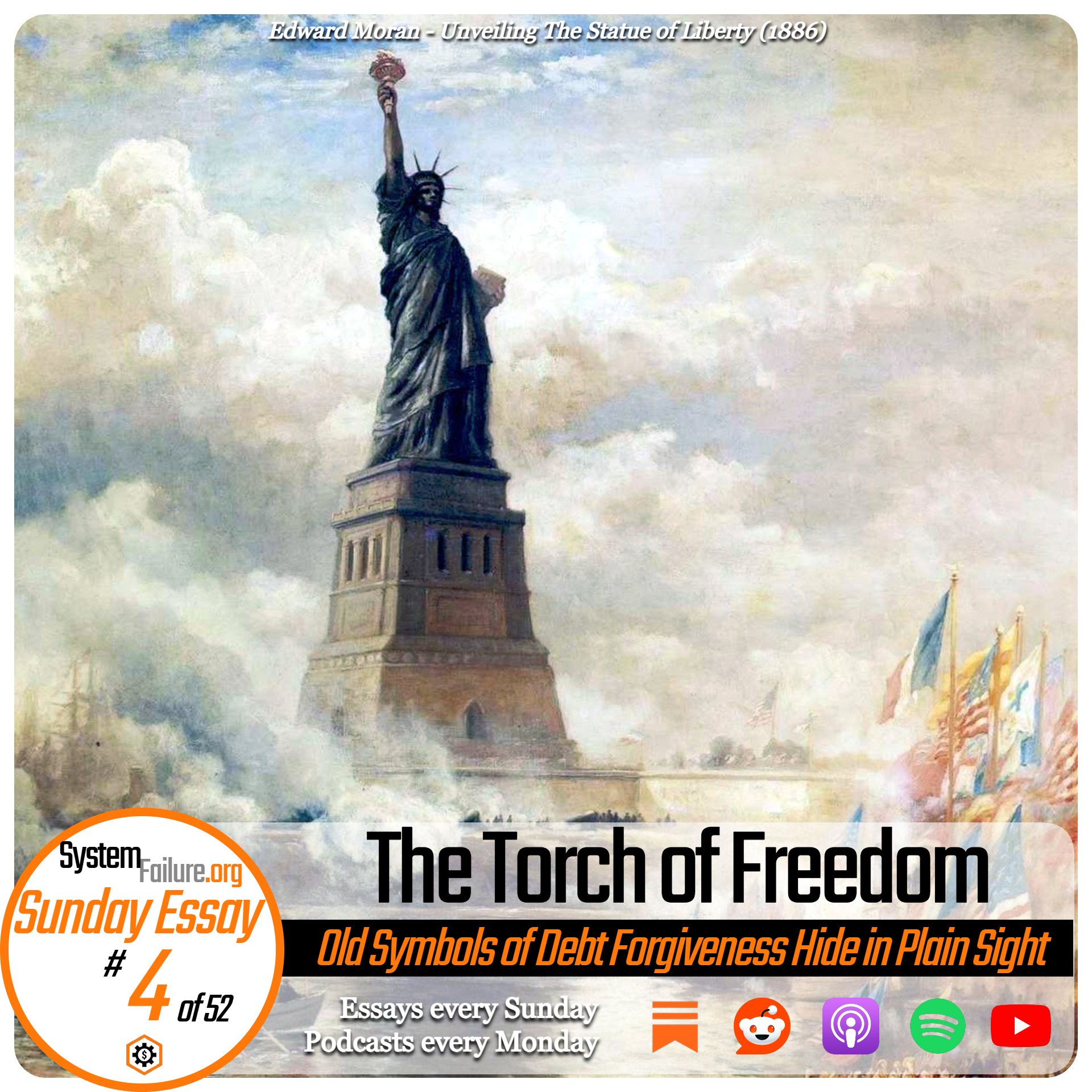
The major theme of Essays #4 through #8 is debt forgiveness, a practice widely observed by early agricultural societies—until the Romans forfeited economic sustainability by NOT forgiving debts.
Key Points:
Sun gods were said to dispense laws from on high that made human society sustainable over time.
Bronze Age sun gods helped human society avoid disaster by commanding periodic debt forgiveness.
The Statue of Liberty’s torch is an old Babylonian symbol for the forgiveness of debts.
Solar Law-Givers
To modern people, an ever-accelerating rate of technological innovation makes the passage of time feel like progress towards a goal. But the ancients conceived of time very differently: they thought in terms of endless cycles of renewal.
Accordingly, they worshipped sun gods who reflected the cosmic rhythm of death and rebirth that dominates agriculture. Many of these sun gods were resurrected or reborn, like the Egyptian sun god Ra. These solar deities were also said to pass down laws that promoted balance and sustainability, like the Babylonian sun god Shamash.
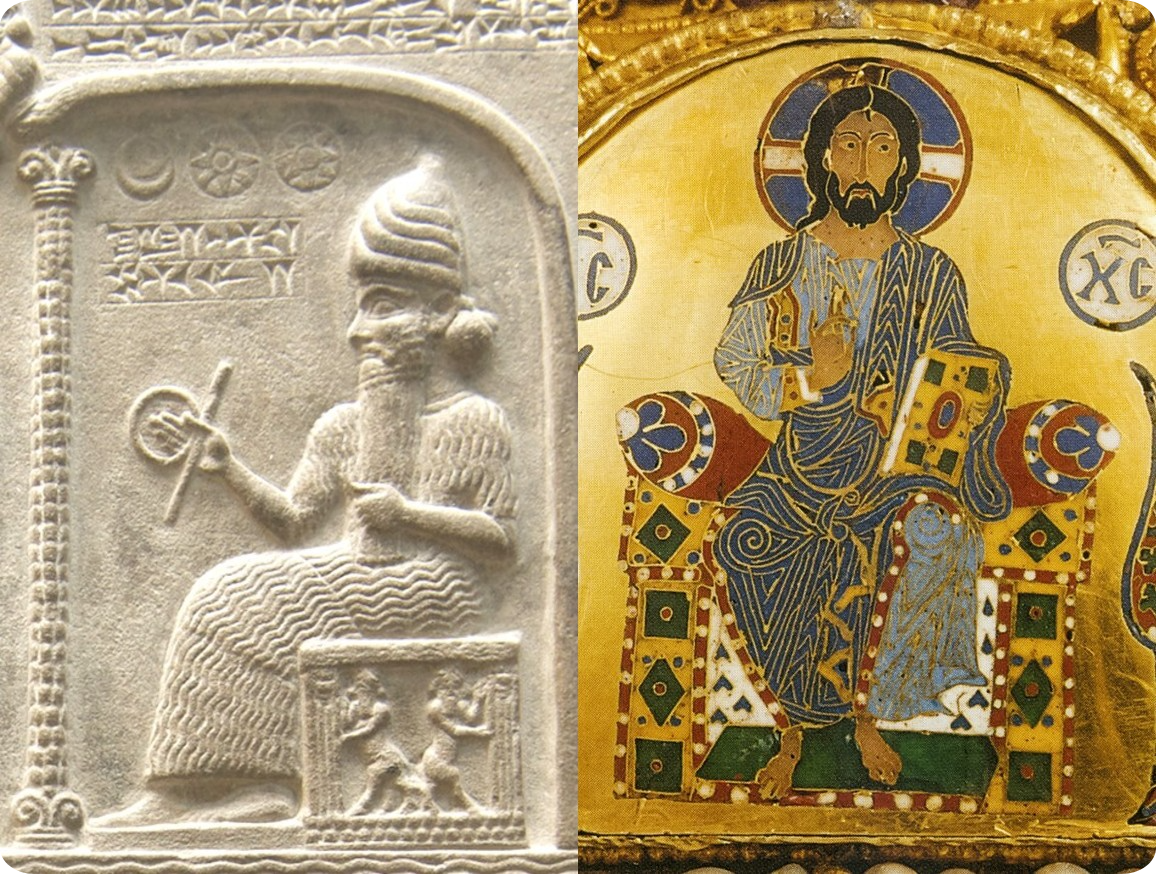
Ra and Shamash became symbolic templates that were later borrowed by traditions like Judaism and Christianity. These newer faiths deemphasized their solar origins. But the passage of laws down from on high remained a major theme in the story of Moses and in the Christ Pantokrator icons prominent in Orthodox Christianity.
These icons are central symbols of divine sovereignty: Pantokrator translates into “ruler of all”. It depicts Christ in the same seated position once assumed by Shamash, as he dispenses laws that have the power to save humankind from apocalypse. Though Jesus isn’t considered to be the literal sun, he retains Ra’s Egyptian sun disc—which we recognize as a halo.
The Hidden Dangers of Debt
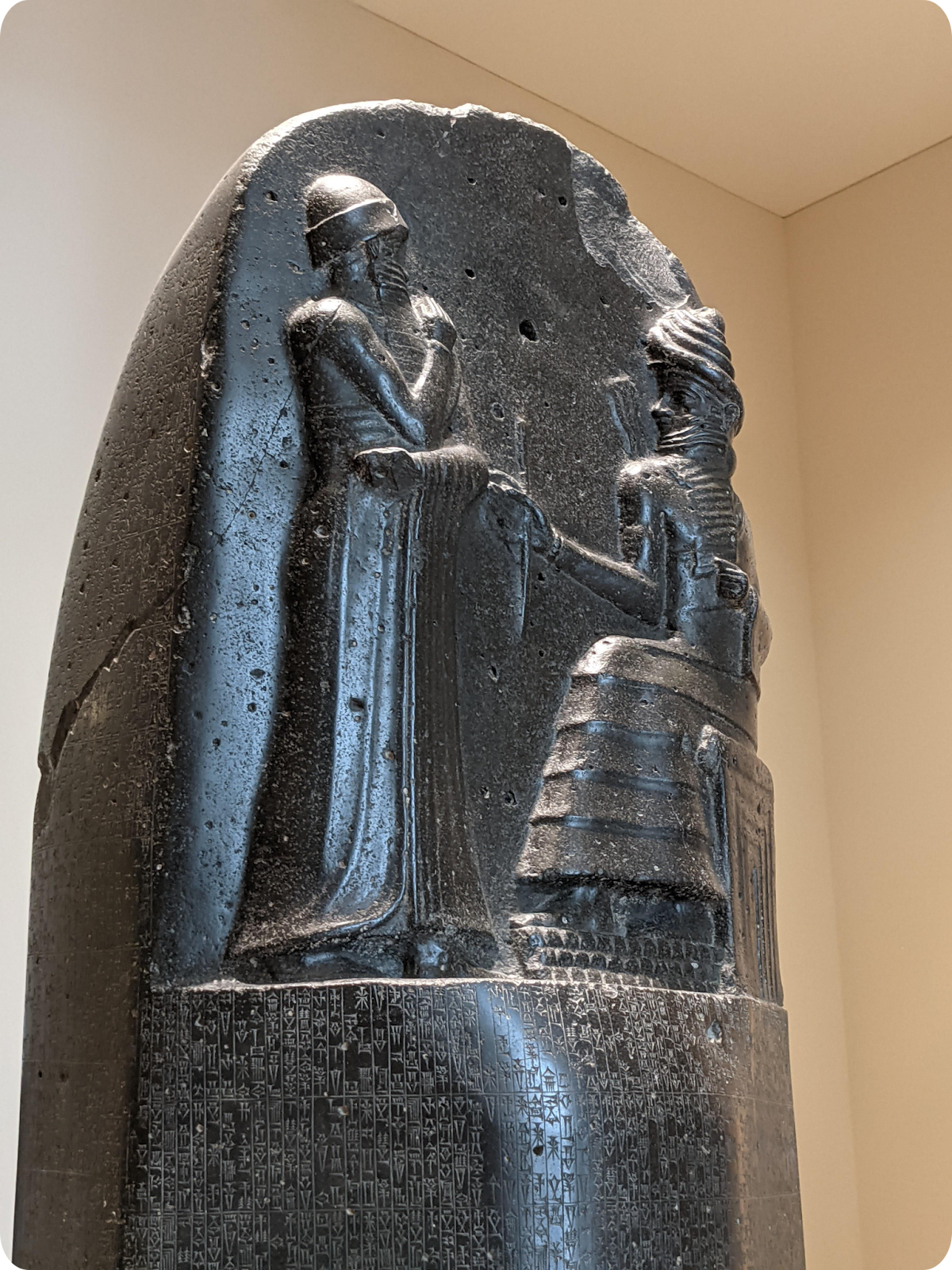
The Code of Hammurabi is famous for being one of the oldest examples of laws written down for common reference. They’re inscribed on a basalt pillar and currently housed at the Louvre Museum in Paris. The top of that pillar depicts the Babylonian king Hammurabi receiving these laws from the seated sun god Shamash.
Law #48 commands, “If a man has a debt lodged against him, and the storm-god Adad devastates his field or a flood sweeps away the crops, or there is no grain grown in the field due to insufficient water—in that year he will not repay grain to his creditor.”
Debt has always been an indispensable tool for expanding human society. But it comes with a hidden danger: unforeseeable circumstances—like the floods and droughts cited in Law #48—sometimes conspire to make debt repayment impossible.
Some debts always turn out to be unpayable. When the inevitable happens, debtors are forced to surrender to creditors the collateral they pledged on their loan. In the aftermath of floods and droughts, foreclosures happened en masse in ancient societies. This had the destabilizing effect of concentrating wealth in the hands of a few wealthy creditors whenever weather or war disrupted agricultural activities.
Hammurabi didn’t command periodic debt forgiveness because he was a nice guy. He did so to prevent any of his subjects from becoming wealthy enough to challenge his lineage for power. Periodic debt forgiveness prevented that outcome, and lent stability to the Bronze Age societies of the ancient Near East. That’s why Hammurabi and the Babylonians conceived of the commandment to forgive debts as having originated from Shamash himself.
The Statue of Liberty
The dangers of mass foreclosure went beyond mere property. In ancient times, debt defaulters were obliged to become slaves to their creditors and work off their debts. Hammurabi and other kings of Babylon couldn’t afford to watch huge swaths of their subjects become slaves after every flood or drought. That limited military recruitment and left them defenseless against conquering armies.
The Babylonian kings had no choice but to reserve the right to undo disastrous debt arrangements. They would raise a physical torch from a high point—usually a temple or palace—to signal to the surrounding countryside that a debt forgiveness decree was in effect.
After raising the Golden Torch of Freedom, Babylonian kings then ceremonially smashed the clay tablets on which canceled debt records were written. This practice was the origin of the Jewish tale of Moses smashing the Ten Commandments.
When the French wanted to gift the United States a symbol of freedom in the late 1800s, the Golden Torch of Babylonian lore was a logical choice. It perfectly encapsulates the idea of liberty by representing freedom from enslavement. The torch held aloft by the Statue of Liberty over New York harbor is a direct reference to the old Babylonian practice of debt forgiveness.
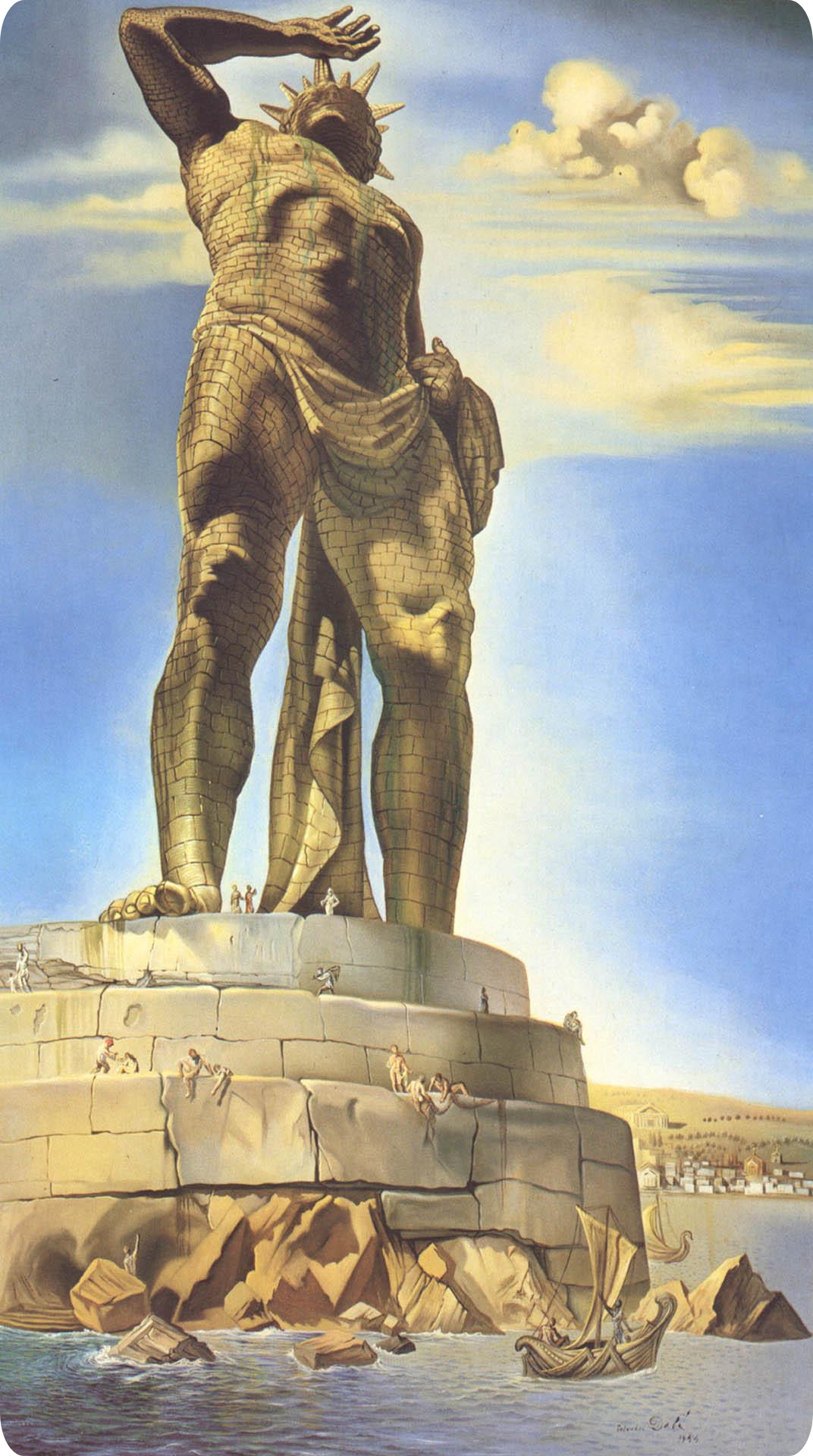
The French also incorporated a layer of solar symbology by giving Lady Liberty the same “radiant crown” that once adorned the head of the Colossus of Rhodes, the titanic statue of the Greek sun god Helios from the 3rd century BC. That crown’s outward emanating rays evoke the ancient worship of the sun that once stood for economic sustainability.
Conclusion
The Bronze Age civilizations of the Fertile Crescent understood that debt forgiveness plays a crucial role in lending stability to any economy. But that practice, of course, amounts to a financial haircut for wealthy creditors. For this reason, ruling classes from ancient Rome to modern America have sought to prevent a popular understanding of this ancient custom from gaining traction. That’s why so few Americans today recognize the classic Babylonian symbol of sustainability soaring hundreds of feet over their biggest city.
Since you made it this far, patient reader, kindly consider hitting the ❤️ button above or below; it really helps!
Further Materials
To a visitor from Hammurabi’s Babylon, the Statue of Liberty might evoke the royal iconography of the important ritual over which rulers presided: restoring liberty from debt. The earliest known reference to such a ritual appears in a legal text from the 18th century BC. A farmer claims that he does not have to pay a crop debt because the ruler, quite likely Hammurabi (who ruled for 42 years, 1792–1750 BC), has “raised high the Golden Torch” to signal the annulling of agrarian debts and related personal “barley” obligations.
Michael Hudson, …and Forgive Them Their Debts, 2018, Page 33

I worked as a farmer in SW Colorado for about four years. One hot summer day out with my shovel to irrigate the fields, I was struck by magnificence of the sun. It is easy to proclaim a Sun God as 'Ra' is literally the source of human life. I pondered that all those who claim ownership (I was a ranch hand, not a rancher) neglect that the Sun has the prior claim.
Another realization was about debt and the Lord's Prayer. An unconventional Christian pastor had done the work to realize that the Council of NIcea had altered Jesus' Sermon on the Mount to reconcile with the new Roman (creditor class) masters. "…and forgive us our debts as we forgive our debtors…" was altered to "…forgive us our sins…", where Jesus debt was material and sin is spiritual. Forgiving debts cost the creditors money while forgiving sin was a money-maker.
Sorry, I cannot remember the name of the Christian pastor nor her book's title, but my thinking about debt is heavily influenced by Michael Hudson.