


The words of children held mystical significance to the ancient Egyptians; their sun god Horus the Child (Har-pa-khered) points to his own mouth. The Greeks later adopted Harpocrates as their God of Silence, and that gesture came to mean “hush”. Aphrodite created roses as a gift to this god, persuading him to keep her many amorous indiscretions a secret. The Romans hung roses in banquet halls to remind revelers that utterances made “under the rose” (Latin: sub rosa) were strictly confidential. In the Middle Ages, roses were carved into the ceilings of council chambers, government meeting rooms, and Christian confessionals for the same reason. And now the SUBROSA CLUB is an exclusive space for paid System Failure subscribers…

Those of us who’ve been enjoying American football this season have been carpet-bombed with commercials for Skyrizi, a medication aimed at treating horrific disorders of the lower intestine like Crohn’s disease and ulcerative colitis. The proliferation of ads for these and similar products is a sad testament to the state of American backside.
Comedian Robbie “The Fire” Bernstein joked in 2024 that no one can trust a fart anymore because the US food supply is poisoned. Anyone who’s been to Europe will have noticed the difference: many with celiac disease find that they can still enjoy the bread over there.
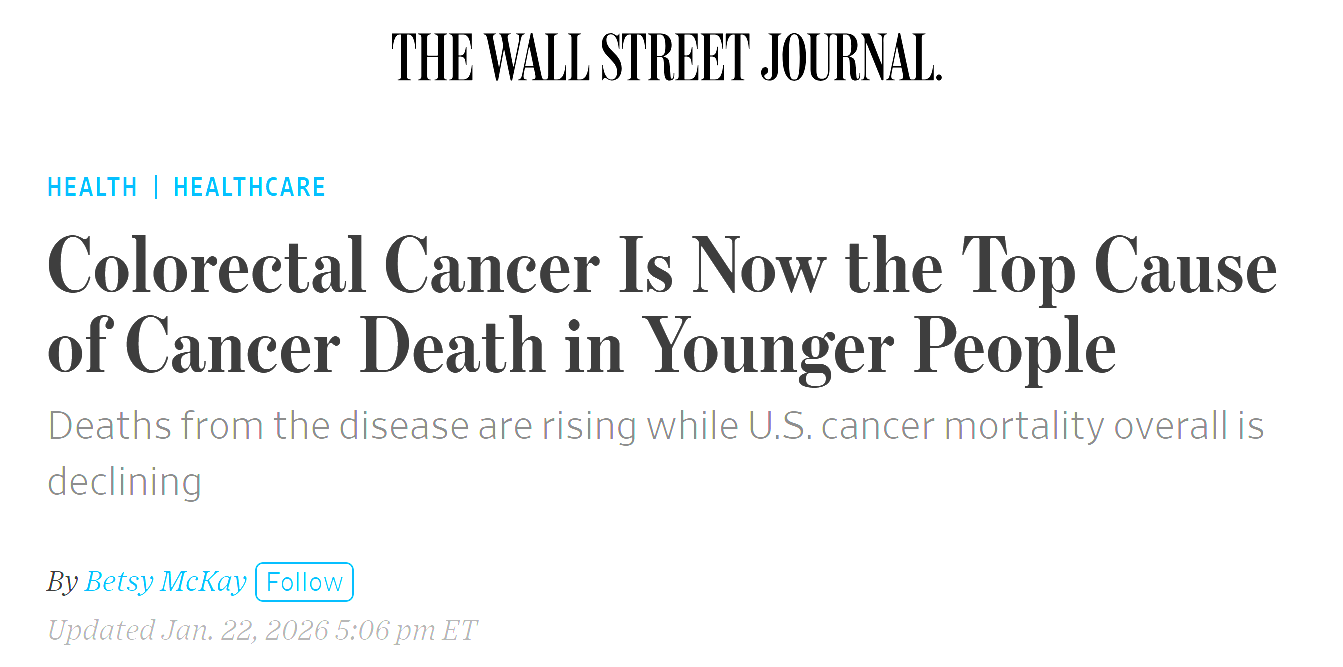
In another ominous sign, the WSJ reported this week that colorectal cancer is now the top cause of cancer death in people under 50. The article notes that overconsumption of alcohol and processed meat—and a dearth of fresh fruit and vegetables—are causes being investigated by researchers.
Unsurprisingly, the Journal neglects to implicate the ownership structure of food production and distribution companies in the uptick. Because we permit the buying and selling of these companies on so-called “free” markets, owners tend to purchase them with an eye toward return-on-investment.
That constant need to increase profits every quarter means they’re constantly seeking to renegotiate, in their favor, the exchange of value for money they make with customers. They’re financially incentivized to enhance profits by diminishing the value of the products they offer.
That’s why loaves of bread now include many chemical preservatives whose names are unpronounceable. These preservatives are not nutritious, but they do increase shelf-stability and cut down on spoiled inventory. Where perhaps they once converged, the profit motive and societal good now stand in direct opposition.
Regarding the colonoscopies now needed by younger people, a comment on the WSJ article notes, “In the last 15 years, the insurance coverage has gotten SO much worse for this kind of screening. I never even got a bill 15 years ago, even with my lousy company plan. Now I get bills for thousands of dollars and have to fight for months to get them reduced or covered.”
Here, again, the profit motive undermines societal good. Health insurance companies must also find ways to increase their profits every quarter, all while performing no surgeries themselves or prescribing any drugs.
There’s a limit to how much wealth Americans can afford to have extracted from them, without the provision of any actual value in return. That limitation is colliding with the eternal capitalist quest to increase quarterly profits, such that even WSJ subscribers are sitting up and taking notice.