


Key Takeaways:
The resolution of the Thirty Years’ War curtailed the political power of the Popes, but international banking houses soon sprang up to take their place.
There was much cross-pollination between founding members of the Bank of England and a secret society called the Freemasons.
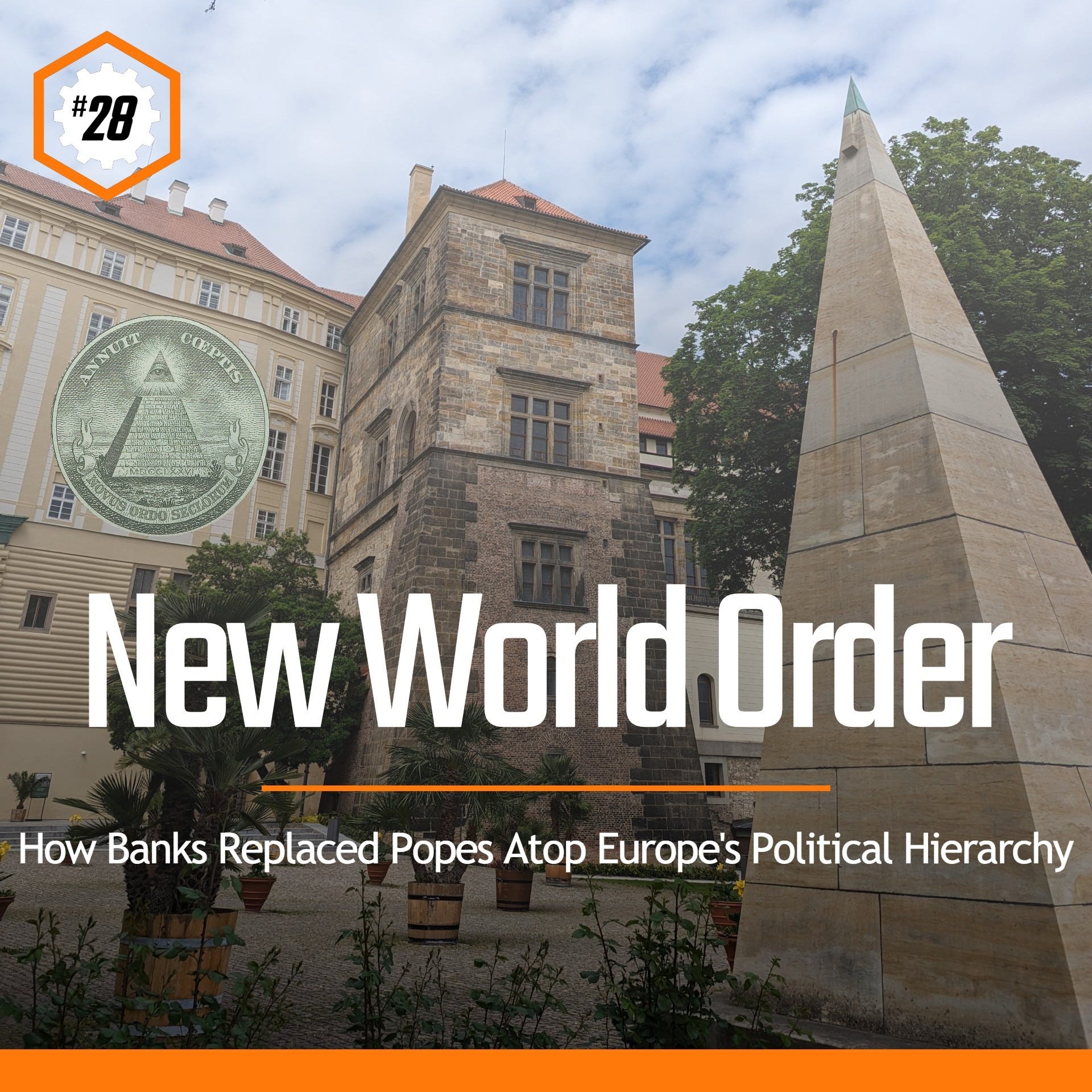
In an astonishing coincidence, a prominent Masonic symbol stands just steps away from the spot where the Thirty Years’ War began.
Nature Abhors a Vacuum
During the Middle Ages, popes often wielded significant political power over the crowned heads of Christendom. But the brutal Thirty Years’ War that ravaged Europe between 1619 and 1648 changed all that. The conflict erupted after enraged Protestants stormed Prague Castle and threw the Catholic administrators they found there out of a high window.
After millions died in the resulting military conflict, an exhausted Europe finally established international borders around sovereign nation-states with the Peace at Westphalia. This agreement put an end to the Thirty Years’ War by guaranteeing states like Bohemia—where Prague is located—the right to choose between Catholicism and Protestantism for themselves, without interference from the Vatican. These borders severely curtailed the political influence enjoyed by the popes during the Medieval period.
But nature abhors a vacuum. Just 46 years after the Peace of Westphalia, the Bank of England arose to fill the power vacuum left at the apex of European geopolitics by the deposed popes.
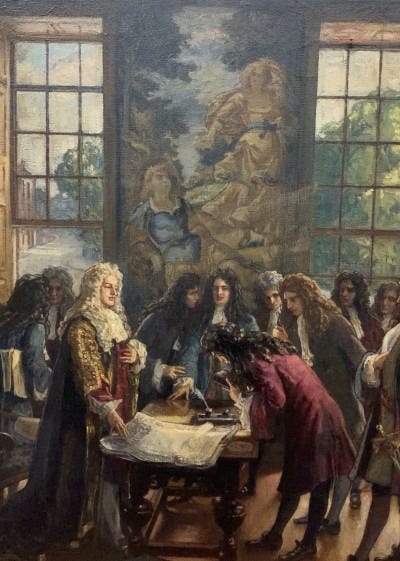
In 1694, bankers from London and Edinburgh pooled their resources and loaned a considerable sum to King William III, who desperately needed funds for another war against the French. These bankers then proceeded to sell off the rights to the future tax revenues the King had promised them as repayment.
The resulting promissory notes soon began circulating as Europe’s first national paper currency. Once these paper notes became widely accepted as a primary form of payment, the bankers found themselves wielding a power that exceeded the popes’ wildest dreams: the power to print money.
Over the ensuing centuries, similar central banks sprang up in nearly every country in the world. By 1930, coordination between these central banks was formalized in Switzerland with the establishment of the Bank for International Settlements, which serves as a central bank for central bankers.
The politician Barry Goldwater once remarked, “Most Americans have no real understanding of the operation of the international money lenders…It operates outside the control of Congress and manipulates the credit of the United States.” Like the popes during the Middle Ages, international banking houses have evolved into a transnational authority that holds considerable power over our nominal heads of state.
The Rise of Freemasonry
The Bank of England was established by a small, interconnected group of wealthy merchants and bankers centered primarily around Lombard Street in London. These individuals were shareholders, directors, and major clients of the bank.
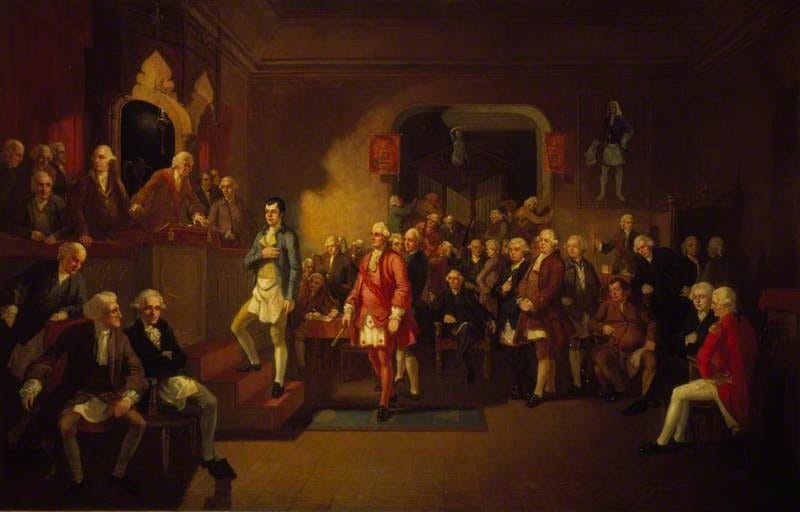
In 1717, just 23 years after the establishment of the Bank of England, a secret society called the Freemasons publicly announced the opening of their Premier Grand Lodge in London. This group met in taverns located near Lombard Street.
It must be stressed that not every banker was a Freemason, and not every Mason was a banker. But there was significant overlap between the Freemasons and the founding members of the Bank of England. Discussions, decisions, and influence within both spheres were informally linked through shared membership.
The co-emergence of Freemasonry with the Bank of England is no coincidence. Both institutions flourished in a new era of political stability, created by the 1648 Peace at Westphalia that concluded the Thirty Years War. Both were championed by the rising commercial and professional classes of the day. They were two different manifestations of the same historical forces that shaped our modern political paradigm.
New Order of the Ages
Secret societies have always used secret symbols intelligible only to their members. The Freemasons were no exception. In their rituals, Masons utilize ancient Egyptian occult symbology like the unfinished pyramid and the Eye of Provenance, which is a modern adaptation of the old Eye of Horus.
Latin mottos are another calling card of the Freemasons, as these were part of the Enlightenment sensibility that dominated European culture during the 1700s. In the latter part of that century, many of the men now recognized as America’s “Founding Fathers” belonged to Masonic lodges.
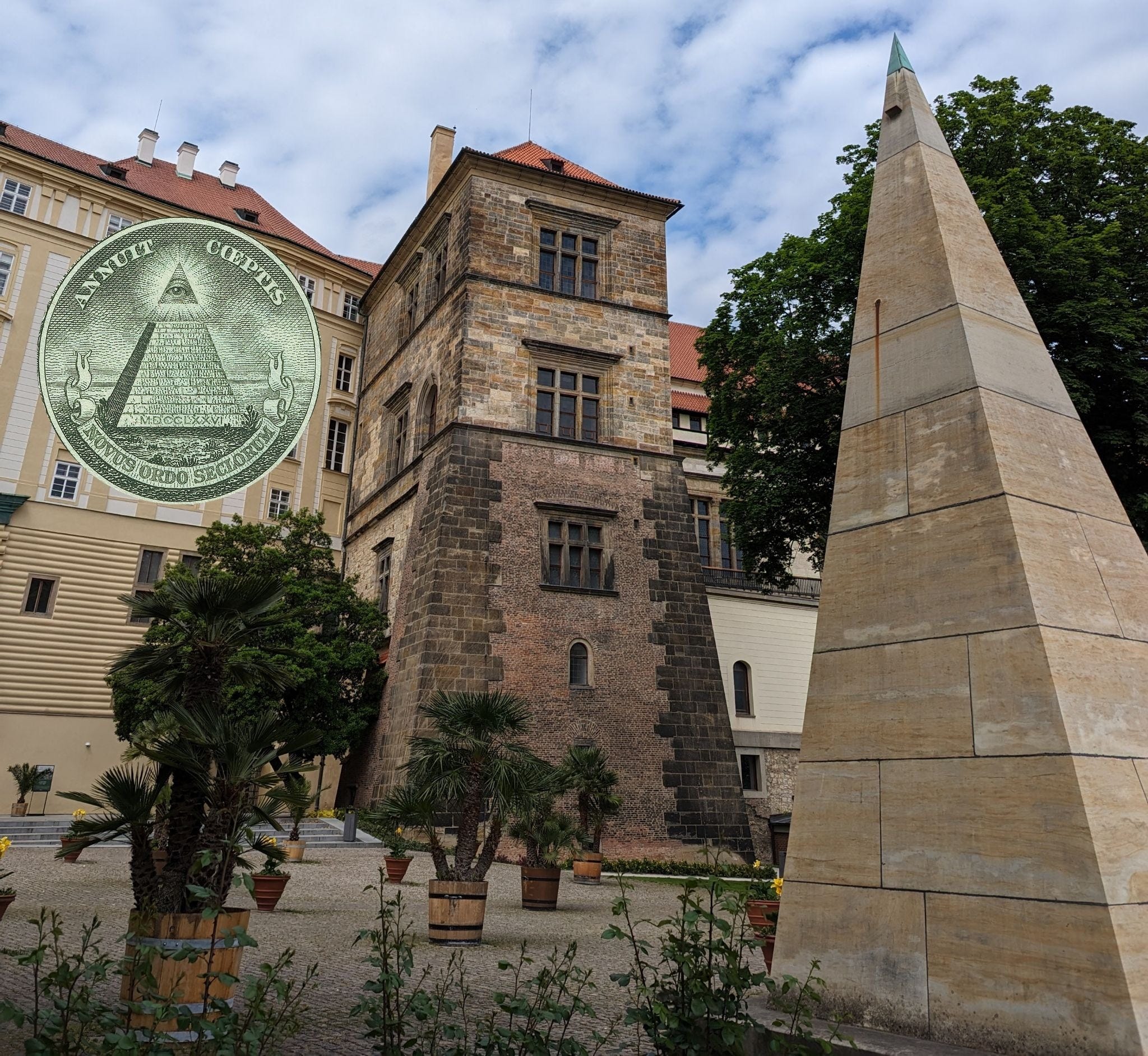
Influenced by the secret society many of them belonged to, the Founding Fathers adopted the unfinished pyramid and the Eye of Provenance as the obverse of the Great Seal of the United States in 1782. These symbols were accompanied by the twin Latin phrases Annuit cœptis and Novus ordo seclorum, which translate respectively to “God favors us” and “a new order of the ages”. Both phrases were lifted straight from the Roman poet Virgil.
Today, these same symbols and phrases can be found on the back of any US one dollar bill. All US paper money is labeled “Federal Reserve Note” because the Fed—rather than the US Treasury—issues the currency and backs its value. Pioneered by London and Edinburgh bankers in 1694, the modern central banking system today wields tremendous political power. That is particularly true in the case of the US dollar, which remains the world’s reserve currency.
An amusing symbological coincidence can be found at the site of the Defenestration of Prague, where Protestants agitators once hurled Catholic administrators out of a window. Just steps away from the place where the Thirty Years’ War began, there is a large stone pyramid with a copper capstone. This structure is eerily reminiscent of the unfinished pyramid and the Eye of Providence that adorns the back of every US one-dollar bill.
A more fitting symbol could scarcely be imagined for the historical process that unwound the political might of the Popes—and saw it replaced by powerful international banking houses. That such a symbol stands mere feet from the spot where those historical forces were unleashed is an astonishing coincidence of symbology.
Conclusion
One of the chief complaints of the Protestant Reformation was the infamous Sale of Indulgences, wherein the Roman Catholic Church amassed vast wealth by charging its flock for sin remission. The root of the Church’s power during the Middle Ages was the widespread belief that it was in exclusive contact with God. But the political shift from the Medieval period to the modern age involved the displacement of that transnational authority and the rise of another to replace it. Where the Church once monetized a spiritual monopoly, central banks today instead leverage a monopoly over the issuance of currency to dominate international geopolitics.
Since you made it this far, intrepid reader, kindly consider hitting the ❤️ button above or below; it really helps!
Further Materials
It was only with the creation of the Bank of England in 1694 that one can speak of genuine paper money, since its banknotes were in no sense bonds. They were rooted, like all the others, in the king’s war debts. This can’t be emphasized enough. The fact that money was no longer a debt owed to the king, but a debt owed by the king, made it very different than what it had been before. In many ways, it had become a mirror image of older forms of money. The reader will recall that the Bank of England was created when a consortium of forty London and Edinburgh merchants—mostly already creditors to the crown—offered King William III a £1.2 million loan to help finance his war against France. In doing so, they also convinced him to allow them in return to form a corporation with a monopoly on the issuance of banknotes—which were, in effect, promissory notes for the money the king now owed them. This was the first independent national central bank, and it became the clearinghouse for debts owed between smaller banks; the notes soon developed into the first European national paper currency.
David Graeber, Debt: The First 5000 Years, 2011, page 339

The banks are certainly having their, "Let them eat cake." moment.
Infinite growth economics is reaching the edge of the petri dish.
The advantage of multicellular organisms is being able to sense and navigate their situation.
In that states function as social super organisms, government, executive and regulatory, is the nervous system, while money and banking function as blood and the circulation system.
When the medium enabling markets is a player in those markets and not a utility, everyone else are tenants. "You will own nothing and be happy."
Pitchforks and torches interrupt the narrative.
I favor the ‘Origen of Money’ story to Sumerian temples issuing tokens for measures of grain brought by farmers as tribute, taxes, or granary storage. Thus, money has always been debt.