


Key Takeaways:
The Thirty Years War began as the culmination of the Protestant Reformation, but exploded into a broader power struggle.
The Peace at Westphalia concluded the Thirty Years War by demolishing the Medieval political hierarchy and replacing it with our modern one.
A living ebook called The Network State provides us with a glimpse of what a post-Westphalian political paradigm might look like.
The Horrors of the Thirty Years War
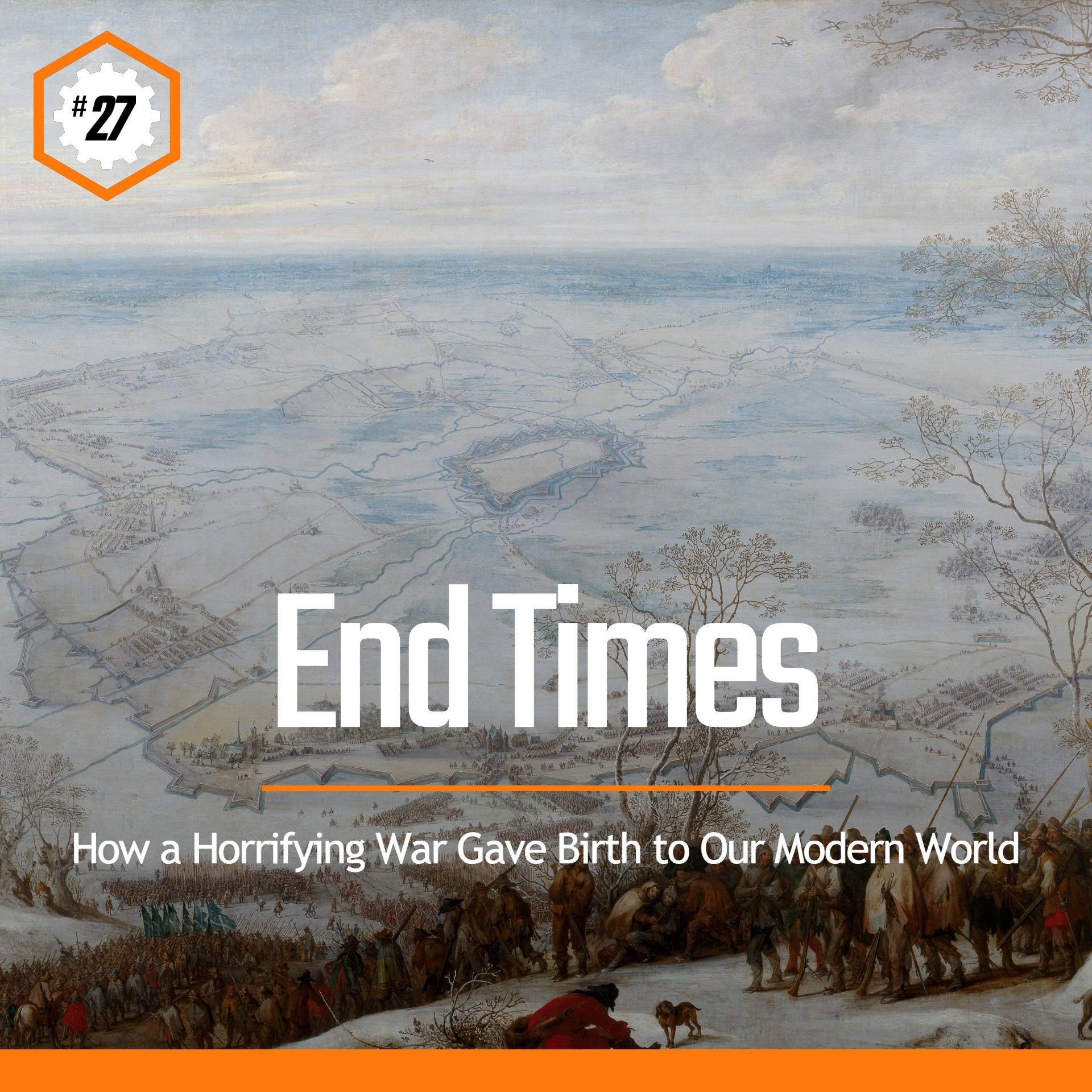
Prior to the 20th century, the most brutal conflict fought on European soil was the Thirty Years’ War. It began as the final culmination of the Protestant Reformation. But what started as a religious dispute between Catholic and Protestant factions within Germany’s Holy Roman Empire soon sucked in other European powers like Sweden and France.
Theological disagreements took a backseat as a broader struggle for political power exploded, engulfing virtually all of Europe. Though France was Catholic, it entered the war on the side of German Protestants to get one over on their Habsburg rivals from Vienna and Madrid.
During the decades of chaos that ensued, between 4 and 8 million people met untimely deaths. Europe had never seen violence on such a scale, and wouldn’t again until the first World War. Entire towns were wiped off the map for the crime of loyalty to the wrong faction. By 1648, Europe was exhausted, shattered, heartbroken, and desperate for peace.
Despite the exhaustion, hard feelings still abounded. The grudge between Catholics and Protestants ran so deep that Protestant envoys declined to negotiate in Catholic-dominated cities. Meanwhile, Catholics refused to sit at the same negotiating table as “heretical” Protestants.
To get around this diplomatic impasse, representatives of the Holy Roman Empire met with delegates from France in the Catholic city of Münster. At the same time, 35 miles to the north, Osnabrück was chosen as the site for negotiations between the Holy Roman Empire and Protestant Sweden, because that city was evenly split between Catholics and Protestants.
The Deposition of the Popes
Both Münster and Osnabrück are located in a region of northwestern Germany called Westphalia. The twin treaties that stemmed the bloodshed of the Thirty Years’ War are known as the “Peace at Westphalia.” It created our modern political paradigm by establishing international borders.
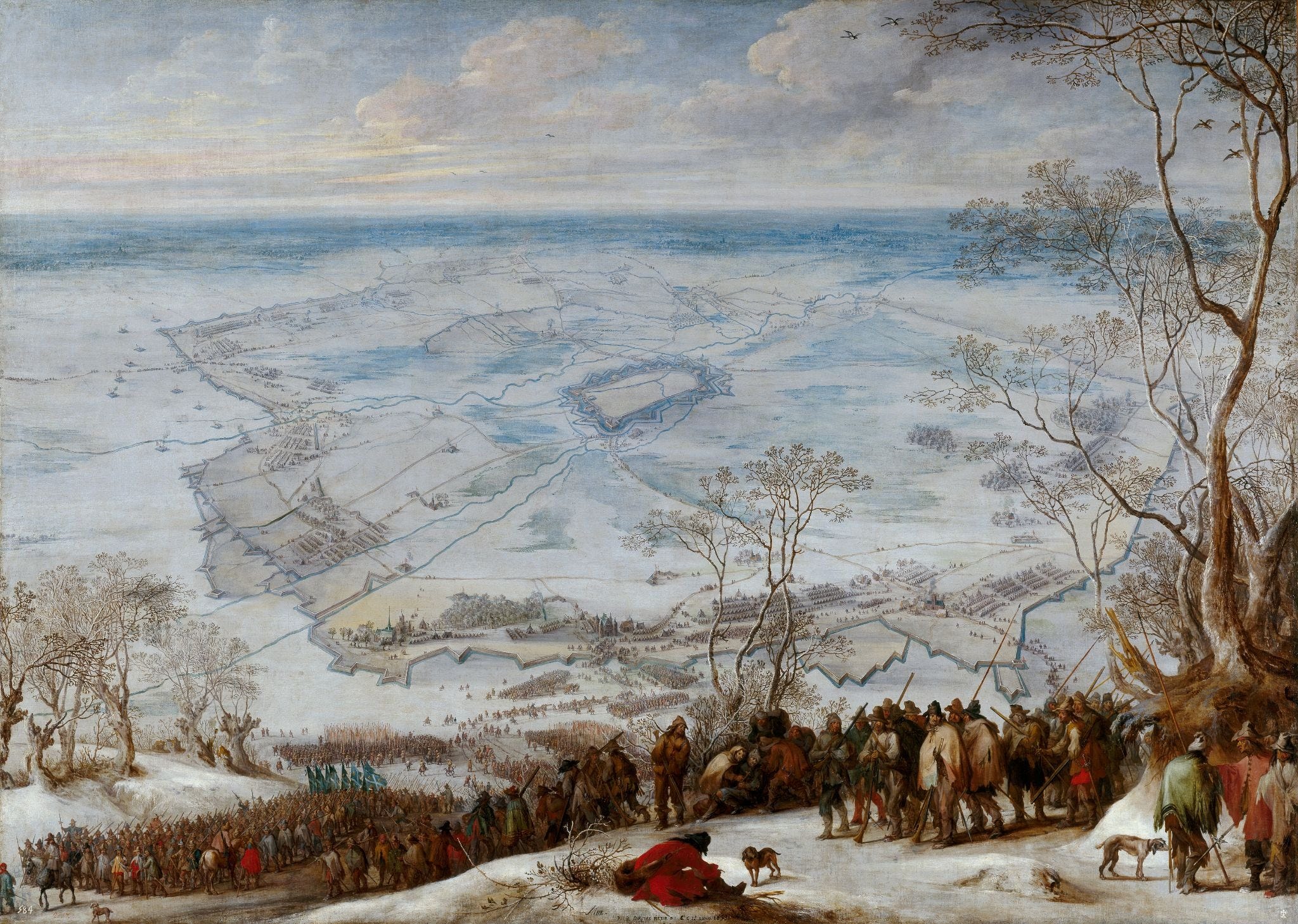
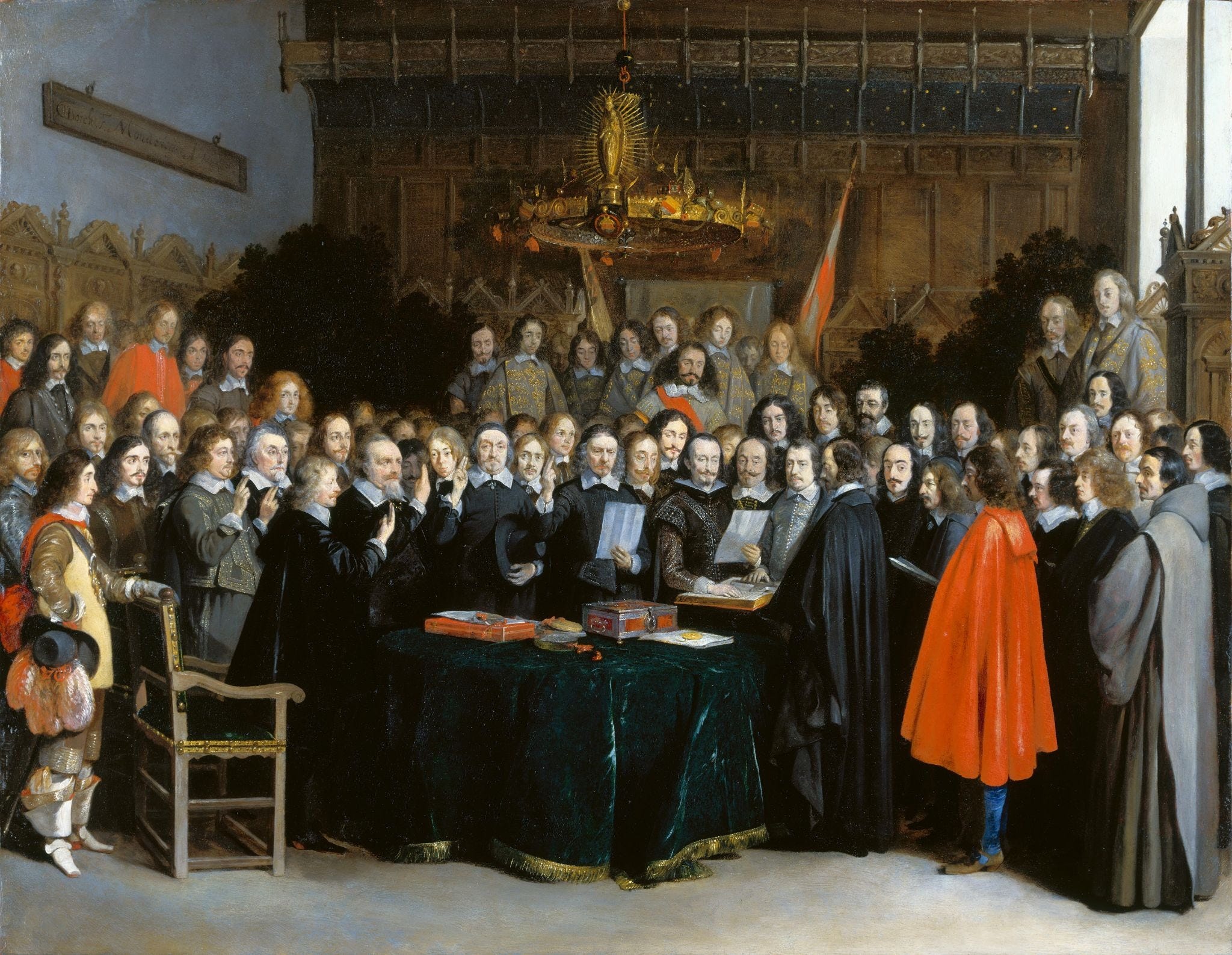
The Dutch painter Gerard ter Borch was right there in the room when the Münster treaty was signed. Later that same year, he recreated the scene on canvas. His painting now hangs in the Rijksmuseum in Amsterdam, and it serves as a portal into that pivotal moment in history.
Our familiar system of sovereign countries and international borders is an inheritance from the bitter struggle of the Protestant Reformation. “Westphalian sovereignty” is the principle in modern international law where nation-states enjoy exclusive sovereignty over their own territory. It is enshrined in the United Nations Charter, which states that “nothing ... shall authorize the United Nations to intervene in matters which are essentially within the domestic jurisdiction of any state.”
The Popes had been the kingmakers in Europe after the surprise coronation of Charlemagne by the Pope on Christmas Day in the year 800. But in 1648, the Peace at Westphalia formally subordinated the Roman Catholic Church beneath the heads of newly-created nation-states.
After 800 years of dominance over European politics, the Popes found themselves deposed. The Peace at Westphalia created modern nation-states by guaranteeing sovereign nations the right to break with the Catholic Church without interference from Rome. It effectively ended the centuries-old Medieval political hierarchy, and gave birth to our modern political paradigm.
The End of the Modern Era
Because the Westphalian system is the only one in living memory, we take it to be ubiquitous. The Civilization series of video games, for example, awkwardly transposes this system of international borders onto the dawning of the Agricultural Revolution.
But the Westphalian system is far from ubiquitous. It’s peculiar to our modern era, and to the capitalist system of production and distribution that emerged to replace the feudal economic system of Europe.
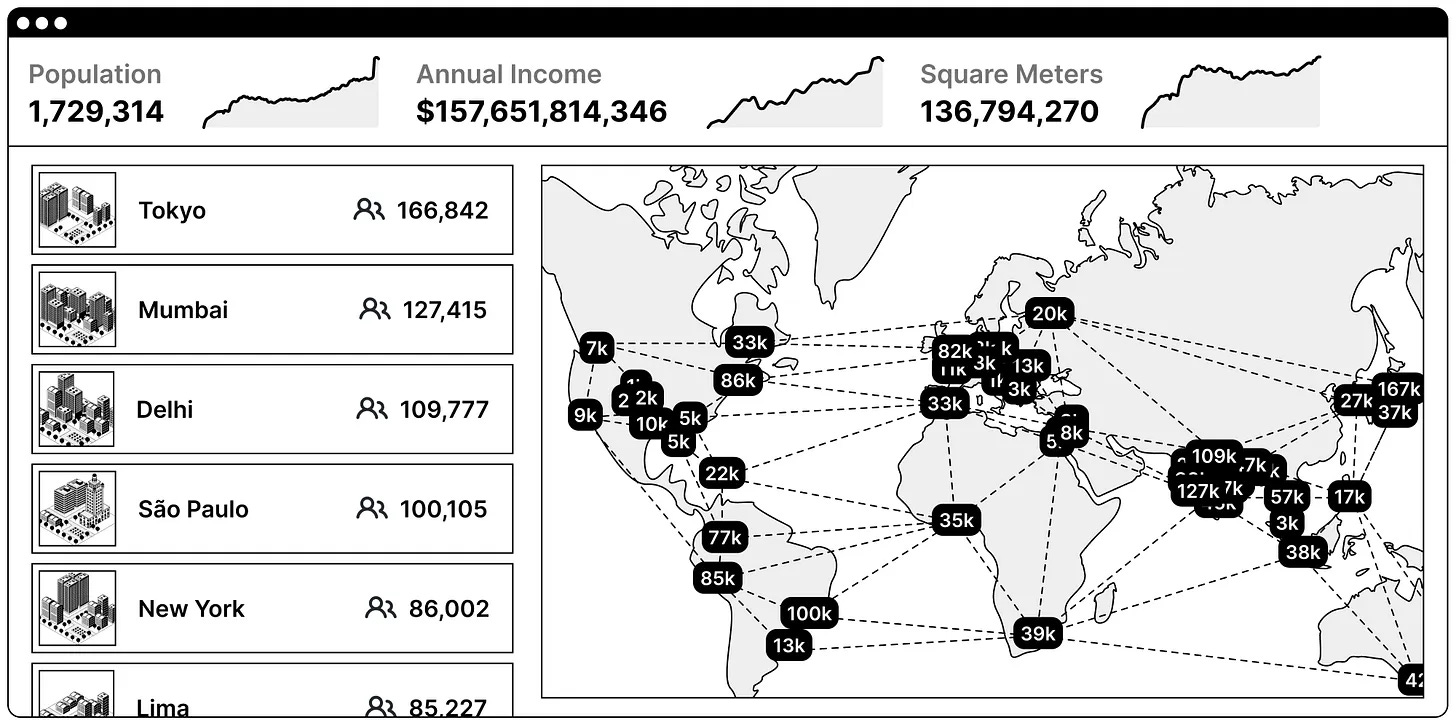
Renowned tech entrepreneur Balaji Srinivasan wrote a living ebook called The Network State, where he argued that in a dawning digital age, physical location is losing its meaning and relevance. He predicts that new types of political entities will arise from online spaces instead of physical ones.
These new entities could replace Westphalian nation-states. Srinivasan sees a future in which humans organize themselves not according to the geography where they happen to be born, but according to personal political philosophies. We could, in other words, pay taxes and exercise political rights as digital nations instead of physical ones.
In Srinivasan’s vision, the international borders that are the hallmark of our modern Westphalian political system would become irrelevant as citizens of digital polities are distributed across the globe.
As a thought experiment, his vision provides us with an example of what a post-Westphalian system might look like. It enables us to stretch our imaginations into the future, beyond a geopolitical paradigm that has only existed since 1648.
Conclusion
During the Middle Ages, kings were frequently crowned by popes who endorsed a feudal economic system divided into peasants and lords. But the Protestant Reformation changed all that after it exploded into the Thirty Years War. The treaties that ended that bitter conflict established modern nation-states defined by international borders. Each state was granted sovereignty, which meant the right to choose between Roman Catholicism and Protestantism. That system became the stage on which the Industrial Revolution and the rise of capitalism played out. But as capitalism reaches the end of its lifecycle, we should be asking ourselves what a successor to the Westphalian system might look like as we once again prepare to enter into a new chapter of history.
Since you made it this far, inquisitive reader, kindly consider hitting the ❤️ button above or below; it really helps!I
Further Materials
But though the Reformation had been saved, it suffered, along with Catholicism, from a skepticism encouraged by the coarseness of religious polemics, the brutality of the war, and the cruelties of belief. During the holocaust thousands of “witches” were put to death. Men began to doubt creeds that preached Christ and practiced wholesale fratricide. They discovered the political and economic motives that hid under religious formulas, and they suspected their rulers of having no real faith but the lust for power—though Ferdinand II had repeatedly risked his power for the sake of his faith. Even in this darkest of modern ages an increasing number of men turned to science and philosophy for answers less incarnadined than those which the faiths had so violently sought to enforce. Galileo was dramatizing the Copernican revolution, Descartes was questioning all tradition and authority, Bruno was crying out to Europe from his agonies at the stake. The Peace of Westphalia ended the reign of theology over the European mind, and left the road obstructed but passable for the tentatives of reason.
Will & Ariel Durant, The Age of Reason Begins, 1961, page 571

A fatal human flaw that I don’t think will ever end and that is the othering and war and jamming religion down your throat
Without evidence, I am supposing that while the new 'nation states' were politically sound, their economics maintained medieval practices and views. Some time after Westphalia, states began issuing fiat money and abandoning metallic money. This must have created a new paradigm for economies, much easier and more efficient for transactions and investments (and for war). Nevertheless, we moderns still have not fully abandoned medieval monetary theories. So that mmt contends with MMT.