The words of children held mystical significance to the ancient Egyptians; their sun god Horus the Child (Har-pa-khered) points to his own mouth. The Greeks later adopted Harpocrates as their God of Silence, and that gesture came to mean “hush”. Aphrodite created roses as a gift to this god, persuading him to keep her many amorous indiscretions a secret. The Romans hung roses in banquet halls to remind revelers that utterances made “under the rose” (sub rosa) were strictly confidential. In the Middle Ages, roses were carved into the ceilings of council chambers, government meeting rooms, and Christian confessionals for the same reason. And now the Subrosa Club is an exclusive space for paid System Failure subscribers…

Youth Work Actions in Yugoslavia
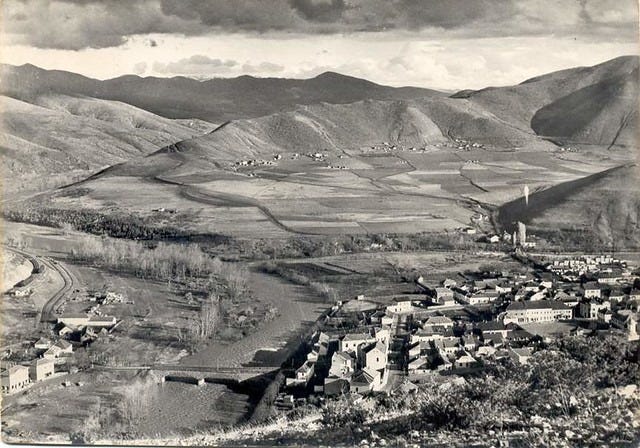
The hills surrounding the city of Raška, Serbia used to be almost completely denuded of trees. An old photo of Raska from the 1940s can be seen below. But all that changed in the 1960s, when Serbia was a part of the Communist State of Yugoslavia.
That’s when Youth Work Actions (or “Radne Akcije”) transformed the country. After a brutal occupation by the Nazis, Yugoslavia emerged from the struggle of World War II with a sense of national pride and cohesiveness under Josip Tito. The young people of Yugoslavia banded together as volunteers to rebuild the shattered infrastructure of their country.
They left their mark on the city of Raška by planting trees in and around the city. The efforts of these volunteers radically changed the landscape of the city into what it is today.
In the worst versions of Communism, corrupt bureaucrats use what is supposed to be the collective ownership of the state to enrich and empower themselves. Western propaganda highlights these failures to no end.
But it seems to me that Youth Work Actions that rebuilt Yugoslavia provides us with a counterexample to these horror stories. It illustrates the effectiveness of people working with a common vision of the future. When we work together, there is nothing we can’t accomplish.