


Key Takeaways:
1. Ergot in the 20th Century: Consciousness-altering drugs have had a tremendous—but often unrecognized—impact on human society.
2. Witchcraft: Ergot may have been the cause of the Salem Witch Trials of 1692.
3. The Anabaptist Revolt: Ergot may also have caused a shocking revolt that gripped the German city of Münster during the Protestant Reformation.
Ergot in the 20th Century
The story of human civilization is a duet between human consciousness and substances that alter it. There is a growing number of scholars, for example, advocating for the idea that the Agricultural Revolution wasn’t originally about farming food. They argue that the cultivation of cereal grains actually began in the service of brewing beer.
Drugs have played a major role in shaping human society ever since. Alcohol and sugar powered the infamous triangular slave trade between Africa, the Caribbean, and the capitals of Europe. Later, opium plunged England and China into two wars during the 1800s.
But no drug has had more of a profound impact on human story than ergot. This toxic fungus infests cereal grains so readily that beer brewers must constantly test their batches for it. In 2021, Brian Muraresku published a book called The Immortality Key where he presented findings that archeological artifacts once used in the Rites of Demeter tested positive for ergot. A human jawbone also reveals evidence of that psychoactive substance on the dental calculus. These clues point to the consumption of hallucinogenic ergot at Eleusis, a massively important religious observance in the Greco-Roman world.
Ergot also left an indelible mark on the 20th century. It was from this fungus that Swiss chemist Albert Hofmann first synthesized LSD back in 1938. That drug went on to influence the creativity of the Beatles and of Steve Jobs, whose contributions shaped the cultural milieu in which we live out our lives.
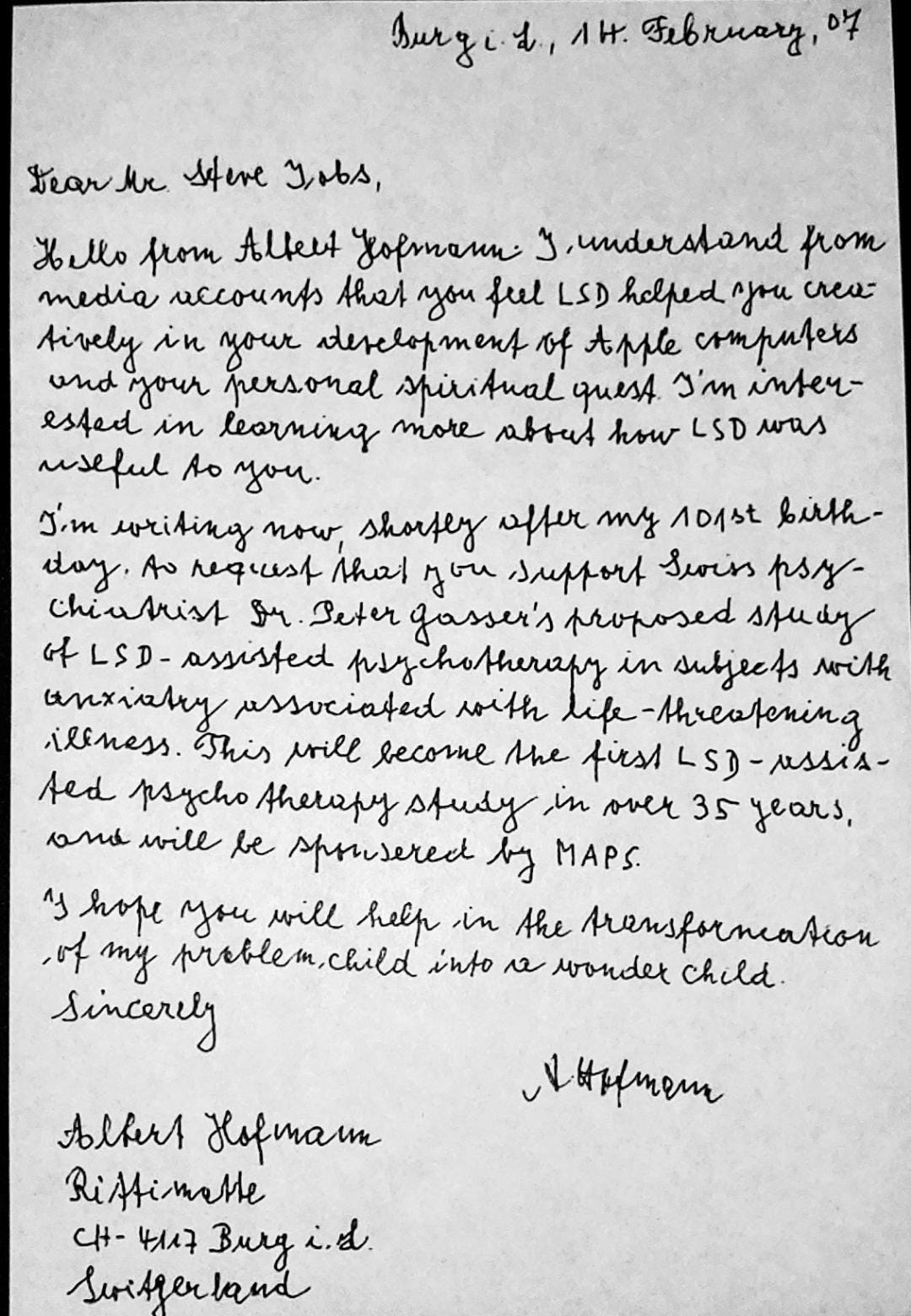
Albert Hofmann penned a letter to Steve Jobs in 2007, after his innovation of the iPod took off. Jobs had been so open about the impact of LSD on his revolution of the Apple computer corporation that Hofmann wanted to open a dialogue during the final years of his life.
The Beatles famously took an LSD-fueled trip to India in 1968. Their experience with the Maharishi delivered them from the poppy surf guitars of I Wanna Hold Your Hand into the visionary White Album. Under the guise of LSD, ergot has impacted both ancient and modern society in ways that we are only just beginning to grapple with.
Witchcraft
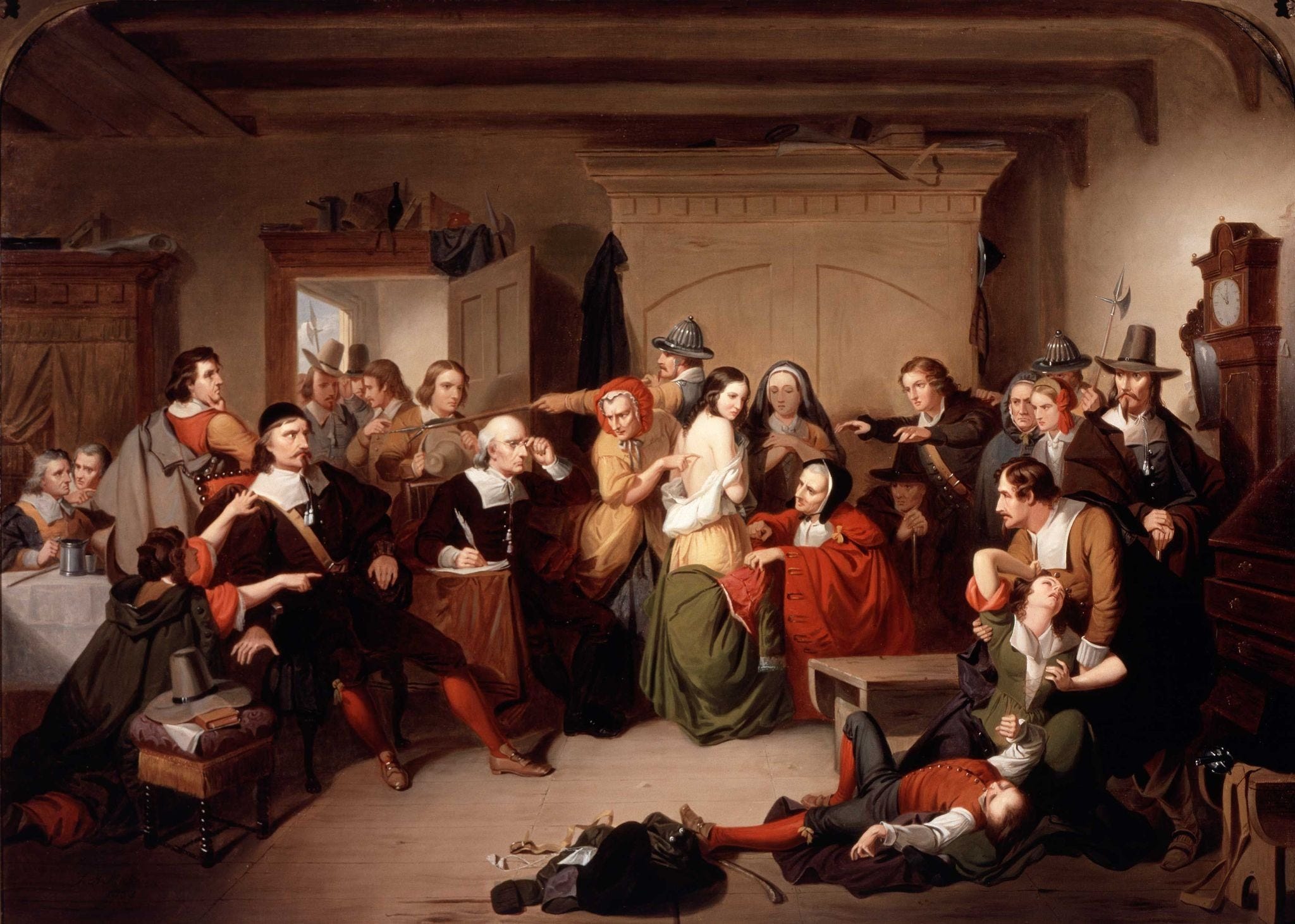
In 1976, Linnda R. Caporael published a famous paper that theorizes that ergot also caused the Salem Witch Trials. She titled it “Ergotism: The Satan Loosed in Salem?”. Her theory was that a late thaw caused moist conditions in the storehouses of Salem, Massachusetts in the fall of 1692. Unbeknownst to the town’s Puritan inhabitants, ergot fungus infested their grain. As the contaminated grain was consumed, some of the townspeople began to experience convulsions and strange visions.
The Puritans had no lens through which to understand these bizarre occurrences, except through the zealous Christian faith that had driven them from the Old World onto a dark new continent. Recognizing the nefarious influence of the devil, they turned on each other in an orgy of violence. Twenty people lost their lives, and the tragic incident still haunts the public imagination to this day.
The Anabaptist Revolt
A century and a half before the Salem Witch Trials, the people of Münster, Germany may have also unwittingly consumed grain contaminated with ergot. That city abruptly lapsed into sexual orgy and religious revelation during the broader Protestant Reformation, in 1534. The ecstatic population rose up and expelled its Prince-Bishop, who was forced to return with an army and lay siege to his own city.
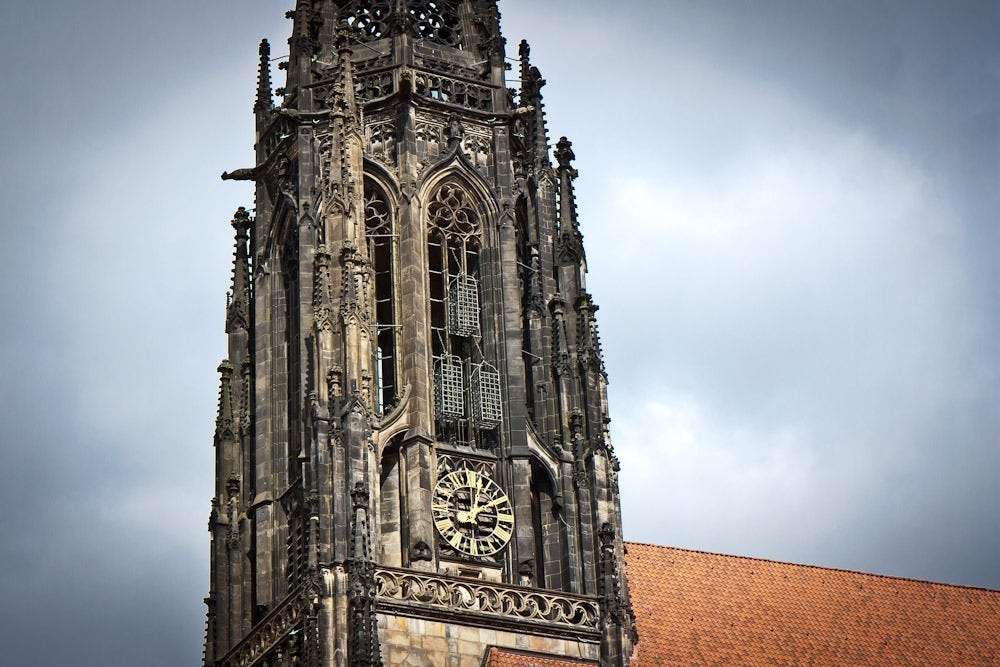
Once the dust had finally settled, the three main co-conspirators had their skin ripped off with hot tongs, and were hoisted in iron cages to the steeple of St. Lambert’s Church. Though their bodies have long since decayed, their cages hang there still, and the Anabaptist Revolt of Münster is remembered as an incident of some moment within the broader Protestant Reformation.
The Anabaptists were a smaller movement within the Protestant Reformation that rejected the idea of infant baptism, preferring instead that adults should be baptized of their own free will. Both Catholics and Protestants found this idea to be a dangerous one, and they heavily persecuted the Anabaptists. To escape these persecutions, some of them fled to the Americas. There, they became the forebears of the Amish and Mennonite communities of rural Pennsylvania.
The Anabaptists were extreme pacifists, like their modern Amish descendants. Only in Münster did the movement take such a violent and overtly sexual turn. That fact lends credence to the notion that hallucinogenic ergot may have been involved in the Anabaptist Revolt, just as Linnda Caporael speculated it was behind the Salem Witch Trials.
Conclusion
The profound impact of drugs on human history is a reality that we’re only just waking up to. The Greeks and Romans observed ceremonies involving drug-induced ego death that later became significant influences on Christianity. Psychoactive compounds used in the worship of gods like Demeter and Dionysus chemically induced a collapse in the mental conception of the self. The experience feels like death and rebirth. The kykeon of Demeter and the wine of Dionysus live on to this day as the bread and wine of the Christian Eucharist. After the Fall of Rome, Christian authorities began harshly condemning the old pagan rites as devil worship; even the ones that had bequeathed to Christianity its themes of death and rebirth. The Medieval Church tolerated no spiritual competition to the Christian Eucharist. Magical ingredients like the ergot in the potions consumed at Eleusis were labeled as witchcraft. This history of repression has concealed the considerable influence that drugs have had on the mystical and creative experiences that define the human story. But today, in the 21st century, that history is finally coming to light.
Since you’ve made it this far, intrepid reader, kindly consider hitting the ❤️ button above or below; it really helps!
Further Materials
Facing famine and deteriorating morale. [John of Leyden] announced that all who wished might leave the city. Many women and children, and some men, seized the opportunity. The men were imprisoned or killed by the Bishop’s soldiers, who spared the women for divers services. One of the émigrés saved his life by offering to show the besiegers an undefended part of the walls. Under his guidance a force of Landsknechts scaled them and opened a gate (June 24); soon several thousand troops poured into the town. Starvation had so far done its work that only 800 of the besieged could still bear arms. They barricaded themselves in the market place; then they surrendered on a promise of a safe-conduct to leave Münster; when they had yielded up their arms they were massacred en masse. Houses were searched, and 400 hidden survivors were slain. John of Leyden and two of his aides were bound to stakes; every part of their bodies was clawed with red-hot pincers, until “nearly all who were standing in the market place were sickened by the stench”; their tongues were pulled from their mouths; at last daggers were driven into their hearts.
The Bishop regained his city and augmented his former power; henceforth all actions of the civil authorities were to be subject to episcopal veto. Catholicism was triumphantly restored. Throughout the Empire the Anabaptists, fearing for their lives, repudiated every member guilty of using force. Nevertheless many of these pacifist heretics were executed. Melanchthon and Luther advised Philip of Hesse to put to death all adherents of the sect.The conservative leaders felt that so serious a threat to the established economic and political order should be punished with an unforgettable severity.
Will & Ariel Durant, The Reformation, 1957, page 588
