


Key Takeaways:
The ancient Egyptians worshipped triune gods, a concept later adopted by Christians.
Egyptian obelisks—used to worship the sun—are also prominent symbols within Christianity.
Further examples of Christo-Egyptian syncretism include the Christian Cross itself and the Crown of Thorns, both also derived from sun worship.
The Trinity
The ancient Egyptians are history’s most famous sun worshippers. Because their civilization spanned some 3,000 years, Egyptian mythology had many layers to it. Although the stories and characters evolved considerably during that period, certain themes remained consistent, such as the way they clustered their many gods and goddesses into groups of three called triads.
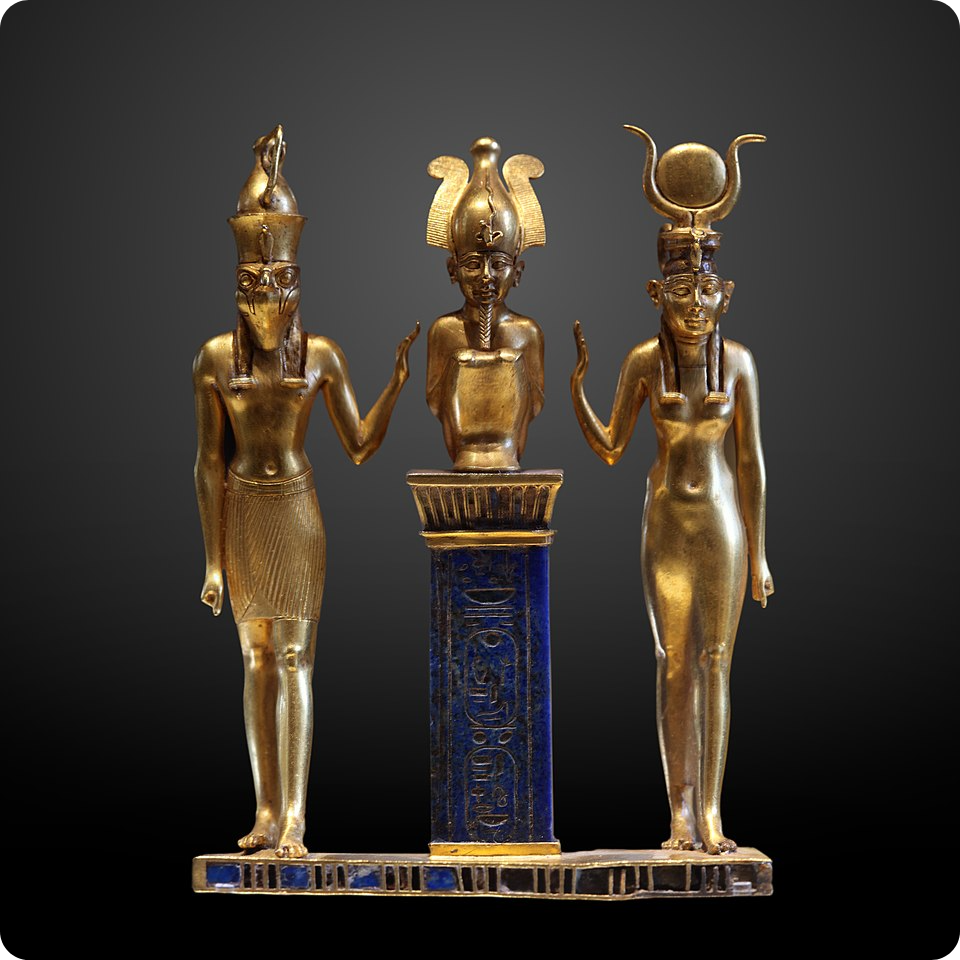
The most famous triad from Dynastic Egypt included Osiris, Isis, and Horus. Other important examples included the worship of Amun/Mut/Khonsu in Thebes, and Ptah/Sekhmet/Nefertem in Memphis. These triads typically featured a divine family unit: a father, mother, and child, often syncretized with major gods like Ra.
But the Egyptian affinity for triads is most richly illustrated by their conception of the sun as three distinct gods rolled into one, comprising a holy trinity. This trinity centered around Ra, the father figure and god of the midday sun. His child, Horus, was frequently conceptualized as the morning sun, while Set, the dark god of chaos, personified the setting sun.
It must be emphasized that the following etymologies are probably entirely coincidental, since they only work in English. But it’s interesting to note that we still call it a sunset to this day. Similarly, the words hour and horoscope seem to echo a time when the ancients worshipped the morning sun as the child god Horus, who pops into view on the horizon each morning.
Dynastic Egypt was a cultural force in the Mediterranean Basin for almost three millennia, right up until the 3rd century BC when Alexander arrived to install the Greek Ptolemaic dynasty, which later produced Cleopatra during Roman times. As the centuries wore on, versions of the old Egyptian trinity found their way into Greek Neoplatonism and Roman Christianity.
The Obelisk
Though the sands of time long ago swallowed up the kingdoms of Dynastic Egypt, their architecture is still evident. The Washington Monument that soars over the US Capitol is a prime example of neo-Egyptian architecture; that structure is a modern copy of the obelisks carved by Egyptians during ancient times.
Obelisks are shaped like narrow stone columns that taper to a point. They’re designed to mark the daily appearance of Ra, the god of the midday sun. Because these columns stand vertically, the presence of any shadow indicates that the sun isn’t directly overhead. But the disappearance of an obelisk’s shadow announces the awesome presence of the great god Ra at high noon.
Another prominent obelisk stands before St. Peter’s Basilica in Rome. Rather than being of modern construction like the Washington Monument, this obelisk was originally quarried in Heliopolis, Egypt, during the reign of Pharaoh Amenemhat II in the 20th century BC.
In the 1st century AD, the Roman Emperor Caligula ordered this obelisk transported from Egypt to Rome. He had it erected in the Circus of Caligula. His successor Nero expanded the site, renamed it after himself, and later began slaughtering Christians there during the first persecutions in 64 AD. Among them was St. Peter himself. Because of this history, St. Peter’s Obelisk is sometimes poetically referred to as a witness to his death.
In 1586, Pope Sixtus V moved it to the center of St. Peter’s Square, where it still stands today. At its peak, a cross replaced the bronze orb once thought to hold the ashes of Julius Caesar. It still serves as the gnomon—or shadow-casting stylus—of a sundial mosaic laid out on the pavement stones of the square. St. Peter’s Obelisk illustrates how these structures are a surprisingly prominent, but often overlooked, symbol in Christianity, especially within Catholicism.

The Cross
Early Christians adopted existing religious allegories to make their message as comprehensible as possible to the populations of the Mediterranean basin, whom they hoped to convert. Trinities and obelisks are far from the only features of Egyptian sun worship they borrowed.
The cross itself is yet another example. A circle sliced into four equal quadrants is a near-universal symbol for the calendar year divided into four seasons. From the Native American medicine wheel, to Stonehenge in the UK, to Dynastic Egypt, this shape has symbolized the sun’s annual cycle since time immemorial.
Many Christian traditions over the past two thousand years have represented their faith with a circle and a cross. By elongating the shaft—and in most cases removing the circle—early Christians transformed an old symbol to look like the infamous execution device common to Roman society. Some crosses even retained the circular background, such as the Celtic Cross and, later, the Presbyterian Cross.
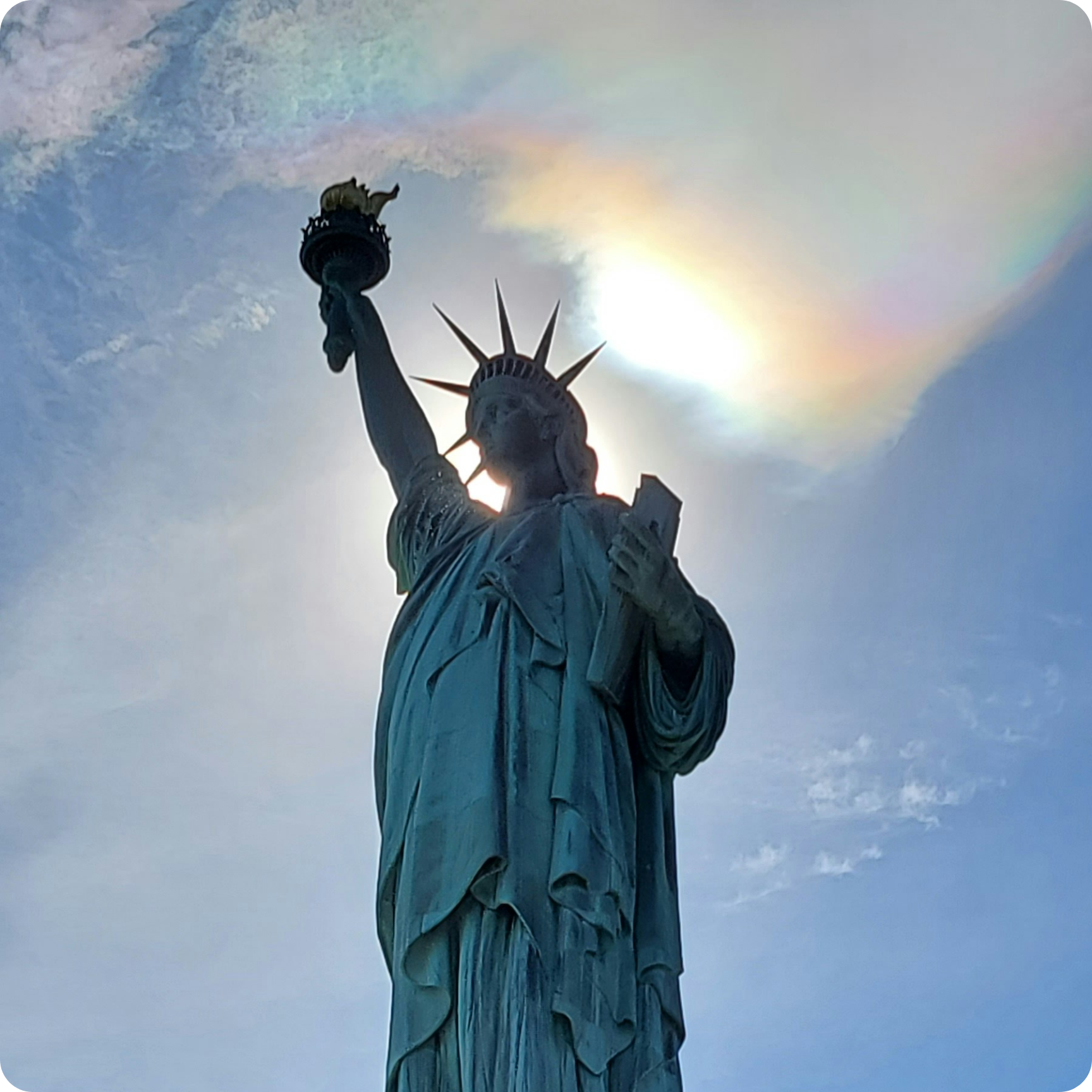
Another striking example is the Crown of Thorns. The Egyptians depicted their sun god Ra with a large red sun disk over his head. The Greek version of Ra, Helios, wore a radiant crown that also evoked the sun’s rays. The Colossus of Rhodes was a giant bronze statue of Helios, complete with a spiked crown. And because the Statue of Liberty was based on the Colossus, she also wears the solar crown. Furthermore, this tradition explains why astronomers named the outermost layer of the sun’s atmosphere the corona, which is Latin for “crown.”
Christians incorporated this symbolism into their faith when they modified the sun discs of Dynastic Egypt into the round halos of Christian iconography. Meanwhile, the radiant crown of Helios became the gruesome crown of spiked thorns placed upon the head of the Christian savior.
Conclusion
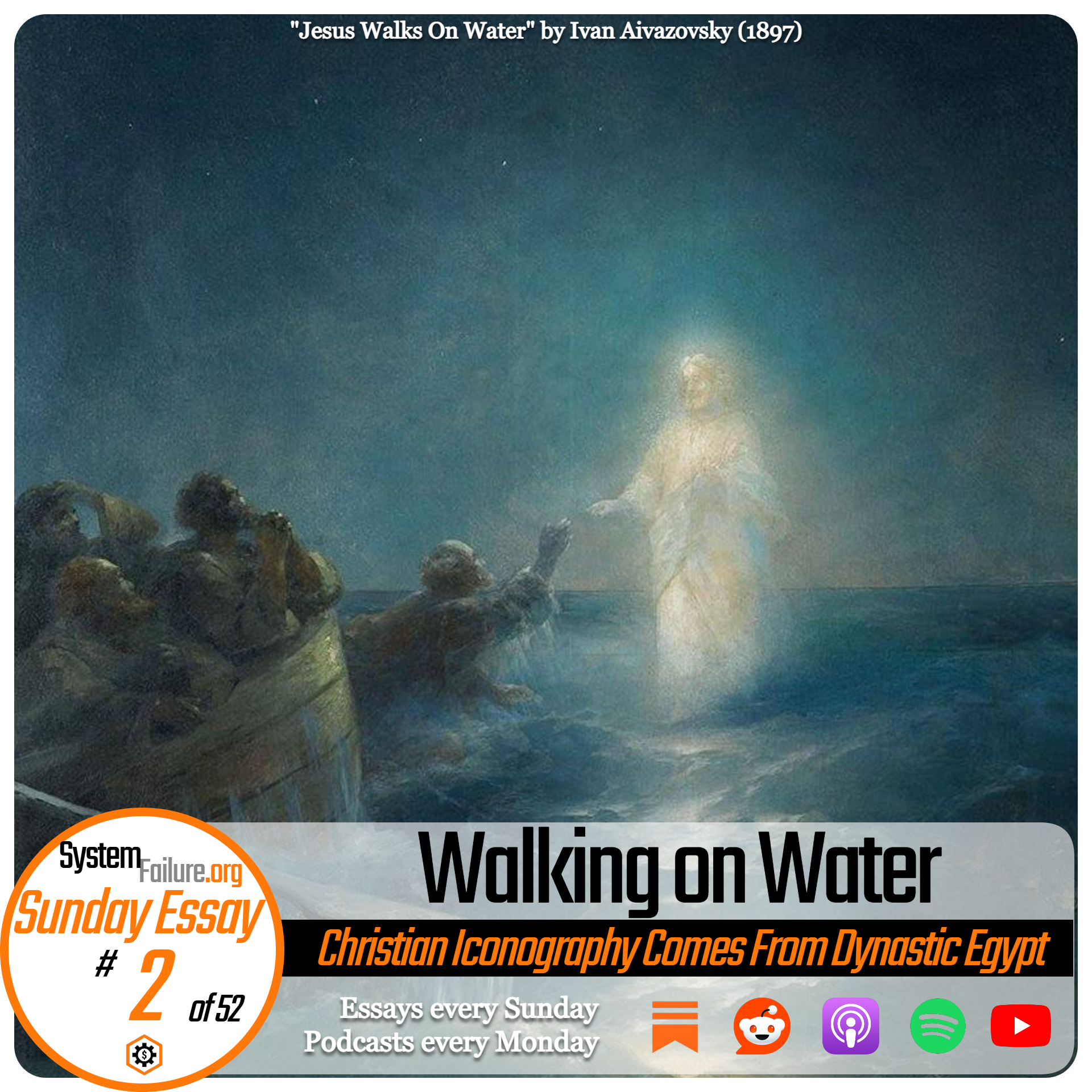
The layers of solar imagery borrowed from Egypt by early Christians are numerous and varied. From the notion of triune gods, to the obelisk, to the cross and the crown of thorns, much of the Christian iconography so familiar to us has its roots in Dynastic Egypt. Where they once worshipped The Sun, Christians now worship The Son in yet another etymological coincidence. Ancient sun gods were said to linger on water because the sun’s rays reflect off its surface; anyone who’s ever enjoyed a sunrise or sunset over water can appreciate the beautiful effect. Jesus was no exception. But where the Egyptian sun god Ra was believed to have traversed the sky in a boat, Jesus preferred to walk.
Since you made it this far, patient reader, kindly consider hitting the ❤️ button above or below; it really helps!
Further Materials
Written history is at least six thousand years old. During half of this period the center of human affairs, so far as they are now known to us, was in the Near East. By this vague term we shall mean here all southwestern Asia south of Russia and the Black Sea, and west of India and Afghanistan; still more loosely, we shall include within it Egypt, too, as anciently bound up with the Near East in one vast web and communicating complex of Oriental civilization. In this rough theatre of teeming peoples and conflicting cultures were developed the agriculture and commerce, the horse and wagon, the coinage and letters of credit, the crafts and industries, the law and government, the mathematics and medicine, the enemas and drainage systems, the geometry and astronomy, the calendar and clock and zodiac, the alphabet and writing, the paper and ink, the books and libraries and schools, the literature and music, the sculpture and architecture, the glazed pottery and fine furniture, the monotheism and monogamy, the cosmetics and jewelry, the checkers and dice, the ten-pins and income-tax, the wet-nurses and beer, from which our own European and American culture derive by a continuous succession through the mediation of Crete and Greece and Rome. The “Aryans” did not establish civilization—they took it from Babylonia and Egypt. Greece did not begin civilization—it inherited far more civilization than it began; it was the spoiled heir of three millenniums of arts and sciences brought to its cities from the Near East by the fortunes of trade and war. In studying and honoring the Near East we shall be acknowledging a debt long due to the real founders of European and American civilization.
Will & Ariel Durant, Our Oriental Heritage, 1935, page 116

Just some thoughts from deepseek:
Unity in Trinity:
Just as the Trinity is understood as one God in three persons, money is an economic reality with three inseparable functions. All three must be present together for money to function fully—much like the three persons of the Trinity are inseparable.
Interdependence:
The unit of account enables the valuation of goods (like the Father as origin).
The medium of exchange is the reality made visible in the exchange (like the Son in the Incarnation).
The store of value preserves economic power over time (much like the Holy Spirit, who remains and acts).
No function can exist in the long term without the others.
Mediating Function:
Money mediates between different goods and times—a kind of "mediator" role, perhaps reminiscent of Christ's mediating role.