The words of children held mystical significance to the ancient Egyptians; their sun god Horus the Child (Har-pa-khered) points to his own mouth. The Greeks later adopted Harpocrates as their God of Silence, and that gesture came to mean “hush”. Aphrodite created roses as a gift to this god, persuading him to keep her many amorous indiscretions a secret. The Romans hung roses in banquet halls to remind revelers that utterances made “under the rose” (Latin: sub rosa) were strictly confidential. In the Middle Ages, roses were carved into the ceilings of council chambers, government meeting rooms, and Christian confessionals for the same reason. And now the SUBROSA CLUB is an exclusive space for paid System Failure subscribers…

Trump Waves the White Flag on Immigration
The big news out of America this week was that the Trump administration is drawing down immigration enforcement in Minnesota and Maine. The move comes on the heels of a second brutal killing by federal agents. Though it may seem like Trump is waving the white flag, the president already gave up on mass deportations last summer.
All the way back in May 2025, The Wall Street Journal reported that Trump announced a pause in deportation efforts at farms, hotels and restaurants.
“Our great Farmers and people in the Hotel and Leisure business have been stating that our very aggressive policy on immigration is taking very good, long time workers away from them, with those jobs being almost impossible to replace,” Trump said.
The reason for the announcement is obvious. The major political donors who own these types of businesses profit immensely from undocumented workers, because they’re unprotected by American labor laws and are therefore vastly cheaper than American workers to employ. Whereas legal workers might expect to receive minimum wage and contributions to their Social Security accounts, for example, illegal immigrants have no standing to demand such considerations.
Any serious effort to deport millions of undocumented workers would involve cracking down on the employers who hire them in massive numbers. But the conspicuous absence of any such effort reveals that Federal agents in Minnesota and Maine are actually about something else entirely.
One might also expect serious immigration enforcement to start in Southern states with much higher concentrations of undocumented immigrants. Not northern states with much smaller populations of them. What sets Minnesota and Maine apart is the presence of Donald Trump’s political enemies.
Minnesota Governor Tim Walz ran for vice president against Trump in 2024, and has been an outspoken critic of the administration ever since. In 2025, Maine Governor Janet Mills similarly found herself in a public feud with Trump. The targeting of these governors’ states for so-called immigration enforcement is certainly no accident.
The presence of masked Federal agents on streets of relatively small northern cities is better understood as political theater, and not a serious attempt to address the problem of undocumented immigration. That ship already sailed last year.

Völkerwanderung
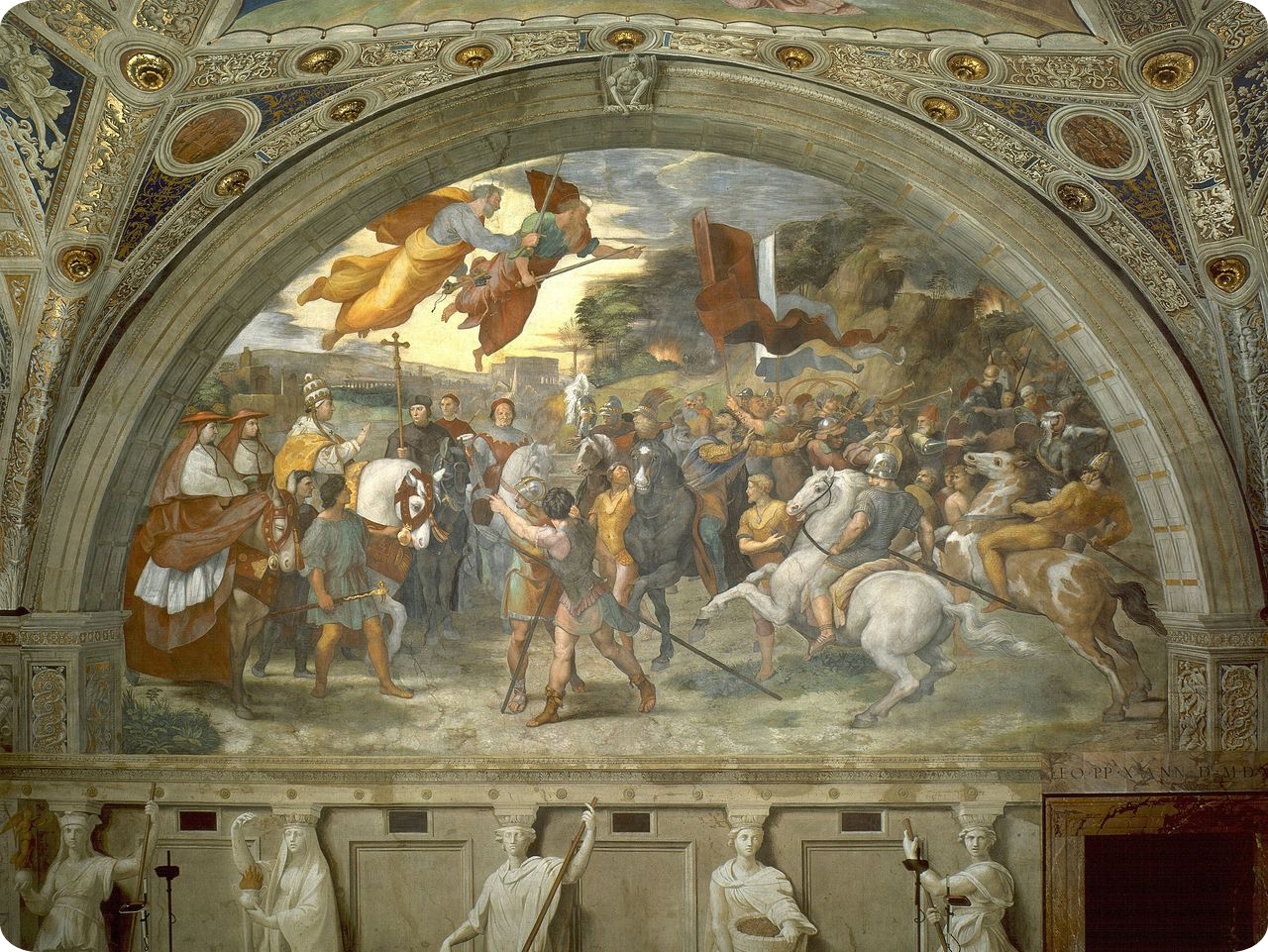
Attila the Hun arrived in Europe in the 5th century AD. His armies displaced the Gothic tribes who had migrated south from Scandinavia and challenged the Roman Empire at its northern borders.
Legendary podcaster Dan Carlin once compared the ripple effects to the classic executive desk toy, where 4 small metal balls ricochet off one another. The Visigoths retreated west from the Hunnic invasion and displaced the Vandals. The Vandals, in turn, were driven south into Spain and ultimately into North Africa. The southernmost region of Spain, Andalusia, still retains their name to this day.
Mass migrations like these are typical of human history. The German term for them is Völkerwanderung, or “wandering of the people”. Here’s a partial list:
1. The Indo-European migrations (c. 3000–1500 BCE)
2. The Late Bronze Age Collapse (c. 1200 BCE)
3. The Slavic Migrations (6th–7th centuries)
4. The Arab-Islamic Expansions (7th–8th centuries)
5. The Turkic Migrations into the Middle East and Anatolia (11th–13th centuries)
6. The Mongol Invasions (12th–13th centuries)
7. The European Colonization of the Americas (16th–17th centuries)
Notice that this list of major migrations peters out in the 17th century. That’s because the Protestant Reformation culminated in the Thirty Years’ War between 1619 and 1648. The Treaty of Westphalia ended that brutal conflict, and established a system of international borders designed to limit the Pope’s political influence.
Our modern conception of the nation-state is less than 400 years old. Before that, city-states were much more common. Only since 1648 has the entire world (except Antarctica) been carved up into sovereign nations, with each square foot of land claimed by some nation or another.
Given the recency and transience of the nation-state, it’s fair to question whether these modern political forms ultimately have the power to prevent the mass migrations of people that have characterized all of human history. We are, after all, descended from nomadic tribes of hunter-gatherers.
We don’t count the influx of immigrants into America between 1850 and 1950 as a migration similar to the invasion of Europe by Attila. But that’s just what it was. It transformed America just as Europe was transformed by the arrival of the Huns.
The immigration crisis consuming American politics today is simply too massive a historical force to be long impeded by the crude apparatus of the nation-state. The sooner the public stops being taken in by political theater concerning the natural movement of peoples, the sooner we can adopt policy measures that actually align with the reality of human history.
The Price of Gold
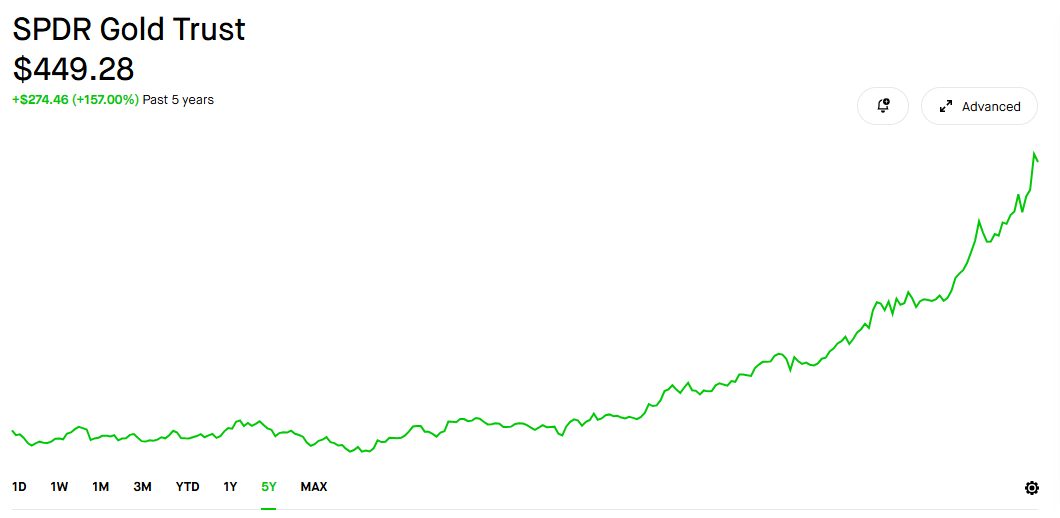
In financial markets this week, the price of gold and silver retreated abruptly from all-time heights. The catalyst was Trump’s nomination of longtime Fed critic Kevin Warsh to replace Jerome Powell as chair of the U.S. Federal Reserve in mid-May. A glance at the price of gold over the past 5 years, however, reveals the recent drop to be a minor blip on a dizzying upward trajectory.
The price of gold, as reckoned in U.S. dollars, has been spiraling upward because the U.S. Treasury routinely spends more dollars than it has collected in tax revenue. It holds bond auctions to raise the extra cash it needs to keep the government running.
The demand for U.S. Treasury bonds is augmented by the fact that the U.S. dollar is the world reserve currency, and by the fact that the U.S. Federal Reserve will swoop in and purchase bonds from jittery investors if demanded yields rise too high. The Fed typically purchases bonds on the secondary market, with money conjured into existence on a computer.
But the U.S. Treasury has overspent so badly—and the Fed backstopped bond markets so much—that many investors and foreign governments are opting to draw down their U.S. Treasury holdings; most notably China.
But after American authorities seized Russian exchange assets after Putin’s invasion of Ukraine, major countries like China have dramatically slowed down their purchases of bonds at U.S. Treasury auctions. They’ve been purchasing gold instead.
Doubts have begun to fester as to the status of the U.S. dollar as the world reserve currency. Furthermore, the Fed has printed vast quantities of dollars to backstop bond markets. Both of these factors are eroding demand for the U.S. dollars, just as demand for gold is spiking for related reasons. The result has been a parabolic rise in the number of U.S. dollars needed to buy identical amounts of gold.
Many of the great empires of history have collapsed under similar conditions of currency debasement. The Roman Empire, Han Dynasty China, the Byzantine Empire, the Spanish Empire, and the Ottoman Empire are all salient examples. The recent run-up in gold prices relative to the U.S. dollars matches a terrifying historical pattern.