The words of children held mystical significance to the ancient Egyptians; their sun god Horus the Child (Har-pa-khered) points to his own mouth. The Greeks later adopted Harpocrates as their God of Silence, and that gesture came to mean “hush”. Aphrodite created roses as a gift to this god, persuading him to keep her many amorous indiscretions a secret. The Romans hung roses in banquet halls to remind revelers that utterances made “under the rose” (Latin: sub rosa) were strictly confidential. In the Middle Ages, roses were carved into the ceilings of council chambers, government meeting rooms, and Christian confessionals for the same reason. And now the SUBROSA CLUB is an exclusive space for paid System Failure subscribers…

The Tragedy of the Commons
An ecologist named Garrett Hardin published a 1968 essay in Science entitled “The Tragedy of the Commons.” The term was coined by William Forster Lloyd in 1833, but Hardin’s piece cemented the term in the modern lexicon.
He described the mechanism by which few of us treat rental cars with the same care that we treat our own personal vehicles. Since no one person owns it, everyone exploits it maximally. Hardin’s was an argument in favor of private property rights: his suggestion was that common property is always doomed to fail in this way.
But in 2009, Eleanor Ostrom won a Nobel Prize for proving Hardin wrong. Her book Governing the Commons laid out a game-theory approach for common resources and an empirical look at actually existing commons that work. She proved that property held in common can be a workable model.
The “Tragedy of the Commons” is often taught as an objective economic principle. Hardin’s work remains burned into the public consciousness, while Ostrom’s work is largely unknown. But its 1833 origins and 1968 popularization were heavily influenced by specific political and class interests.
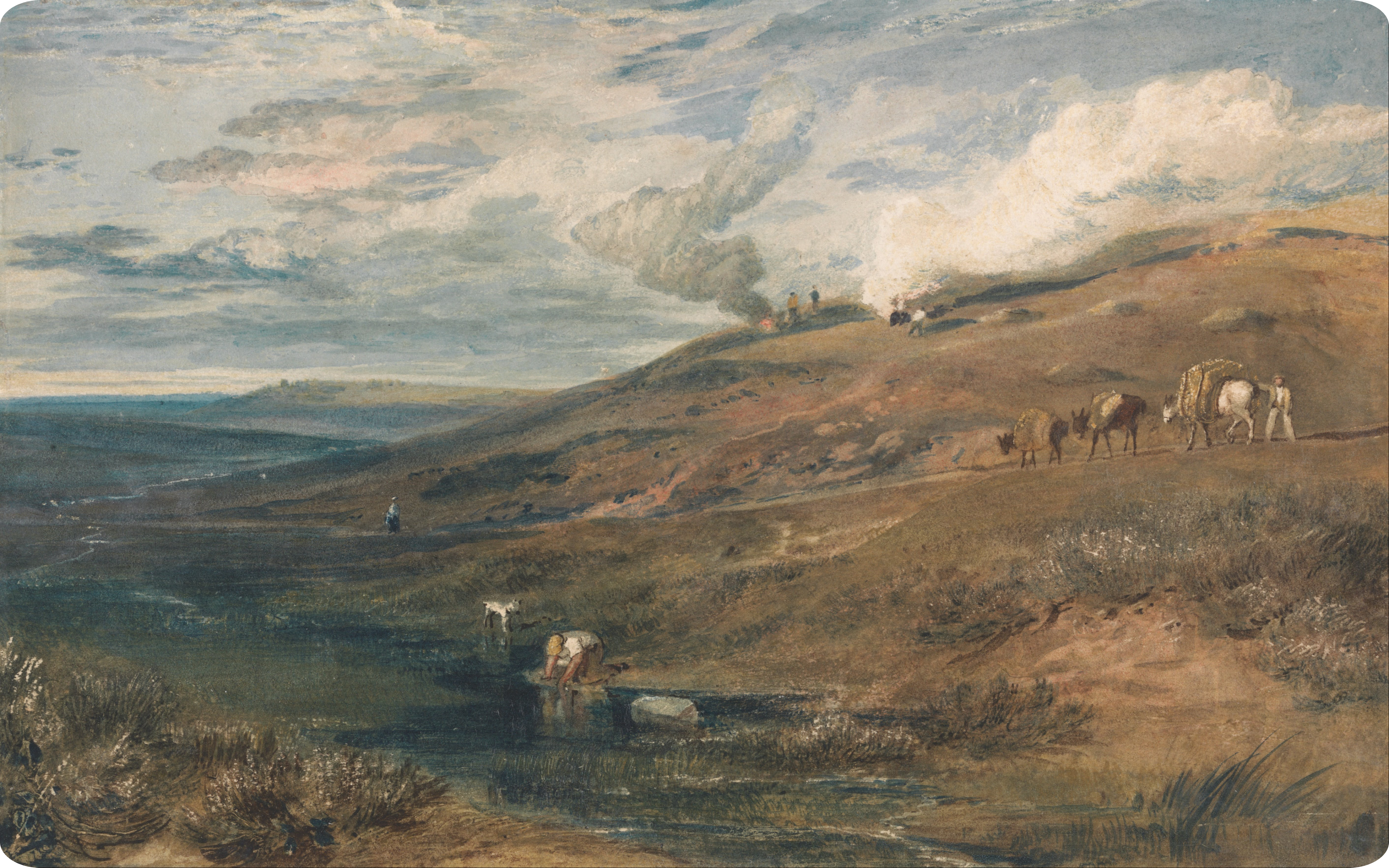
In 18th and 19th century England, there was a concerted effort by the wealthy to enclose common spaces and claim them as private property. The original pamphlet by William Forster Lloyd was a justification for this.
But traditional English commons were not “open-access” free-for-alls. They were actually managed by complex local rules that strictly limited how many animals each tenant could graze. These systems often endured for centuries without the collapse prophesied by Lloyd. Meanwhile back in reality, wealthy landowners often deliberately overgrazed common land to diminish its value to poor neighbors, making it easier to privatize.
For Garrett Hardin’s part, he eventually came to recognize the mistake he made in 1968. He admitted that he should have called it the “Tragedy of the Unregulated Commons.” This story stands as a stark reminder that our received economic wisdom can be tainted by class interests.