


Key Takeaways:
The Roman Catholic Church restricted Bible translations to maintain its role as the sole interpreter of Scripture.
The Church condemned and punished outlaw Bible translators at the Council of Konstanz in 1415.
After the invention of the printing press in 1440, Martin Luther touched off the Protestant Reformation that destroyed Church’s intellectual monopoly.
Translating the Bible
Medieval Europeans believed that the Roman Catholic Church was their sole connection to God. By the late Middle Ages, the Church was shamelessly monetizing that monopoly. One of the most infamous ways it did so was by charging people for sin forgiveness through the Sale of Indulgences. Through this and other means, the Church built up an immense hoard of wealth that remains legendary to this day.
Awkwardly, the vast wealth of the Vatican directly contradicts actual scripture, where Jesus teaches that, “it is easier for a camel to go through the eye of a needle than for a rich person to enter the kingdom of God.”
During the Middle Ages, the Church managed to get away with this obvious contradiction by maintaining strict control over the translation of the Bible into common tongues. Most people had no choice but to accept the Church’s interpretation of scripture, where it deemphasized a harsh condemnation against wealth that is a major theme of the New Testament.
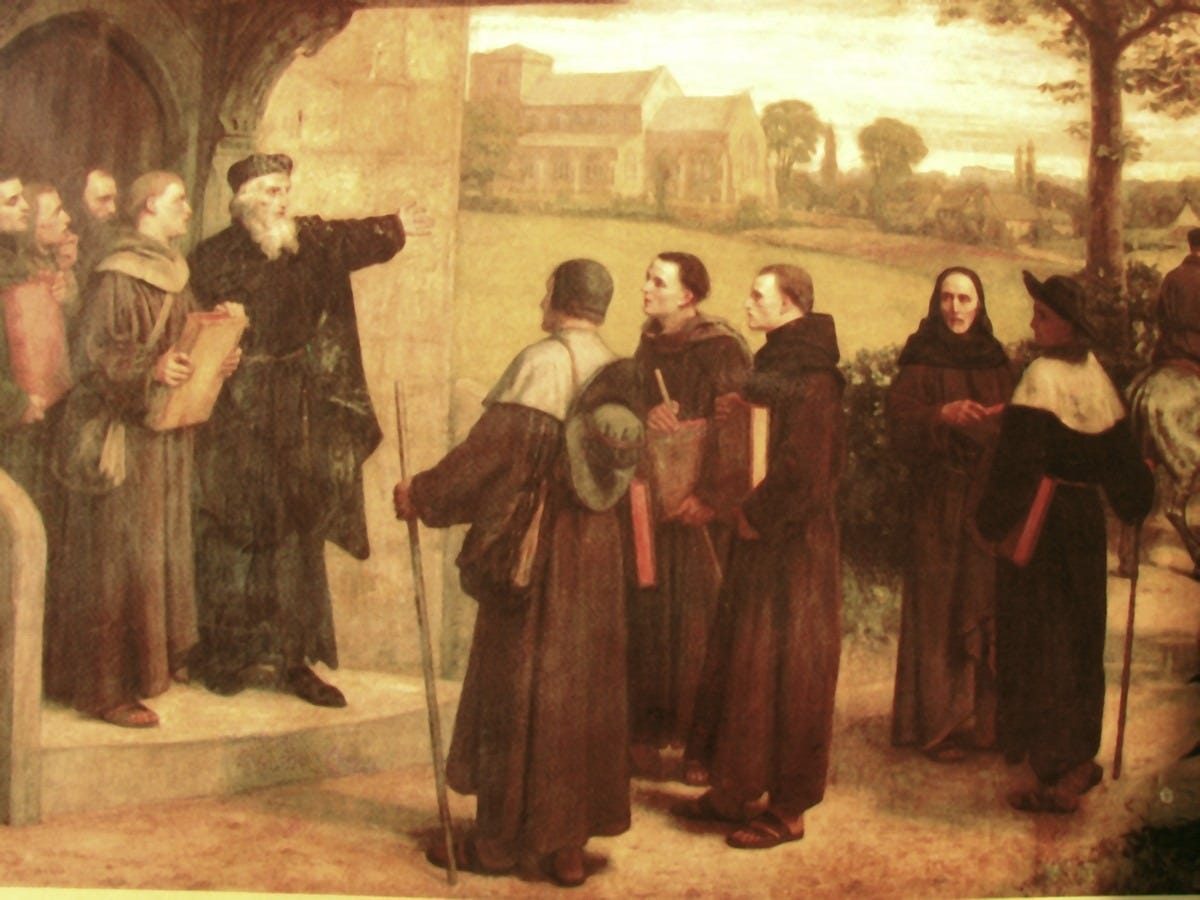
But in the 1300s, one man boldly defied the Church with his translation of the Bible into English. He was John Wycliffe, a preacher so scandalized by what he discovered in the New Testament that he began using fiery sermons to advocate for the total abolition of private property, and of Church property in particular.
Legendary historians Will and Ariel Durant wrote that translation of the Bible into common languages was, “a blow to political as well as to religious orthodoxy. It exposed the compromises that the secular clergy had made with the nature of man and the ways of the world; it revealed the communism of the Apostles, the sympathy of Christ for the poor and oppressed; in these respects, the New Testament was for the radicals of this age a veritable Communist Manifesto. Peasant and proletarian alike found in it a divine warrant for dreaming of a utopia where private property would be abolished, and the poor would inherit the earth.”
The Council of Konstanz
John Wycliffe died of old age on the very last day of 1384, almost a century-and-a-half before the Protestant Reformation shattered the intellectual monopoly enjoyed by the Roman Catholic Church.
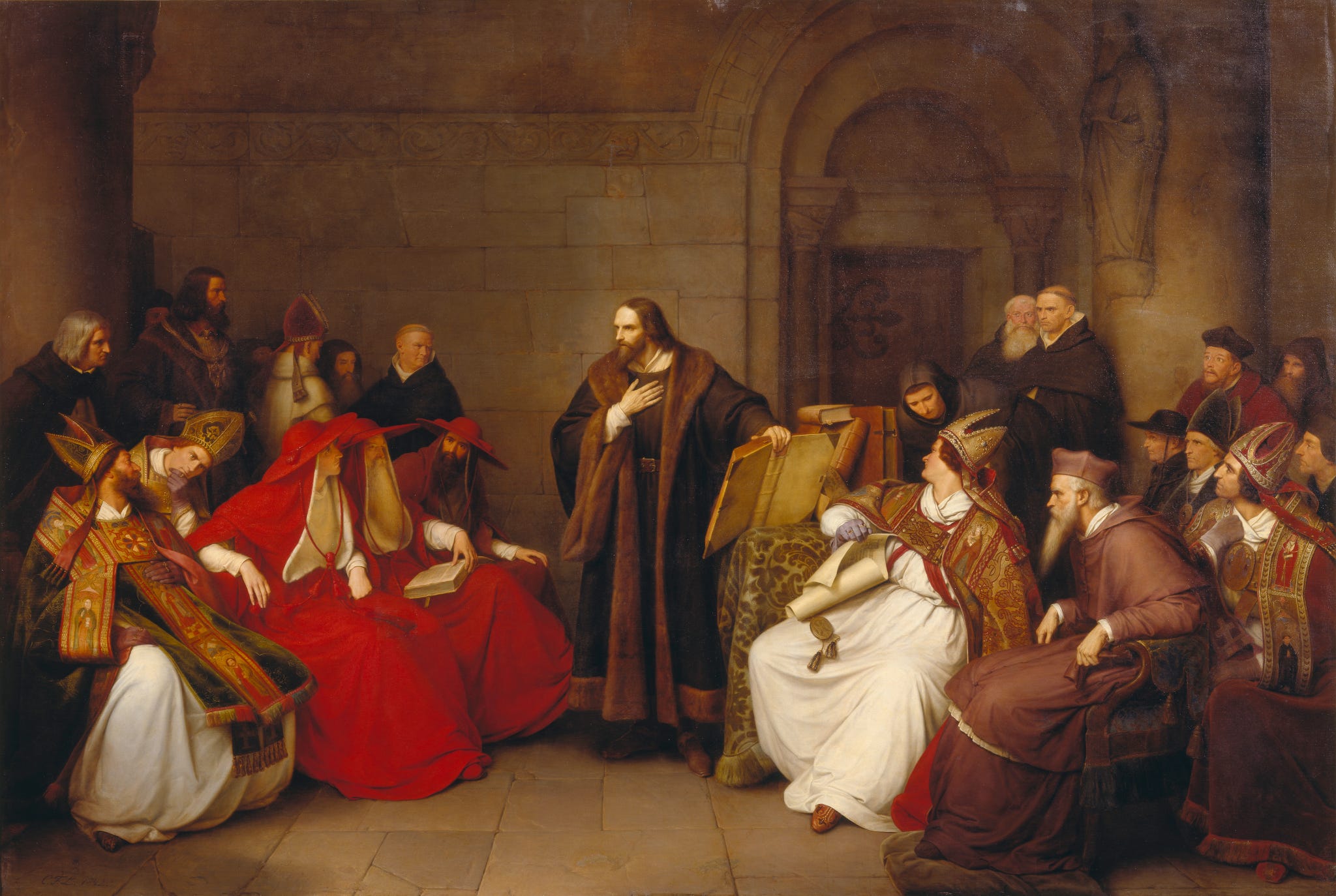
Enemies of the Medieval Church like Wycliffe seldom achieved death by natural causes. But in his day, England was a long way from Rome. By the time Church authorities formally condemned and excommunicated Wycliffe at the Council of Konstanz, he had already been dead for 35 years.
But the attendees at the Council of Konstanz would not be disappointed by a lack of blood. Another firebrand preacher named Jan Hus has been inspired by Wycliffe to formalize a translation of the Bible in Czech. For that literary crime, Church officials summoned him to the German city of Konstanz under a guarantee of protection. Despite the guarantee, they ordered him tied to a stake and the flesh burned off of his body until he died in agony.
Back in Prague, Jan Hus had a huge following. A few years after the treachery at Konstanz, they formed an angry mob and stormed the Town Hall. There, they seized the Catholic members of the city council, and hurled them out of a second-story window to their deaths onto the cobblestones below.
Those seven broken bodies on the streets of Prague were the first casualties in a long and bitter struggle against Church power that eventually claimed millions of lives. But the broader movement that became the Protestant Reformation was still a century away. The monopoly of the Roman Catholic Church survived Jan Hus’s death and remained intact until a marvellous invention changed everything.
The Theses of Martin Luther
Both John Wycliffe and Jan Hus made names for themselves by translating the Bible into common languages. But while they defied the authority of the Roman Catholic Church, they couldn’t have imagined destroying its monopoly.
History credits that feat to another Bible translator, one of history’s most grumpy and least agreeable figures. The monk Martin Luther translated the Bible into German, but he didn’t stop there.
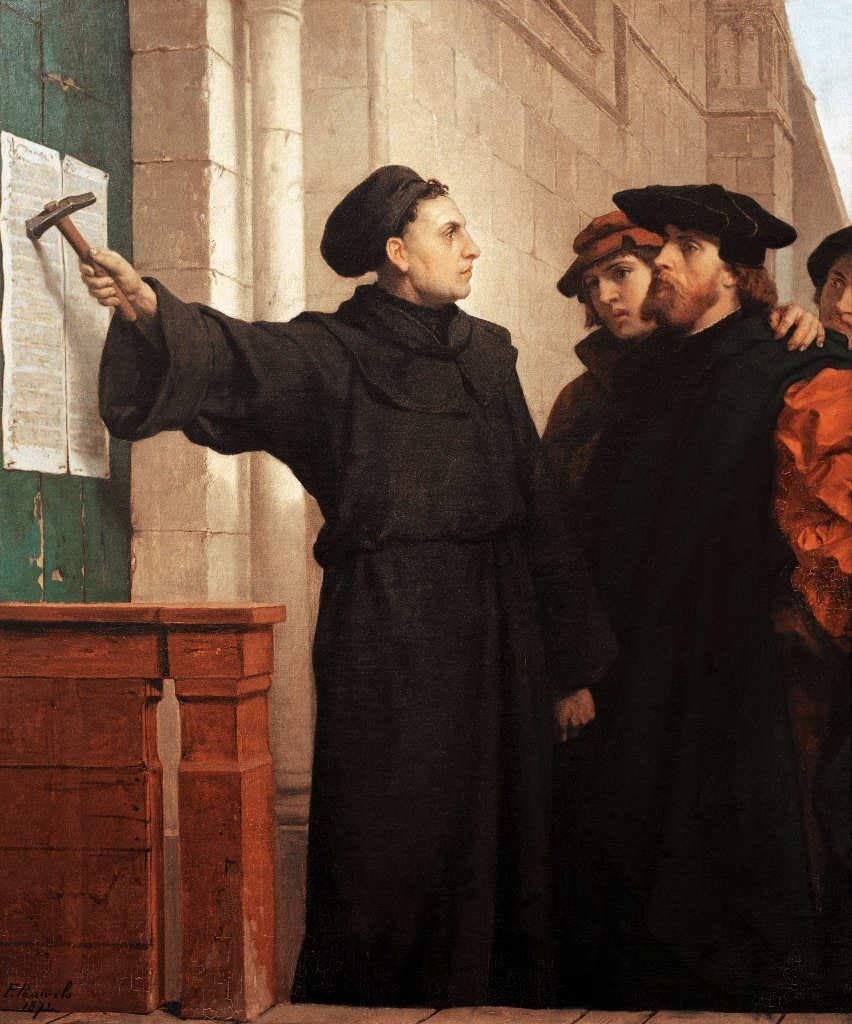
Luther painstakingly compiled an exhaustive list of his complaints against Church corruption. Chief among them was the infamous Sale of Indulgences. Legend has it that he then made his way through downtown Wittenberg to his local church and nailed these so-called “95 Theses” to its door. In those days, the doors of public buildings served as makeshift bulletin boards. The year was 1517, and Luther’s bold act of defiance marks the beginning of the Protestant Reformation.
The reason Luther’s protest against Church power exploded into a mass movement was the advent of the printing press. 25 years after Jan Hus had met his grisly fate at Konstanz, Johannes Gutenberg put the finishing touches on a machine that used moveable type to mass-produce documents.
The era of copying manuscripts by hand was over, and so was the political supremacy of the Roman Catholic Church. Printing presses churned out Bibles in common languages faster than Church authorities could confiscate them. Martin Luther’s complaints about Church corruption spread to every corner of Europe via mechanically-produced pamphlets. Within a century, the supremacy of the Roman Catholic Church collapsed in an orgy of violence that was the Protestant Reformation.
Conclusion
The Church’s dominance of European politics was wholly dependent on its ability to control the public narrative. The invention of the printing press obliterated that control. The Protestant Reformation that followed could never have happened without brave characters like Wycliffe or Hus or Luther. But like a fire that requires both fuel and oxygen to burn, bravery alone was insufficient to escape the awesome gravity of Church power. The Reformation could only flourish after the intellectual monopoly on which Church power rested was finally broken. John Wycliffe and Jan Hus bravely confronted the Church. But because Martin Luther’s protest came AFTER the invention of the printing press, it ignited a mass movement that plunged all of Europe into chaos, ultimately demolishing the authority of the Roman Catholic Church and ushering in the modern historical era.
Since you made it this far, noble reader, kindly consider hitting the ❤️ button above or below; it really helps!
Further Materials
The religious revolt offered the tillers of the fields a captivating ideology in which to phrase their demands for a larger share in Germany’s growing prosperity. The hardships that had already spurred a dozen rural outbreaks still agitated the peasant mind, and indeed with feverish intensity now that Luther had defied the Church, berated the princes, broken the dams of discipline and awe, made every man a priest, and proclaimed the freedom of the Christian man. In the Germany of that age Church and state were so closely meshed- clergymen played so large a role in social order and civil administration that the collapse of ecclesiastical prestige and power removed a main barrier to revolution. The Waldensians, Beghards, Brethren of the Common Life, had continued an old tradition of basing radical proposals upon Biblical texts. The circulation of the New Testament in print was a blow to political as well as to religious orthodoxy. It exposed the compromises that the secular clergy had made with the nature of man and the ways of the world; it revealed the communism of the Apostles, the sympathy of Christ for the poor and oppressed; in these respects the New Testament was for the radicals of this age a veritable Communist Manifesto. Peasant and proletarian alike found in it a divine warrant for dreaming of a utopia where private property would be abolished, and the poor would inherit the earth.
Will & Ariel Durant, The Reformation, 1957, page 382

I must have read the Durants at some time at some time because I have regarded historical Jesus as a revolutionary socialist, perhaps the first communist in recorded history. I regret that too few 'progressives' of this age understand this beginning of Christianity, because to me, they confuse all the inequities of religious institutions with religion itself. This is the reverse of the Zen Koan to not confuse the finger pointing at the moon with the moon itself, where the moon is condemned because of the finger.