


Key Takeaways
The Gospel Writer John Prophesied that Pandemic Would Accompany the Apocalypse
A Pandemic Ended the Pax Romana, the High-Water Mark of Roman Civilization
A Pandemic Caused the Crisis of the Third Century that Brought Rome to its Knees
The Gospel Writer John Prophesied that Pandemic Would Accompany the Apocalypse
At the end of the first century AD, the gospel writer John sat down on the Isle of Patmos to pen the infamous book of Revelation. His hand was guided by his belief that the end of the world was at hand. Two thousand years later his Chapter 6, Verse 8 remains one of literature’s most chilling passages:
And I looked, and behold a pale horse: and his name that sat on him was Death, and Hell followed with him.
That rendering is from the 1611 King James translation of the Bible into English. But John himself wrote in Greek. He used the Greek word thanatos, which means “death.” Footnote #37 in the New English Translation of the Bible clarifies that “θάνατος (thanatos) can in particular contexts refer to a manner of death, specifically a contagious disease.”
That’s why the dread specter of 4h Horsemen of the Apocalypse is commonly interpreted as representing plague, pestilence or pandemic.
Economic dysfunction causes pandemics. Our immune systems falter when we lose access to food, water or shelter. But pandemics also cause economic dysfunction, as shrinking populations curtail economic productivity, cutting off even more access to these essentials of good health.
That feedback loop explains why pandemics and economic collapses are linked in popular imagination. The book of Revelation reflects this linkage. Apocalyptic prophecies laid down by John seemed eerily accurate to Roman citizens living in the 2nd and 3rd centuries—as deadly plagues figured decisively into the Fall of Rome.
Thanks in no small part to the prophecies of John, the Roman populace lapsed into mass religious hysteria as their Empire collapsed around them. Christianity exploded in popularity as they collectively braced themselves for the end of the world.
A Pandemic Ended the Pax Romana, the High-Water Mark of Roman Civilization
The Roman Republican period lasted for 500 years. The transition from Republic to Empire took place around the year 0, an era when both Julius Caesar and Jesus Christ rose to prominence in opposition to a cruel economic hierarchy. Within a few decades of each other, they died two of the most famous deaths in history; both were publicly murdered for their advocacy of the downtrodden Roman working class.
The Republican period was five centuries of constant economic strife and political assassination that finally culminated in a bitter civil war. These deep divisions were temporarily resolved in 27 BC with the coronation of Julius Caesar’s grand-nephew, Augustus. Thereafter, Rome was ruled by emperors while the senate was reduced to a largely ceremonial role.
The Emperors managed to preserve Roman society for another century by forcibly binding Rome’s warring economic factions together with autocratic political power. But like the Senate, the Emperors came from the fabulously wealthy Roman aristocracy. And like their Senatorial predecessors, the Emperors proved unwilling to save Rome by redistributing its vast wealth.
Either the land reforms proposed by Julius Caesar or the debt forgiveness demanded by Jesus Christ could have created a more equitable economy for all Roman citizens. But the aristocracy sealed Rome’s fate by consistently choosing alternative policies that preserved their own fortunes—at the expense of societal stability.
As a result, the 2nd and 3rd centuries AD were marked by the precipitous economic decline of Roman society. Romans converted to Christianity en masse during this period, in part because the new faith championed the poor and castigated the rich. But also because apocalyptic prophecies contained within the book of Revelation appeared to come true before everybody’s eyes.
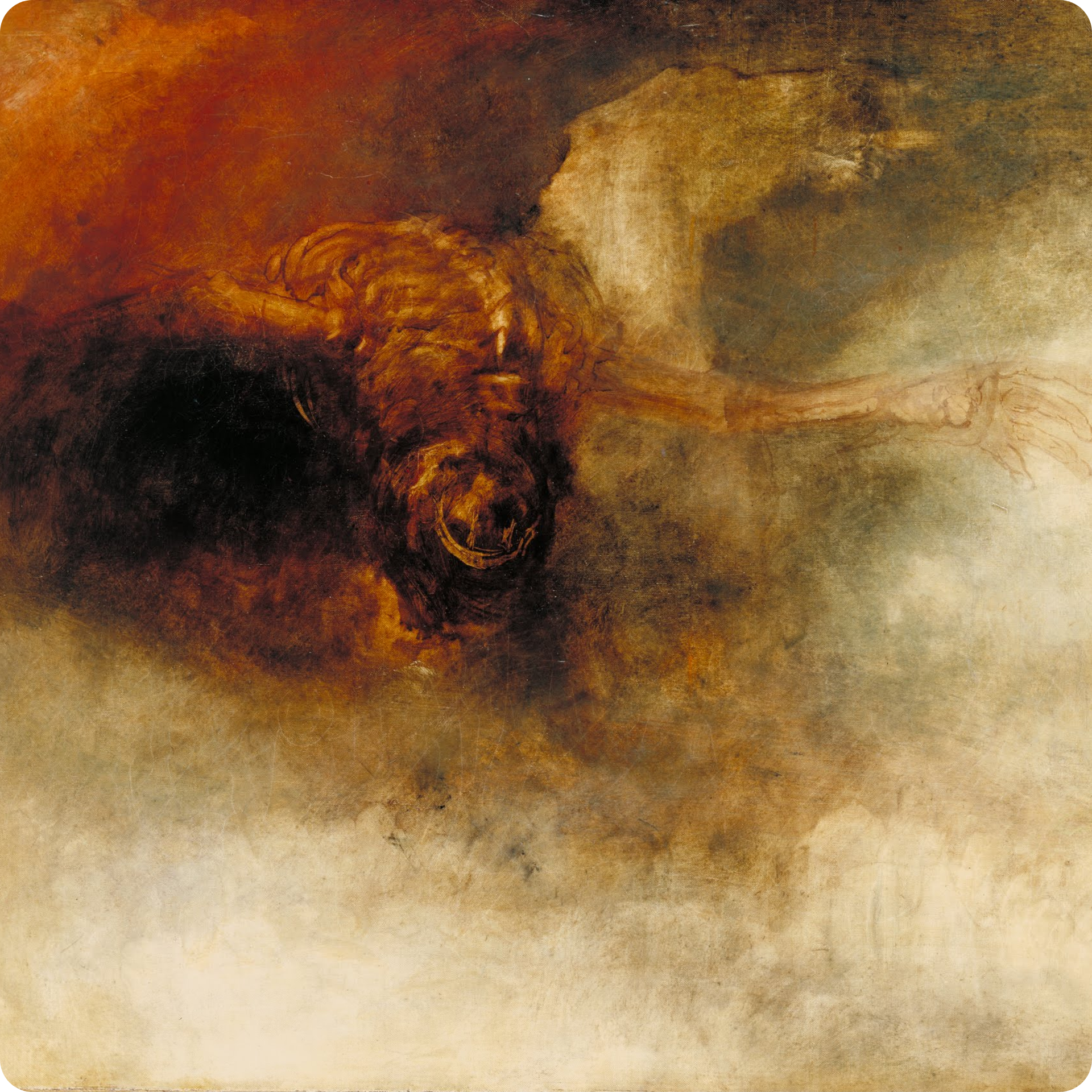
Revelation predicts that the end of the world will be attended by the four ghostly Horsemen of the Apocalypse. The most terrifying of these was the Pale Horse—who is said to represent the plague.
The Antonine Plague hit the Roman Empire in 165 AD, less than a century after the book of Revelation was written. It killed some 10% of the Roman population. Mortality was closer to a third in densely populated settings like the army or the major cities, where great masses of the desperate poor lived on top of each other in squalor.
With so many casualties, food production collapsed and the Empire’s tax base shrank even further than it already had from economic mismanagement. The imperial treasury was forced to debase its currency just to keep functioning. Meanwhile, the plague decimated the ranks of the Roman legions, who suddenly lacked the manpower to defend the frontiers of the Empire.
The famous Pax Romana—or “Roman Peace” that epitomized the height of that civilization—finally came to an end after the borders of the Empire began to shrink back from their furthest advance. As apocalyptic Christian prophecies began coming true, tens of thousands of horrified Romans flocked into churches for the first time. The Pale Horse had come to Rome.
The Crisis of the Third Century That Brought Rome to its Knees was Caused by a Pandemic
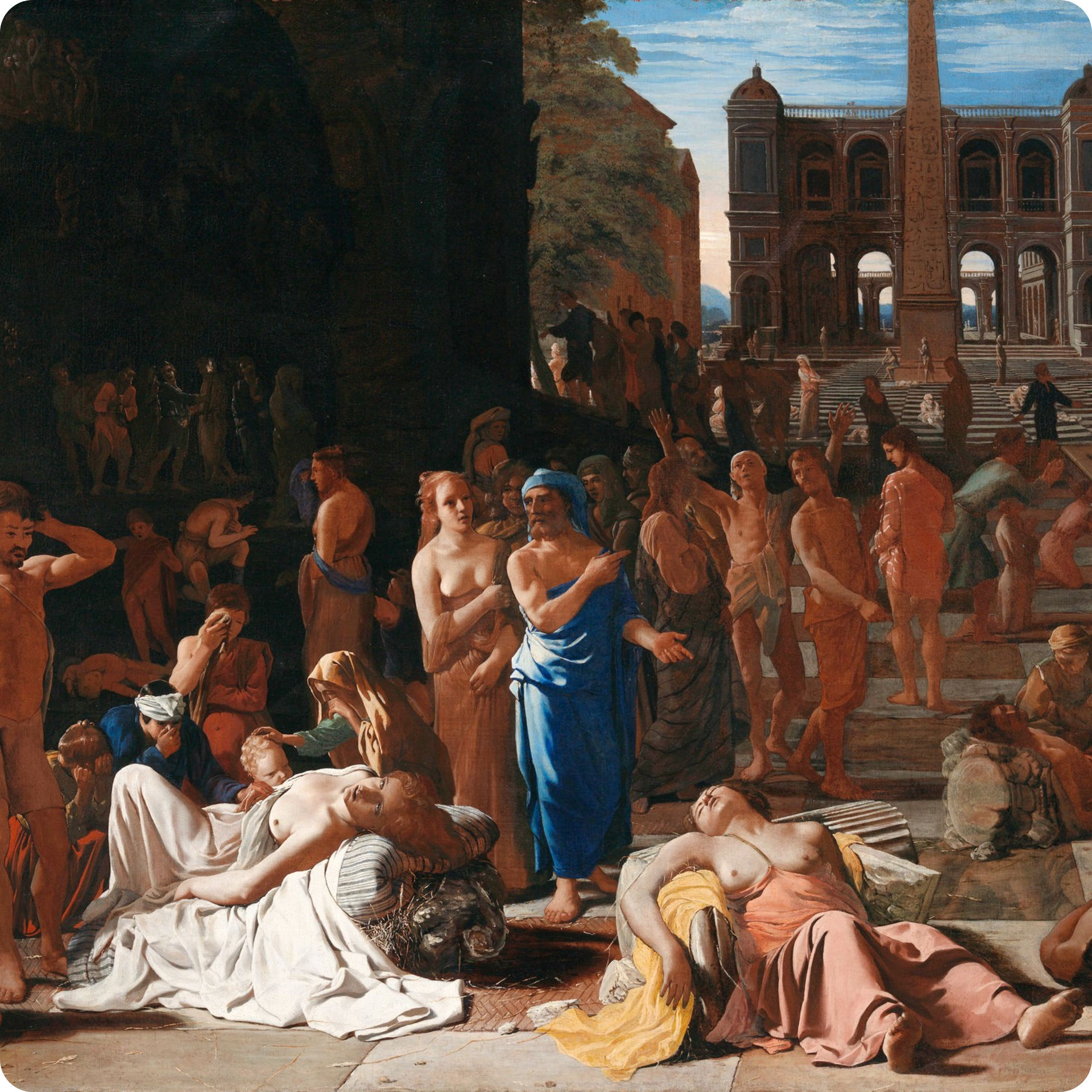
Pandemics played a massive role in the Fall of Rome. The decline began with the Antonine Plague in 165 AD. A century later, the Plague of Cyprian pushed Rome to the brink of total collapse between AD 249 and AD 262.
The plague was named after the Christian Bishop of Carthage at the time. Cyprian himself described its gruesome symptoms in his contemporary treatise De Mortalitate (“On the Plague”):
With the bowels in continuous discharge, the strength of the body is gone; the fire that begins deep within burns all the way up to the wounds in the throat; the intestines are shaken with continuous vomiting; the eyes are set on fire by the force of the blood; for some the feet or other extremities are cut off by the infection of diseased putrefaction; as weakness comes from the failures and losses of the body the ability to walk is enfeebled, the hearing is lost or the eyes are blinded.
An estimated 15-30% of the Roman population lost their lives in the Plague of Cyprian. On the Nile Delta, the city of Alexandria lost a staggering 62% of its inhabitants. The pandemic was attended by the familiar economic fallout of rising prices and labor costs, collapsing tax bases, and currency debasement.
Economic dysfunction soon accelerated into a hyperinflation that paralyzed the Roman economy. This catastrophic Crisis of the Third Century brought Rome to its knees. Generals in the Roman Army began installing themselves as Emperors whenever they could seize power, leading to frequent, violent succession contests that badly disrupted continuity of governance.
Foreign powers like Sassanian Persia took advantage of the mounting chaos. Their militaries began helping themselves to formerly Roman territories across its frontiers. Where the Antonine Plague marked the beginning of Rome’s decline, the Crisis of the Third Century made it abundantly clear to Romans that the end of the world was at hand
Apocalyptic Christian prophecies from the book of Revelation disturbingly matched the grim reality Romans were living though in the 2nd and 3rd centuries. The Pale Horse of Revelation symbolized the role pandemics play in civilizational collapse, and terrified citizens began converting in droves to that new faith. That’s why Christianity exploded in popularity as the lights of Roman society blinked out.
Conclusion
The book of Revelation would once again seem eerily prophetic in the 1300s, as Europe suffered through the horrors of the Black Death. By creating a drastic labor shortage, that pandemic was a primary cause of the collapse of the feudal economic system of the Middle Ages. It also discredited the Roman Catholic Church which—without a germ theory of disease—was utterly powerless to stop the dying. Though nothing like the Black Death in terms of mortality, the recent COVID pandemic was similar to the Black Death in that it undermined public perception of authority. The official response to COVID also created a host of economic problems such as rising rents and home prices, and skyrocketing inflation. The appearance of the Pale Horse from Revelation in our own modern era is part of a long historical pattern of pandemics heralding the end of major economic systems. A popular perception that we live in an era of “late-stage” capitalism matches the words laid down by John of Patmos when he wrote Revelation in the first century AD.
Since you made it this far, savvy reader, kindly consider hitting the ❤️ button above or below; it really helps!

Further Materials
Lucius brought with him the invisible victor of the war—pestilence. It had appeared first among the troops of Avidius in captured Seleucia; it spread so rapidly that he withdrew his army into Mesopotamia, while the Parthians rejoiced at the vengeance of their gods. The retreating legions carried the plague with them to Syria; Lucius took some of these soldiers to Rome to march in his triumph; they infected every city through which they passed and every region of the Empire to which they were later assigned. The ancient historians tell us more of its ravages than of its nature; their descriptions suggest exanthematous typhus or possibly bubonic plague. Galen thought it similar to the disease that had wasted the Athenians under Pericles: in both cases black pustules almost covered the body, the victim was racked with a hoarse cough, and his “breath stank.” Rapidly it swept through Asia Minor, Egypt, Greece, Italy, and Gaul; within a year (166-67) it had killed more men than had been lost in the war. In Rome 2000 died of it in one day, including many of the aristocracy; corpses were carried out of the city in heaps. Marcus, helpless before this intangible enemy, did all he could to mitigate the evil; but the medical science of his day could offer him no guidance, and the epidemic ran its course until it had established an immunity or had killed all its carriers. The effects were endless. Many localities were so despoiled of population that they reverted to jungle or desert, food production fell, transport was disorganized, floods destroyed great quantities of grain, and famine succeeded plague. The happy hilaritas that had marked the beginning of Marcus’ reign vanished; men yielded to a bewildered pessimism, flocked to soothsayers and oracles, clouded the altars with incense and sacrifice, and sought consolation where alone it was offered them—in the new religions of personal immortality and heavenly peace.
Will & Ariel Durant, Caesar & Christ, 1944, Page 428