To the ancient Egyptians, the words of children held mystical significance—that’s why their sun god Horus the Child (Har-pa-khered) always pointed to his own mouth. After the Greeks adopted Harpocrates as their God of Silence, they misunderstood the gesture to mean “hush.” Aphrodite created roses as a gift to this god, persuading him to keep secret her many amorous indiscretions. The Romans hung roses in banquet halls to remind revelers that utterances made “under the rose” (sub rosa) were strictly confidential. During the Middle Ages, roses were carved into the ceilings of council chambers, government meeting rooms, and Christian confessionals for the same reason. And now the SUBROSA CLUB is an exclusive space for System Failure insiders…
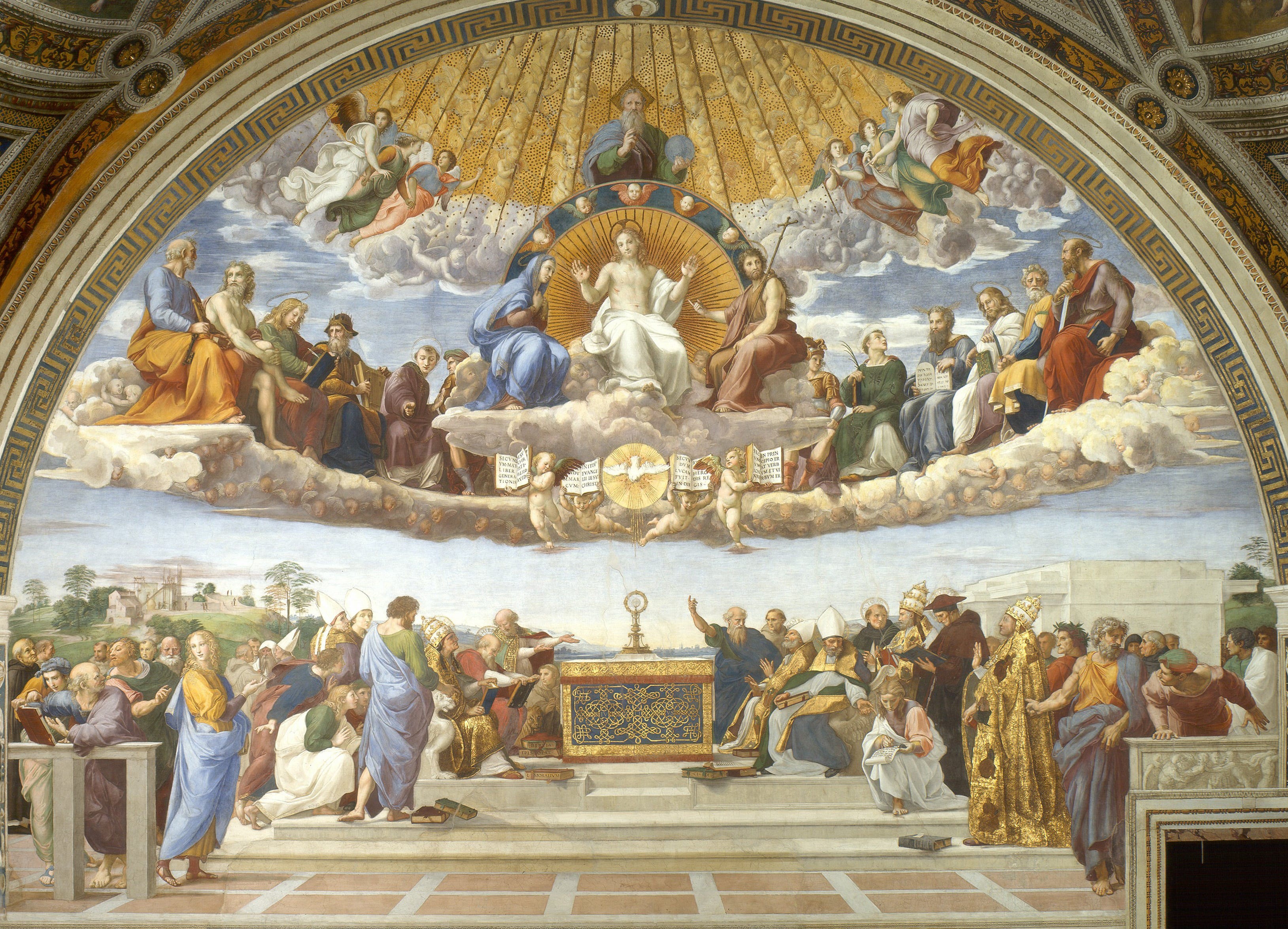
The Great Schism of 1054
On a recent trip to Serbia, a country where the predominant religion is Orthodox Christianity, I was amused to be reminded that—from the Orthodox perspective—Protestantism is still considered Catholicism.
Coming from New England, which was colonized by English Protestants, this perspective was instructive. While we place great importance on the Protestant Reformation of the 1500s, Orthodox Christians are still thinking in terms of the Great Schism of 1054.
Publicly, the Great Schism of 1054 stems from profound theological differences between the Greek and Latin versions of the Christian faith. But like the current conflict in Iran, a struggle for power among elites was the real culprit. Prior to 1054, the Christian Church was governed by 5 Patriarchs seated in Jerusalem, Antioch, Alexandria, Constantinople and Rome. The Roman Patriarch, the Pope, decided to consolidate power over the other Patriarchates.
Later that century in 1095, the Crusades were advertised as a conflict with Islam when Pope Urban II announced them. But in reality, Catholic knights laid siege to the Christian cities of Constantinople and Antioch, in addition to sacking Jerusalem. These battles illustrate the fact that the Crusades are better understood as a conflict between Christian factions.
The actual history of Christianity during the Middle Ages reveals how the Greek Church was attacked by its Latin cousins. It’s no wonder that subsequent divisions among Latin Christians are of little consequence to those who still cherish the Greek version of the Church.