


Key Takeaways:
In ancient Egypt, resurrection was a major religious symbol that stood for life-giving astronomical and agricultural cycles.
Syncretism is the notion that religious symbols have been recycled throughout history.
The Christian traditions of Christmas and Easter are syncretic symbols of death and rebirth from much older traditions.
Egyptian Resurrection
We modern people are blessed with a working model of the solar system, the cyclical nature of which is self-evident. But ancient farmers had no such model to comfort them during long nights and dark winters. They took it on faith that the life-giving sun would return each morning and spring to save them from otherwise certain death.
Early agrarian societies so obviously owed their livelihoods to the sun’s daily and annual astronomical cycles—and the annual growing seasons caused by these—that they worshipped the sun and associated its return with salvation. Ancient Egyptians considered the sun’s rebirth to be a resurrection.
As the ancient Egyptian religion evolved over three millennia, the figure of Horus evolved along with it. Older conceptions of Horus were called “Horus, the Elder,” while newer versions went by “Horus, the Younger,” the son of the resurrected god Osiris.
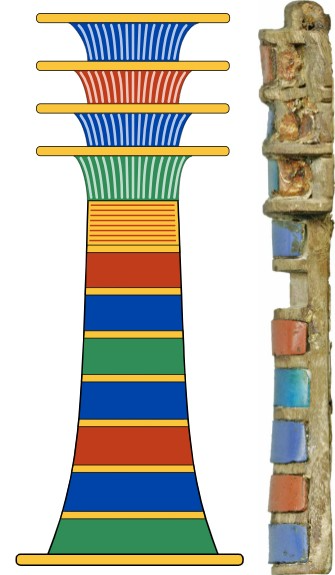
Osiris, the god of the afterlife, was murdered and dismembered by his brother Set. His wife, Isis, reassembled his body and, through magic, conceived Horus, the posthumous son of Osiris. Osiris was the opposite of the noonday sun; he personified the invisible midnight sun. His position in the underworld made Osiris instrumental in the sun’s nightly journey from death to rebirth.
The pharaoh was considered the living Horus and, upon death, became associated with Osiris. The two gods had a cyclical relationship: the son (Horus) replaced the father (Osiris), ensuring the continuity of divine kingship. Horus was seen as a rebirth or continuation of Osiris.
When Christianity arrived in the Mediterranean theater, it adopted and adapted existing religious ideas to appeal to new converts. In the early days of Christianity, the features of Egyptian sun worship merged with Babylonian and other influences to shape the new religion. Christians today still celebrate the resurrection of the Son of God as their salvation. Most remain unaware that this allegory predates Christianity by thousands of years, and has its roots in astronomy and agriculture.
Syncretism
Syncretism is the idea that the gods change cultures like we change clothes. The ebb and flow of religious traditions over millennia has a democratic dynamic to it. Conquering armies found that violent repression guaranteed fierce resistance, because spiritual beliefs are too deeply ingrained to be imposed from above. Adopting new religious beliefs is a quasi-democratic compromise between power and tradition.
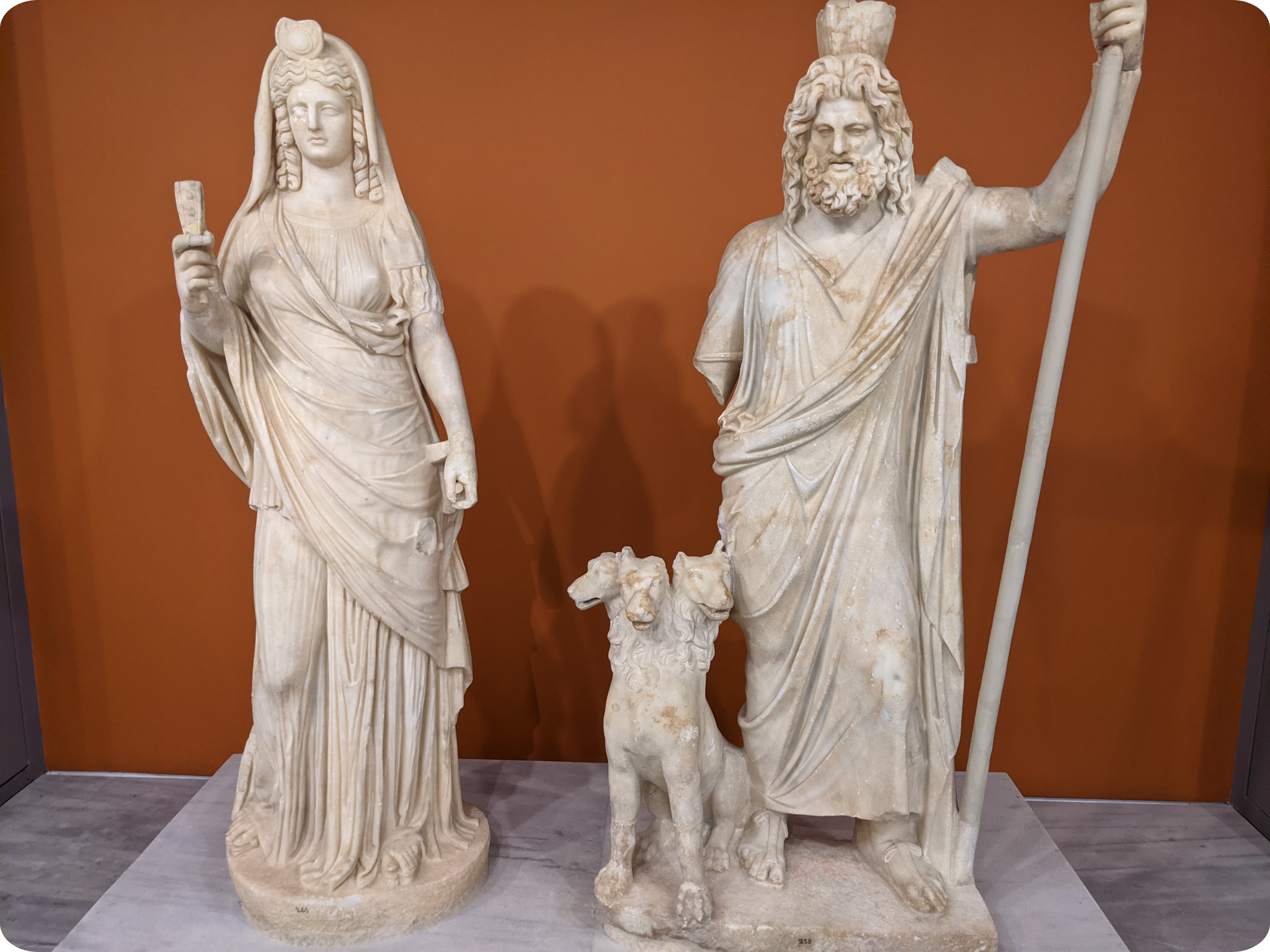
The Greek gods Zeus and Aphrodite, for example, morphed into the Roman Jupiter and Venus. It was as if these gods abandoned Greek society during the Roman conquest of Greece, packed up, and moved to Rome. The Roman state religion was notoriously flexible and pragmatic, often incorporating gods from conquered peoples. That was the only way to unify the patchwork of diverse cultures that made up the Roman Empire.
When applied to Christianity, syncretism is called the “Pagan Continuity Hypothesis.” During the Medieval period, the Roman Catholic Church suppressed the idea that its story was assembled from pre-existing religious components. Church fathers believed they were bolstering their own authority by portraying their faith as a direct revelation from God.
But the fact that Christianity is a syncretic milieu of existing traditions lends to it the gravity of millennia. It’s far more ancient than the relatively modern Roman Empire. Christianity is the latest mask worn by ideas proven over thousands of years of existing tradition.
When people don’t find ideas relevant to their lives, those ideas are forgotten. Conversely, meaningful ideas are remembered and passed along. Over time, Darwinian competition honed the suite of ideas contained within Christianity into a key that fits many locks. Though its resurrection allegory is borrowed from older traditions of sun worship, death and rebirth are eternal themes that cut to the heart of the human experience.
Christian Resurrection
The sun gradually appears less and less in the skies of the Northern Hemisphere each fall. In December, that rate of disappearance slows to a stop. The sun then reverses course and begins appearing more and more each day throughout the spring. The turning point is the Winter Solstice, the shortest day of each year.
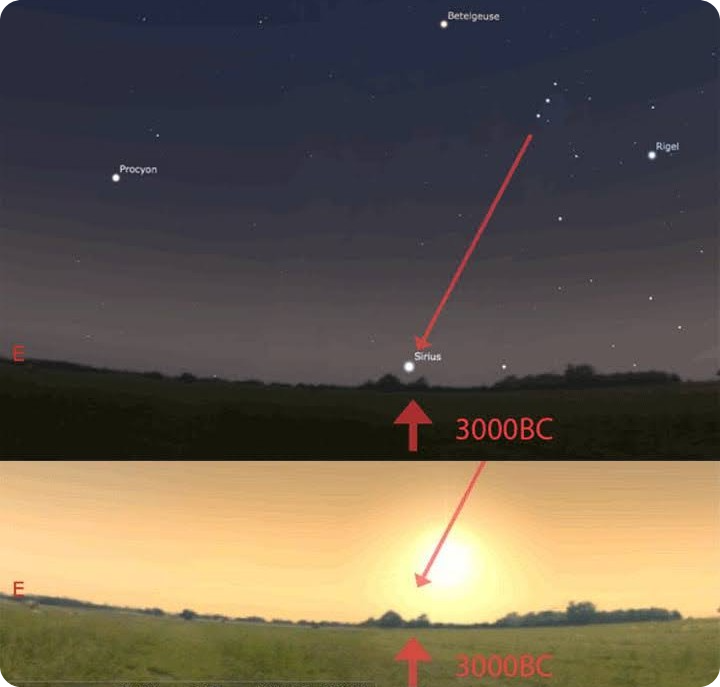
That’s why sun gods like the Egyptian Horus, the Persian Mithras, and the Roman Sol Invictus were all said to have been born on the Winter Solstice. The following morning, the sun appears to rise at the same point on the horizon occupied by Sirius, the brightest star in the sky.
The births of these sun gods were said to have been attended by three significant figures, which correspond to the three stars of Orion’s belt. In Christianity, these figures became the three wise men following a bright star to arrive at the birth of Jesus during Christmas.
The ancient Egyptian New Year celebration took place in the summer. It coincided with the annual flooding of the Nile Delta and the heliacal rising of Sirius. Rebirth was a major theme of the occasion, because the arrival of the flood heralded the regrowth of the agricultural crops that fed Egypt. In addition to the return of the sun, the story of the death and resurrection of Osiris also allegorized this annual deliverance of the Nile floodwaters.
The Christian church incorporated this resurrection allegory into Easter. Christians today celebrate the death and resurrection of their god in the springtime. Most are unaware of Easter’s astronomical origins. But Jesus’ birth on the Winter Solstice, his death in the spring, and his subsequent resurrection are all elements borrowed from previous traditions of sun worship.
Conclusion
The related themes of resurrection and salvation dominate Christianity. These themes are symbols from much older traditions, notably the ancient Egyptian religion. They represent ancient observations of the astronomical cycles, and the long-term sustainability that comes from agricultural success. The fact that these themes are recycled from older traditions makes Christianity a meta-allegory for sustainability. These themes and symbols are themselves resurrected as they’re passed down from culture to culture over the long sweep of history.
Since you made it this far, patient reader, kindly consider hitting the ❤️ button above or below; it really helps!
Further Materials
But it may be that the long domination of the Church was due to the agricultural condition of Europe: an agricultural population is inclined to supernatural belief by its helpless dependence on the caprice of the elements, and by that inability to control nature which always leads to fear and thence to worship; when industry and commerce developed, a new type of mind and man arose, more realistic and terrestrial, and the power of the Church began to crumble as soon as it came into conflict with this new economic fact.
Will and Ariel Durant, The Story of Philosophy, 1926, page 44

The obsession with the sun and stars is very ancient, being culturally passed along for probably at least 100,000 years. In the Magdalenian cave paintings at Lascaux (c. 45kyr-35kyr), the Bull (taurus) is depicted with the Pleiades behind their horns and over their shoulder, corresponding with the relative positions in the sky of Taurus and the Pleiades. The shape of Taurus the Bull would later become the letter A, the first in the alphabet (somewhere along the line it got turned 180°). So the Egyptians probably adapted their myths to an even older script.
I think the really fascinating reason is Why? these astronomical correspondences were charted and important. While some are agricultural and have practical purposes, not all of them do. The ancients were just obsessed with the solstice and equinoxes, but even with stars that cannot be seen with the naked eye. There are hidden understandings here.
The Egyptians' association of Orion with Osiris and Isis with Sirius and their noticing how the heliacal rising of Sirius coincided with the rebirth of the land via the annual Nile flood is a great 'chicken or the egg' question of history. Was the natural phenomenon used to explain the myth or was the myth invented to explain the natural phenomenon?