


Key Takeaways
The Transatlantic Slave Trade Was Fundamentally Different Than Prior Slavery
Roman Slavery Illustrates the Key Difference Between Historical & Modern Slavery
Slavery Caused The Fall of Rome & Created the Feudalism That Followed
The Transatlantic Slave Trade Was Fundamentally Different Than Prior Slavery
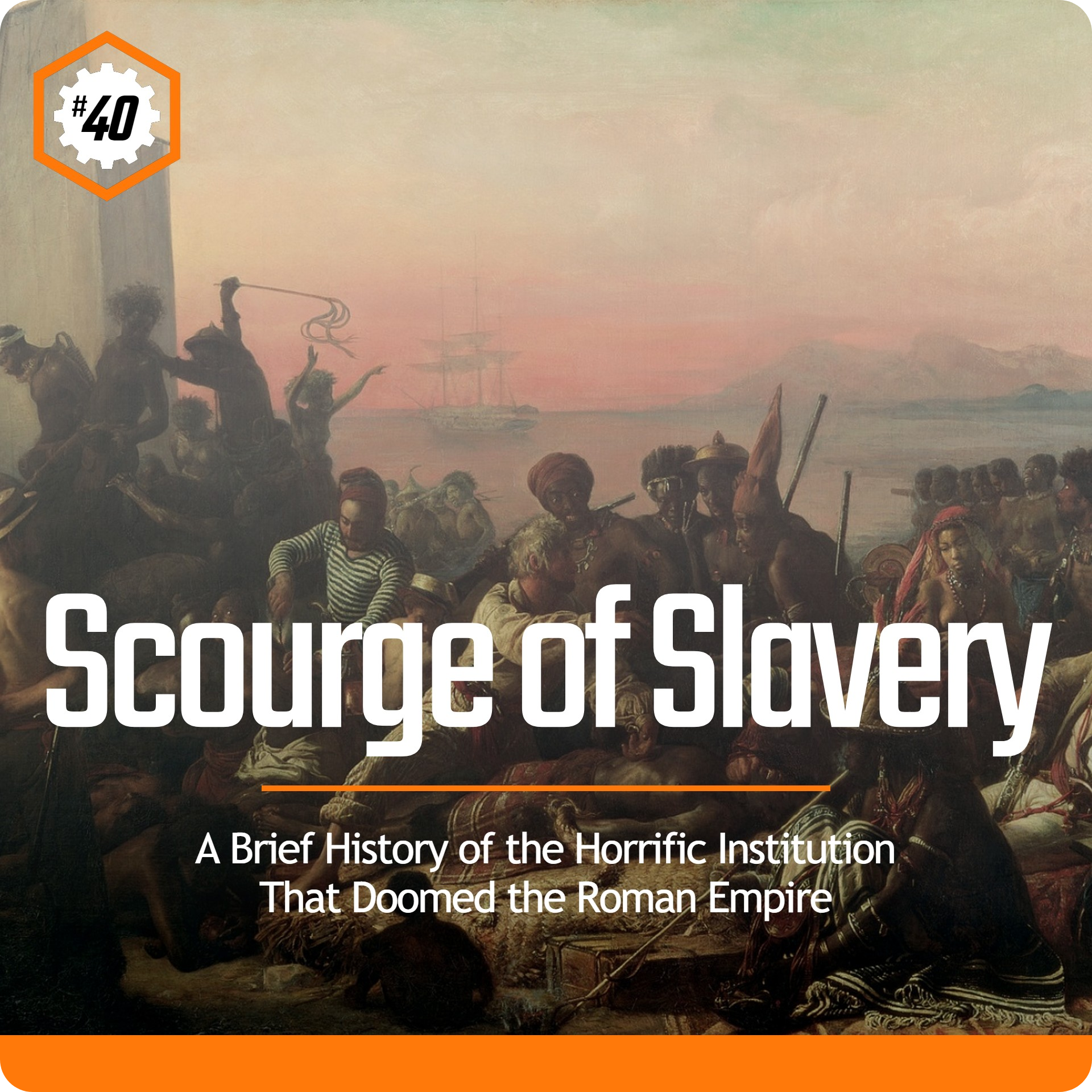
The gorgeous island of Madeira lies some 350 miles off the coast of Africa. There, date palms sway lazily in the balmy tropical trade winds. But this idyllic paradise conceals a dark history.
Though Genoese sailors were the first Europeans to map the island, it was rediscovered and colonized in 1418 by the Portuguese. Madeira remains a part of Portugal to this day; its capital city of Funchal is that country’s sixth largest.
The Portuguese repatriated sugarcane plants from Sicily to Madeira’s fertile volcanic soil. But sugarcane cultivation is a brutally labor-intensive process. The tough and sinewy plant must be boiled down in fierce open furnaces to yield molasses and sugar.
In Madeira’s tropical climate, few workers were willing or even able to tolerate that kind of heat. So the Portuguese imported black Africans from the mainland and forced them to perform the labor. Mass production of the profitable sugar crop that the Portuguese referred to as “white gold” was fed by human sacrifice.
To assuage a guilty national conscience, Prince Henry the Navigator turned to Portugal’s most famous writer, Gomes Eanes de Zurara. Zurara accepted the commission and wrote Crónica dos feitos da Guiné, which translates into “Chronicle of the Deeds of Guinea.” This document rivals the infamous witch-hunting manual Malleus Maleficarum as the most blood-soaked in human history.
Zurara justified the use of black Africans for forced labor by suggesting that their capture would expose them to Christianity, which would then lead to their salvation. His dubious logic suggested that the enslavement of Africans was actually to their benefit.
As the Age of Exploration matured, this horrific production model of race-based slavery was copied and pasted onto the sugar plantations of the Caribbean islands and the cotton plantations of the Southern United States. In these places, the descendants of black Africans formed a distinct economic underclass of slaves.
That is how modern slavery came to be defined by the pernicious racial component we recognize today. Prior to the Transatlantic slave trade, slavery could happen to people of every race and economic background. It was only with the proto-capitalist colonialism of the Age of Sail that an entire race was enslaved.
Roman Slavery Illustrates The Key Difference Between Historical & Modern Slavery
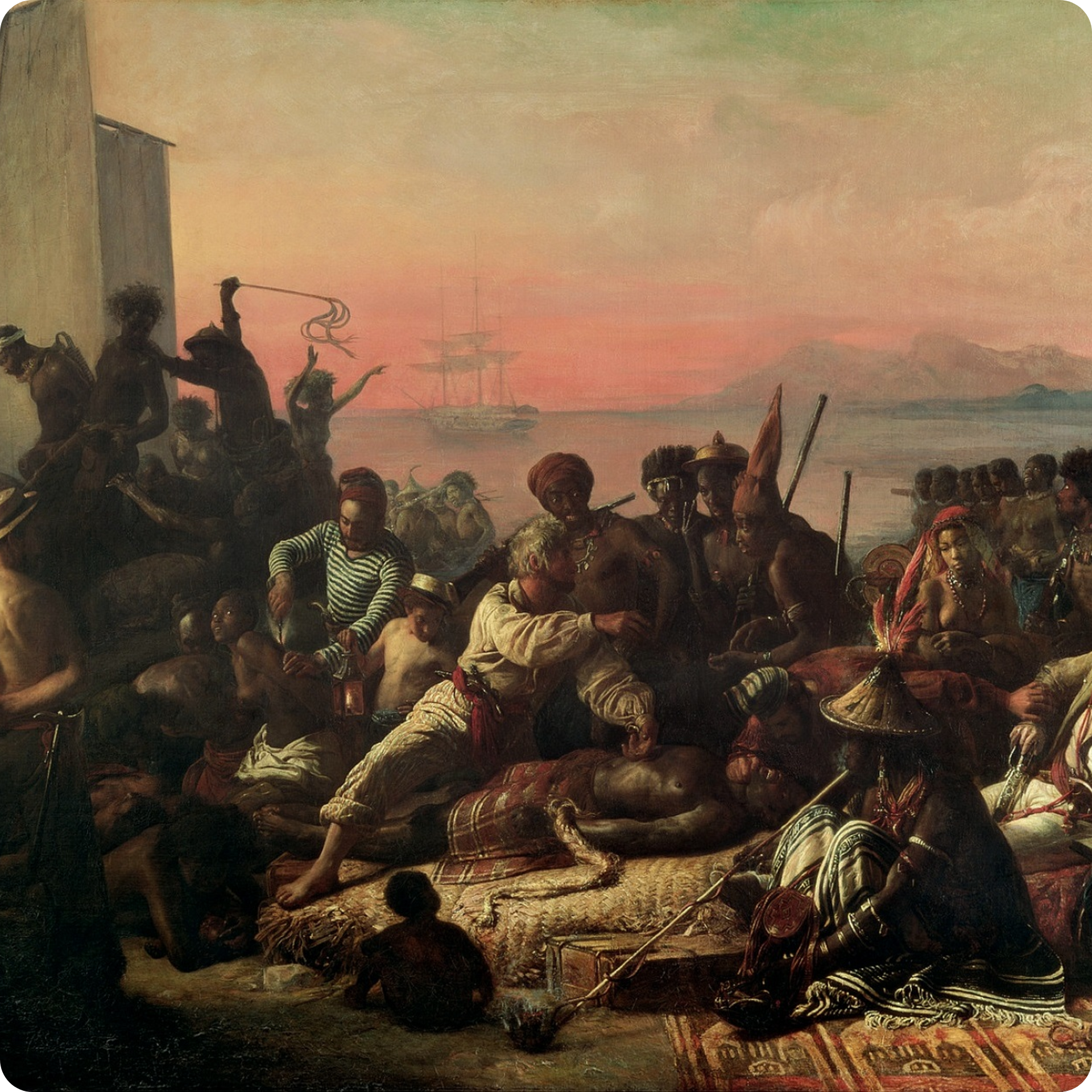
It was only with the rise of the Transatlantic slave trade that a particular race of people were subjugated exclusively as slaves. Up until that time slavery was an embarrassing misfortune that could befall a person of any race, rather like a bankruptcy.
Julius Caesar, for example, was almost sold into slavery in 75 BC. A famous anecdote has him being captured by pirates on his way to the island city of Rhodes off the Turkish coast. His captors threatened to sell him into slavery unless they received a ransom of 20 talents of gold. Insulted by this relatively inexpensive sum, Julius Caesar demanded that his ransom be raised to 50 talents.
This story illustrates how even the scion of a prominent aristocratic family could find themselves temporarily embarrassed by slavery. In addition to being captured by pirates, insolvent debtors could be enslaved by their creditors until their debts were repaid. People whose homes were conquered during Rome’s military adventures also found themselves enslaved.
Though the Roman legal system granted slave owners the power of life and death over the people who were their property, some slaves were fully integrated into their masters’ households. They were occasionally true romantic partners instead of mere rape victims. Slaves could also be beloved tutors and mentors to their owner’s children.
Some of Rome’s most significant historical figures were slaves, such as the gladiator Spartucus played a lead role the downfall of the Republic. The Roman poet and playwright Terence—who coined the phrase “fortune favors the bold”—also began his career as a slave before ultimately being freed.
These aspects of Roman slavery illustrate how that grisly institution was an economic class with some mobility in the centuries before the Transatlantic slave trade. People of all races and economic backgrounds transitioned in and out of slavery. Only with the rise of sugar and cotton plantations during the Age of Sail did one particular race comprise a permanent underclass of slaves.
Slavery Caused The Fall of Rome & Created the Feudalism That Followed
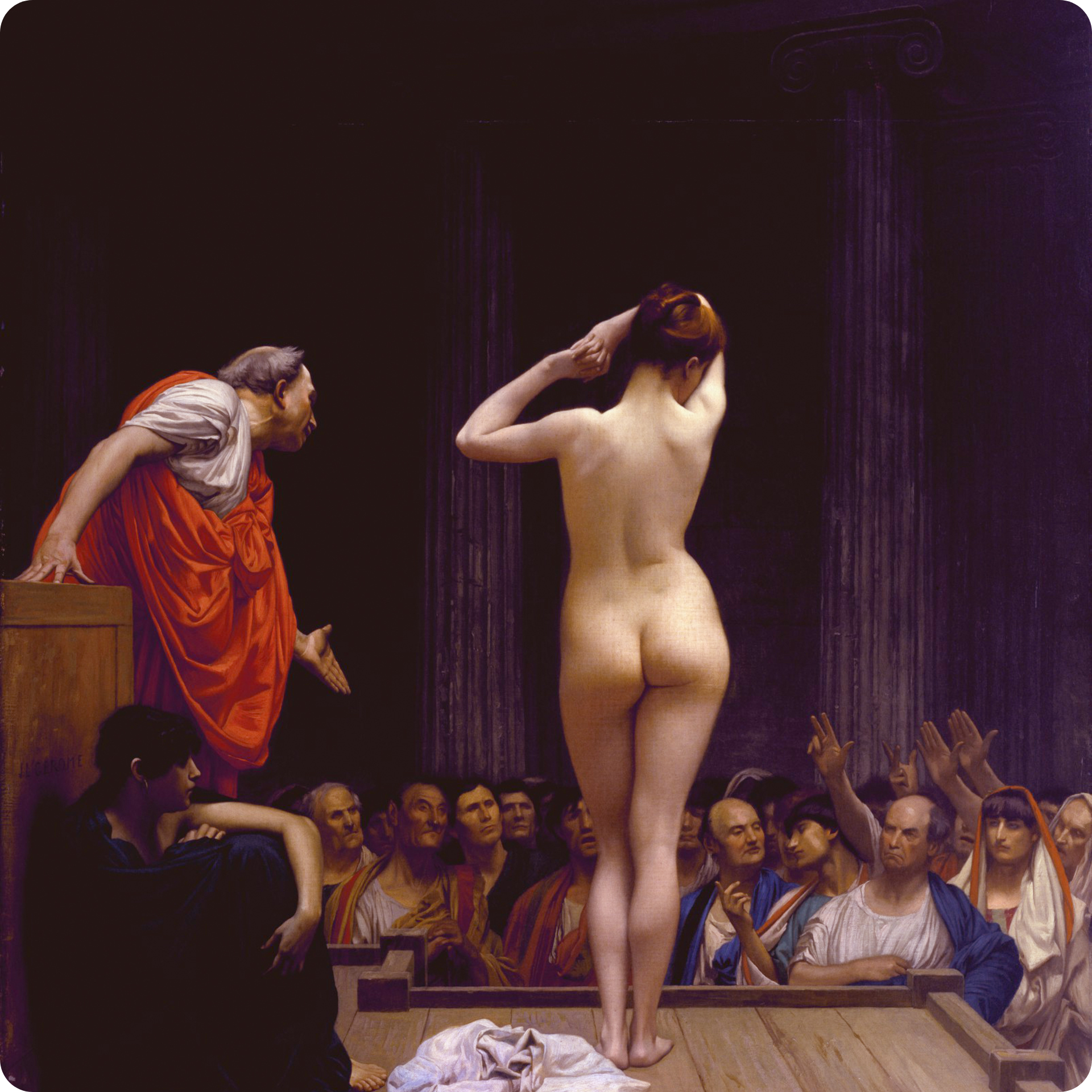
Rome’s ruling class utterly failed to distribute equitably the slaves and land won during their military conquests. Instead, they hoarded these spoils of war for themselves, combining them into the vast slave farms called latifundia that drove Rome’s free farmers out of business.
Unable to pay their mortgages, those small farmers saw their property foreclosed upon. A rigid Roman legal code systematically awarded their collateralized farms to ruling class creditors, who turned around and added that land to their existing latifundia—further exacerbating the wealth inequality that dangerously destabilized Roman society.
Great masses of displaced farmers descended on the capitol, where they were subjected to further abuses by the landlords of squalid tenement housing. Meanwhile, the oligarchy-controlled Senate blocked any redress of political grievances. This unstable political situation finally erupted in January of 43 BC, when Julius Caesar marched on Rome as a populare, or a political representative of the working class.
But Julius Caesar was assassinated by oligarchic conspirators before he could implement any of the land reforms he had planned to relieve the desperate masses. From that point forward, only an Emperor wielding autocratic political power could hope to contain Rome’s white-hot class war.
Julius Caesar was not the only economic reformist to make a big splash in Rome. Within a few decades of his assassination, Jesus proclaimed the good news (evangelion in Greek, gospel in Hebrew) that the debt forgiveness enshrined in Jewish scripture was finally at hand.
By softening the wealth inequality that tore it apart, this demand for debt forgiveness might have saved the Roman Empire from collapse. Small farmers unable to pay their mortgages could have kept their land, instead of seeing it transferred to the already-wealthy through the foreclosure process.
But in the end Jesus Christ was murdered for his attempt to mitigate Rome’s wealth inequality, just like Julius Caesar. But his death became the focal point of a powerful new religious movement that challenged Roman authority.
As the Roman Empire sank into decline, the Roman oligarchy gave up their suppression of the new Christian faith. In 313 AD, the pagan Emperor Constantine converted to Christianity. In 380 AD, Emperor Theodosius I declared Christianity the new state religion of his collapsing Empire, and the Roman Catholic Church was born.
As Roman civilization vanished from the Italian Peninsula, its former oligarchy retreated into fortified homes at the centers of their vast latifundia estates. The individuals who worked their fields became attached to the land as colonoi, or serfs.
That’s how the stage of history was set for the Middle Ages. The nobility, the peasantry, and the church arose from the ashes of the Roman Empire to form the three famous estates of the Medieval feudal economy.
Conclusion
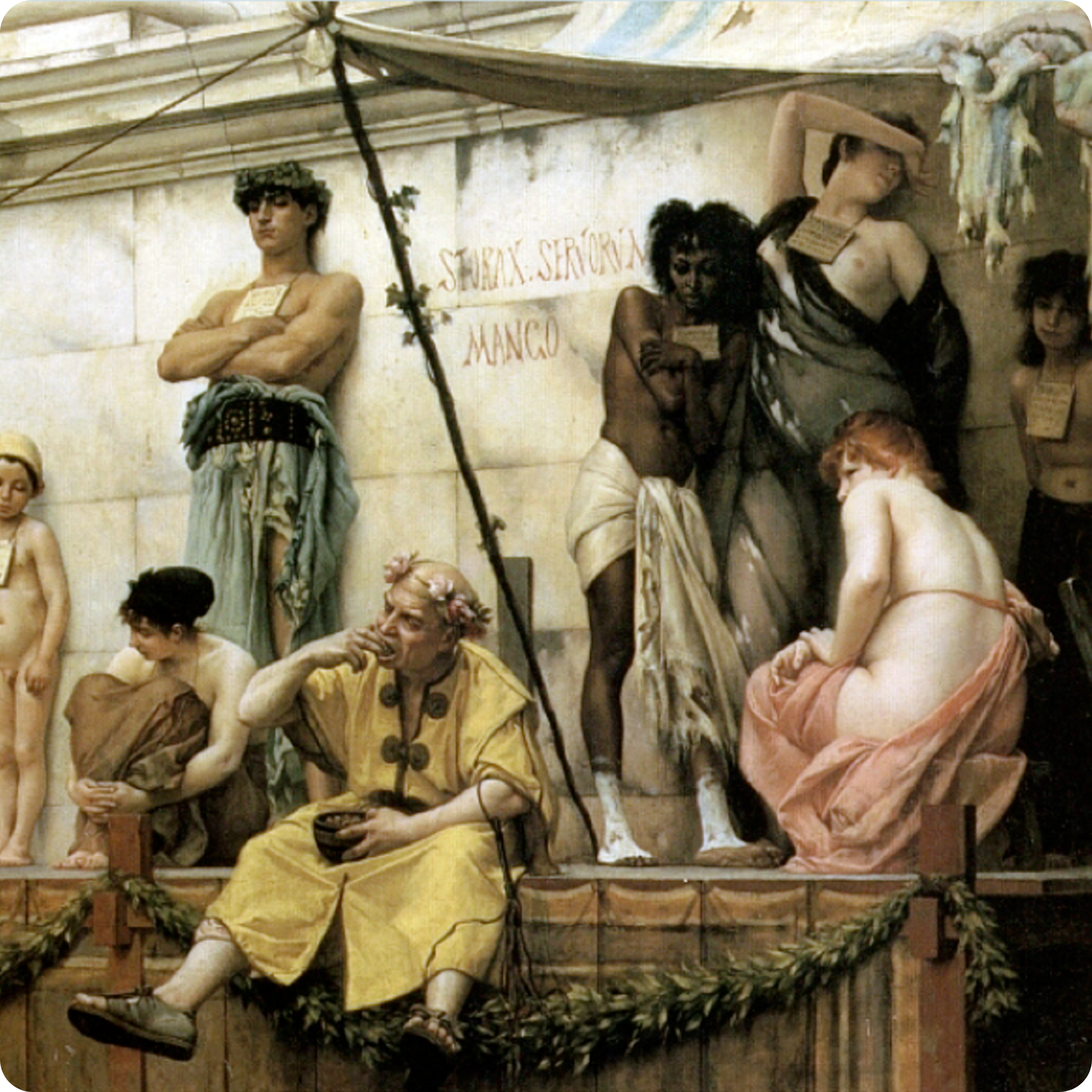
The poisonous institution of slavery drove the United States into a catastrophic civil war, and the unique racial component of modern slavery remains a complex legacy still unresolved within American society today. In the history of Rome that parallels US history in so many ways, slavery drove Roman wealth inequality all the way to that society’s breaking point and beyond. It eventually culminated in a debt crisis that destroyed the Roman Empire and molded the rise of feudalism in Europe.
Since you made it this far, resourceful reader, kindly consider hitting the ❤️ button above or below; it really helps!

Further Materials
The causes of revolution were many, the results were endless, the personalities thrown up by the crisis, from the Gracchi to Augustus, were among the most powerful in history. Never before, and never again till our own time, were such stakes fought for, never was the world drama more intense. The first cause was the influx of slave-grown corn from Sicily, Sardinia, Spain, and Africa, which ruined many Italian farmers by reducing the price of domestic grains below the cost of production and marketing. Second, was the influx of slaves, displacing peasants in the countryside and free workers in the towns. Third, was the growth of large farms. A law of 220 forbade senators to take contracts or invest in commerce; flush with the spoils of war, they bought up extensive tracts of agricultural land. Conquered soil was sometimes sold in small plots to colonists, and eased urban strife; more of it was given to capitalists in part payment of their war loans to the state; most of it was bought or leased by senators or businessmen on terms fixed by the Senate. To compete with these latifundia the little man had to borrow money at rates that insured his inability to pay; slowly he sank into poverty or bankruptcy, tenancy or the slums. Finally, the peasant himself, after he had seen and looted the world as a soldier, had no taste or patience for the lonely labor and unadventurous chores of the farm; he preferred to join the turbulent proletariat of the city, watch without cost the exciting games of the amphitheater, receive cheap corn from the government, sell his vote to the highest bidder or promiser, and lose himself in the impoverished and indiscriminate mass.
Will & Ariel Durant, Caesar & Christ, 1944, page 111