


Key Takeaways:
1. The Modern Drug War: Rather than being about public safety, the Controlled Substances Act of 1970 was actually a legal pretext to crack down on opponents of the Vietnam War.
2. The Ancient Drug War: The Roman Senate used public safety as a pretext to crack down on the Cult of Bacchus.
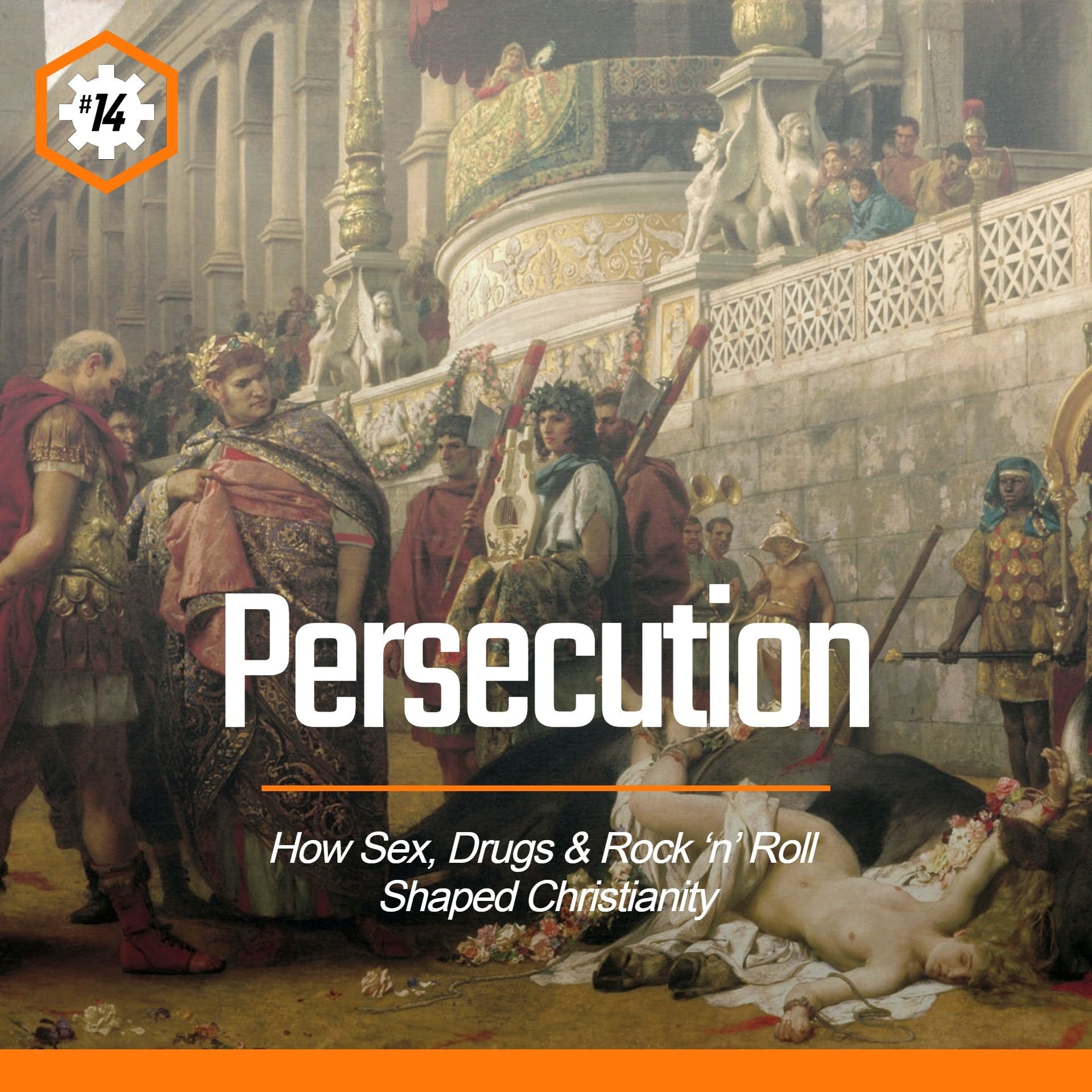
3. Countercultural Christianity: The Cult of Bacchus was a predecessor to Christianity, which also faced a violent crackdown at the hands of Roman Emperors like Nero.
The Modern Drug War
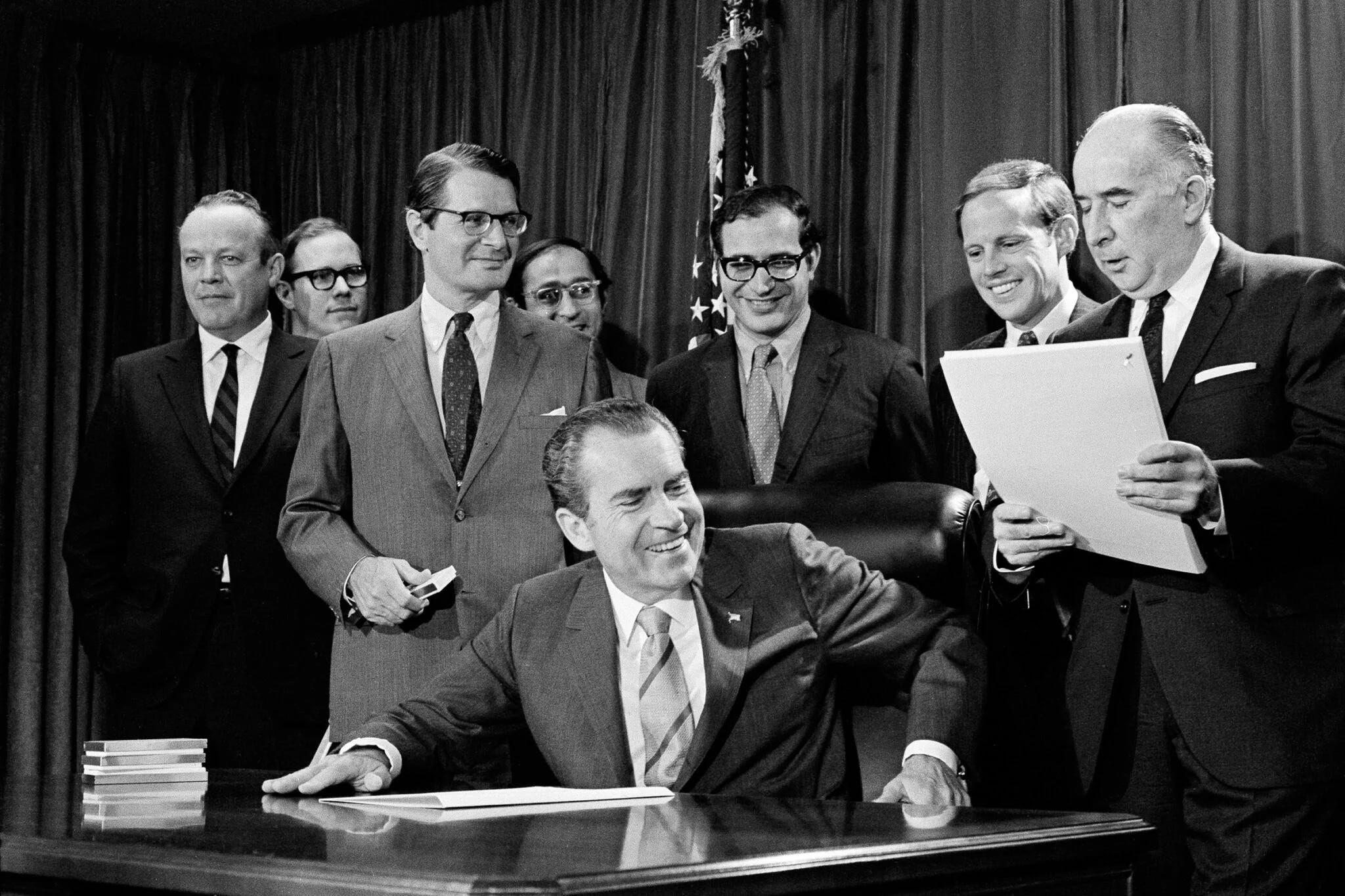
The Nixon administration passed the Controlled Substances Act in 1970, which introduced heavy penalties for the possession of drugs like magic mushrooms, heroin and marijuana. A “Schedule 1” category was created for these substances, indicating a high potential for abuse without any accepted medical use.
Nixon’s chief domestic advisor, John Ehrlichman, admitted that the Controlled Substances Act had nothing to do with public health. In a 1994 interview with journalist Dan Baum, he stated:
The Nixon campaign in 1968, and the Nixon White House after that, had two enemies: the antiwar left and black people. You understand what I’m saying? We knew we couldn’t make it illegal to be either against the war or black, but by getting the public to associate the hippies with marijuana and blacks with heroin, and then criminalizing both heavily, we could disrupt those communities. We could arrest their leaders, raid their homes, break up their meetings, and vilify them night after night on the evening news. Did we know we were lying about the drugs? Of course we did.
The Controlled Substances Act was a legal pretext to crack down on prominent opposition to the Vietnam War. It illustrates how the line between illegal contraband and sanctioned medicine exists not to serve public health but to serve political purposes.
The Ancient Drug War
The Second Punic War ended in 201 BC with a dramatic Roman victory over Hannibal and his Carthaginian army. But instead of sharing the spoils of war broadly, the Roman oligarchy reserved for themselves the newly-captured slaves and newly-conquered territory. These they combined into vast slave farms called latifundia.
All that cheap slave labor drove down agricultural prices below what non-slave farms could sustain. Because they couldn’t compete with slavery, Rome’s free farmers were financially ruined. When they couldn’t pay their debts, mass foreclosures delivered their family estates into the hands of the already wealthy, who used it to further expand the latifundia.
These mass foreclosures outraged a working class that had fought and bled to defend Rome from Hannibal. Seeing their family farms foreclosed upon was a bitter reward for their service to the Roman Republic. Desperate and discontented farmers poured into Rome from the countryside. By 186 BC, the Roman Senate feared they had a revolution on their hands.
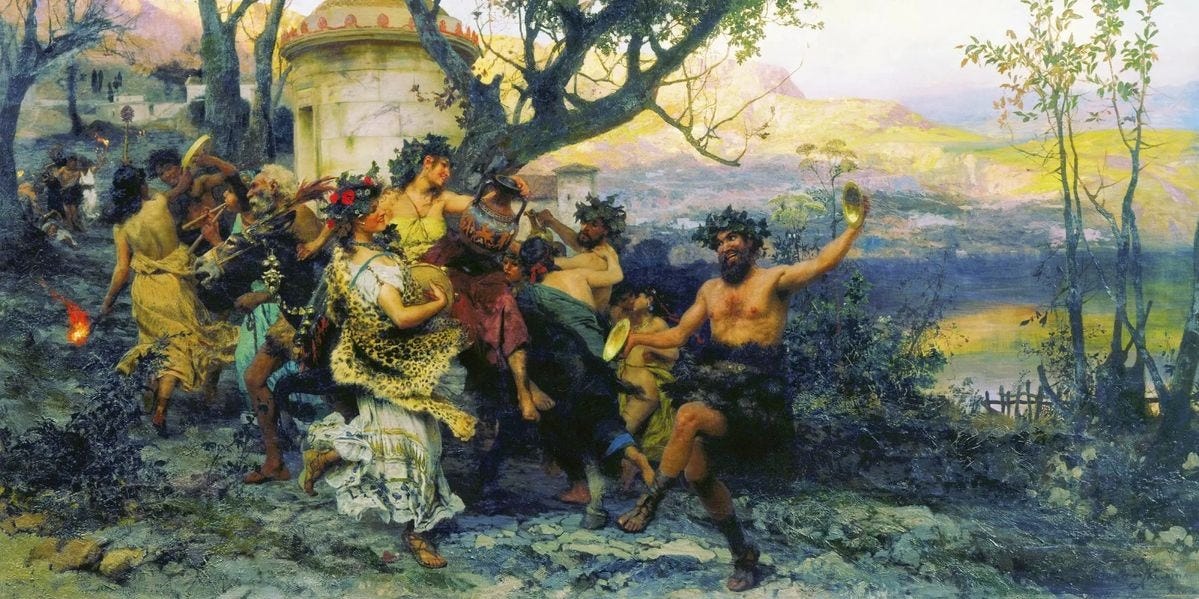
That was the historical context in which the cult of the wine god Bacchus exploded in popularity. The all-night Bacchanalian raves were presided over by women. Cultists played raucous music and mixed wine with powerful psychoactive ingredients in emulation of the Greek worship of their wine god, Dionysus.
This Roman version of sex, drugs, and rock ‘n’ roll proved every bit as alluring as the American version would two thousand years later. And just as during the Vietnam War era, that trinity became the vehicle for a backlash against the political establishment.
That’s why the Senate cracked down on the Bacchanalian festivities. Like Nixon, they feigned concern for the youth and used that as a pretext to eliminate a political threat. But this Roman version of the 1970 Controlled Substances Act was a bloodbath. According to the Roman historian Livy, thousands of cultists were put to death. The Senate didn’t abolish the Bacchanalia. Instead, it converted the edgy Cult of Bacchus into a milquetoast, state-sanctioned celebration that was firmly under the control of political authorities.
Countercultural Christianity
The Senate’s crackdown on the Cult of Bacchus was, for them, a massive success. It forestalled any revolt, allowing the Senate to cling to power for another century of class struggle—before Rome’s grotesque wealth inequality finally erupted into a full-blown civil war.
For 500 years, the Roman oligarchy used its control of the Senate to fleece the working class at every turn. But in 49 BC, Julius Caesar crossed the Rubicon stream with his army and marched on Rome as a popularis advocating for the economic interests of the working class. By then, the situation was so incendiary that only an autocrat could hold the warring factions within Roman society together. Thereafter Rome would be ruled by emperors, and the Senate was reduced to a largely ceremonial role.
This titanic class struggle was the historical backdrop against which Christianity emerged. Jesus’s hostility toward the entrenched economic hierarchy is richly illustrated by his fierce advocacy for the poor and his violent treatment of moneylenders.
Early Christians were involved in the class war that saw the end of the Roman Republic and the dawning of the Roman Empire. They revived and incorporated many rituals and symbols from the old Bacchic Cult that the Senate had repressed a century before. These included eating or drinking the flesh or blood of the gods, ecstatic or rapturous states of mind, speaking in tongues, and, most crucially, a rebellious opposition to the prevailing economic hierarchy.
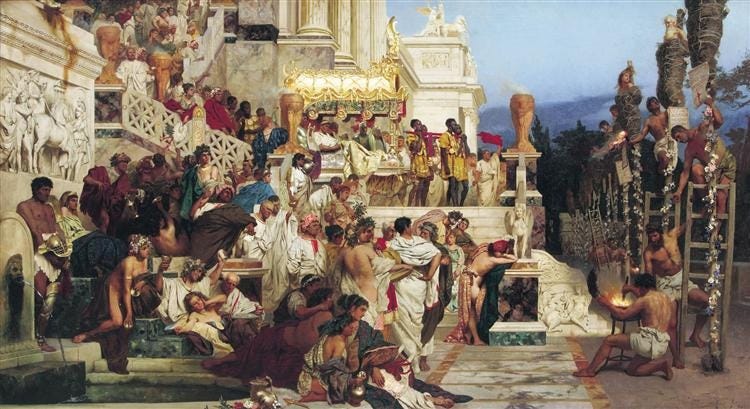
In AD 64, the Great Fire of Rome consumed the city over the course of six days. Popular myth has the Roman Emperor Nero playing his fiddle with indifference during the blaze. After the flames died down, Nero blamed the devastation on the city’s Christian population. He proceeded to massacre them. It was the first state-sanctioned persecution of the new faith, and Christians were slaughtered as entertainment in the Circus of Nero—where St. Peter’s Basilica stands today—and later in the Colosseum. Nero famously lit up his personal garden by tying Christians to wooden stakes and burning them alive.
Conclusion
The Roman government succeeded in containing the Cult of Bacchus. But the violent persecutions of Nero only bolstered the popularity of Christianity—to the point where even the Roman elite were eventually forced to convert. But when they did so, they accepted St. Augustine’s interpretation of Christianity, in which the forgiveness commanded by Jesus was for personal moral failings, not for financial debts. This protected the balance sheets of the rich, so that they wouldn’t be compelled to forgive debts owed to them by the working class. It also sealed Rome’s fate, as broad debt forgiveness could have saved that society from collapse. The Neros and the Nixons of history crack down on popular movements to preserve their own power structures. But the irony is that such persecutions are ultimately destructive because they trade a manageable revolution today for a total collapse tomorrow.
Since you’ve made it this far, valiant reader, kindly consider hitting the ❤️ button above or below; it really helps!
Further Materials
It is impossible to understand the roots of Christianity without understanding the world in which it appeared. For roughly the first three hundred years of its existence, Christianity was an illegal cult. Just like the cult of Dionysus. By appealing to poor folks, and especially women, Jesus was simply picking up where the Dionysian Mysteries left off. Politically he posed the same threat to the Roman establishment as Dionysus. Anything that directed attention and loyalty away from the public cult of the emperor and the traditional Roman gods was considered dangerous. Because at the time, separating young, eligible men from their military service and busy mothers from their family obligations upset the chain of command. Neither belonged in the wilderness, getting high with the God of Drugs. And they didn’t belong at the wedding party where Jesus unveiled Dionysus’s “signature miracle” either. John makes the general paranoia pretty explicit when he records the reaction of the Jewish high priests to Jesus’s string of magic acts following Cana: “If we let him go on like this, everyone will believe in him, and the Romans will come and take away both our place and our nation.”
Brian Muraresku, The Immortality Key, 2020, page 219

Excellent! As for Jesus, I like to think of Him as the first revolutionary Communist in recorded world history, a view that is somehow not acceptable to many. Yet I stand by it.
Paul was a contemporary of Nero. In his fragmentary epistle to the Philippians, he drops some names that should ring some bells. Perhaps the reason the epistle is fragmentary is because some parts got redacted.
In 42 BCE Octavian and Mark Antony fought and defeated the assassins of Julius Caesar in Philippi. Since then Philippi had been an important Roman military base. Of course, Octavian became Caesar Augustus, followed by Tiberius, followed by Caligula, followed by Claudius, followed by Nero. Nero had a right hand man, a freed slave named Epaphroditus. Paul mentions Epaphroditus in his epistle. He mentions Epaphroditus giving him his service. Translators have a hard time with that line. Paul closes Philippians by mentioning "the believers in the Household of Caesar." The Household of Caesar was a department of the Roman Army responsible for financing said army. Nero's man Epaphroditus was definitely a member, likely the leader of the department. Was Paul on Nero's payroll? And it doesn't sound like Nero was persecuting those believers.
Paul also mentions Clement in the epistle. There was a Clement in Rome who became pope. Clement is the source of the story that Paul went on to Iberia, and was executed in 68 CE, after Nero committed suicide. Another contemporary writer linked Nero's suicide with his execution of Peter in 64 CE, just after the Great Fire of Rome. So Nero executed Peter, but not Paul. Clement says Peter was arrested when he got to Rome. Peter spent his papacy in prison. If you count Peter as the first pope, then Clement was the third pope.
The Emperor Claudius is known for expelling the Jews from Rome because they were fighting amongst themselves over whether someone was the Messiah. Because the Emperor couldn't tell who was in the right, he expelled everyone. Clearly the Jews were allowed back under Nero. Also, in those days the Bible didn't exist. So Peter and Paul would have been considered Jews. Especially since Paul wrote in his epistle to the Romans that Jesus was a man resurrected by God because Jesus was faithful to God. Paul was a bad writer, and people tend to misinterpret what he wrote. Paul did believe that Gentiles were saved by what Jesus did; that is, they didn't need to follow the Torah. But Paul had a problem with following the Torah, and his visions of the resurrected Jesus gave him an out.
So, how did Nero get a bad name among Christians? He did arrest, try, convict and execute Peter. Since Jacob, the head of the Jerusalem church, was martyred in 62 CE, there may have been disturbances and arrests of other Jews in Rome who believed Jesus was the Messiah. And then there was the Jewish Rebellion in 66 CE that ended with the destruction of the Temple in Jerusalem in 70 CE. After that, the Messiahists explained that Jesus was a spiritual Messiah. Unfortunately the Temple was the center of industry for Judea, and its destruction meant the economy shifted to export crops (olive oil and wine). Life got harder for Judeans. Eventually they rebelled again and were expelled from Jerusalem in 135 CE.
By that time there were a lot of Gentile churches, and their Jewish fellow believers lost a lot of prestige and status. People who hadn't come around to the opinion that Jesus was God were excommunicated. Christians now saw themselves as not Jews. And Peter and Paul were retroactively Christianized. Nero got a bad name. And also credit for executing Paul. This was when the Christians started thinking about compiling the Canon that became the Bible. Paul's epistles became a part of that Canon.