


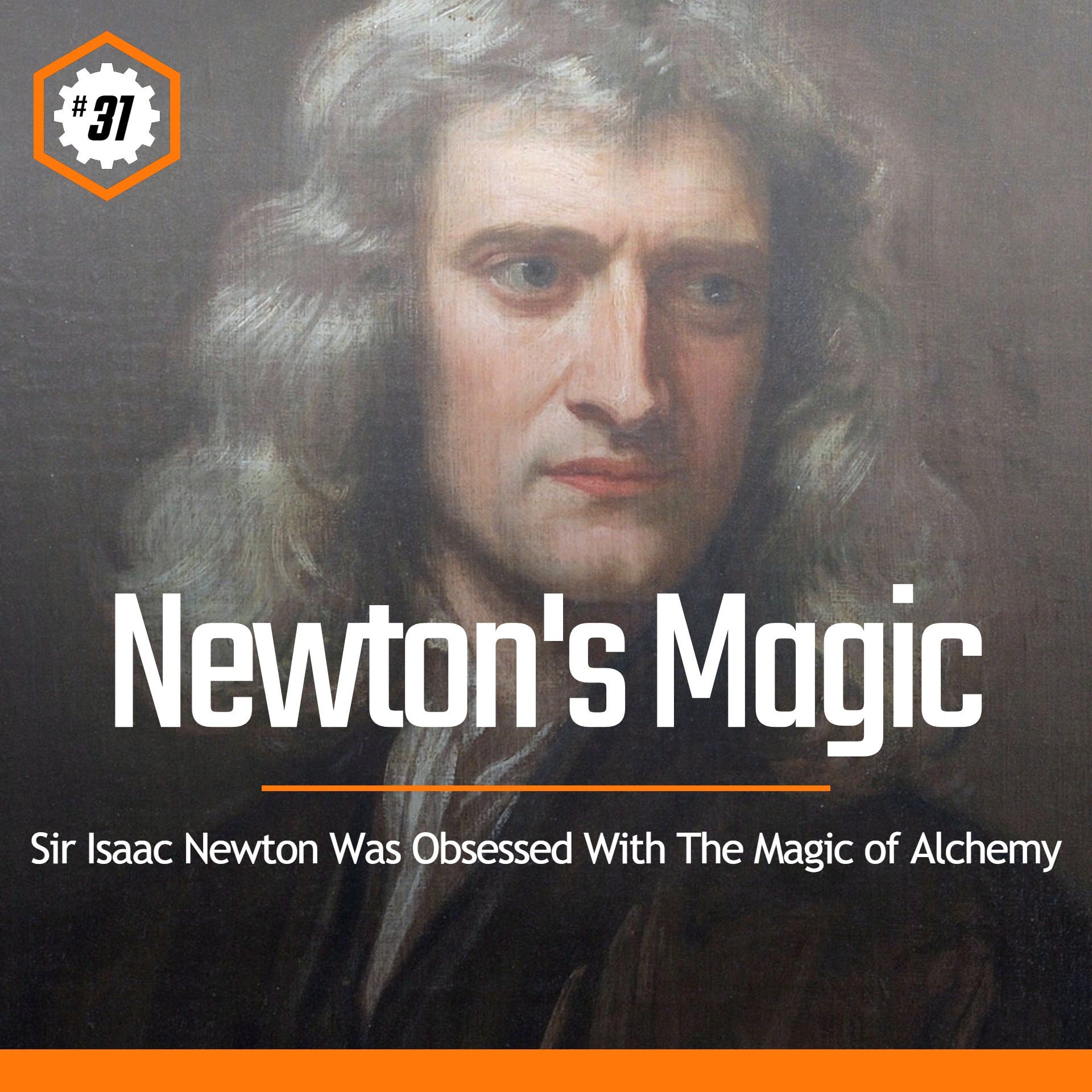
Key Takeaways
Sir Isaac Newton Single-Handedly Unified Physics & Astronomy
Newton Wrote Far More About Magic Than Science
Isaac Newton Accidentally Created the Gold Standard
Sir Isaac Newton Single-Handedly Unified Physics & Astronomy
Empiricism is the notion that our minds are contained within a much larger universe, which we observe with our senses. This way of thinking is ubiquitous in our modern world, but it was first pioneered by the Greek philosopher Aristotle in the 4th century BC.
The Scientific Revolution of the 1600s was a triumph of empiricism. By emphasizing repeatability, the philosophy of science presumes that experimental results which can be duplicated by different observers must be measurements of bedrock reality. That line of reasoning made science a powerful tool for improving the lives of ordinary people. It also gave rise to the Industrial Revolution of the 1700s.
There is no more titanic figure in the Scientific Revolution than that of Sir Isaac Newton. In 1687, he published the Principia, which is short for the book’s full title: Philosophiae Naturalis Principia Mathematica. This groundbreaking treatise laid out Newton’s Three Laws of Motion, which are the foundation of classical physics.
The Principia also defined the mathematical formula for gravity. According to legend, Newton conceptualized the equation after being struck by a falling apple while sitting under a tree outside his home in England.
Isaac Newton left an indelible mark on history by unifying physics and astronomy with his remarkable book. He proved that the same equations which governed falling objects here on Earth also apply to heavenly bodies in the night sky.
Newton also discovered prisms and the light spectrum, among other major breakthroughs credited to him. No single individual contributed more to the advancement of the Scientific Revolution. That’s what makes his obsession with the occult so odd. Newton was heavily involved with the Renaissance magic of alchemy.
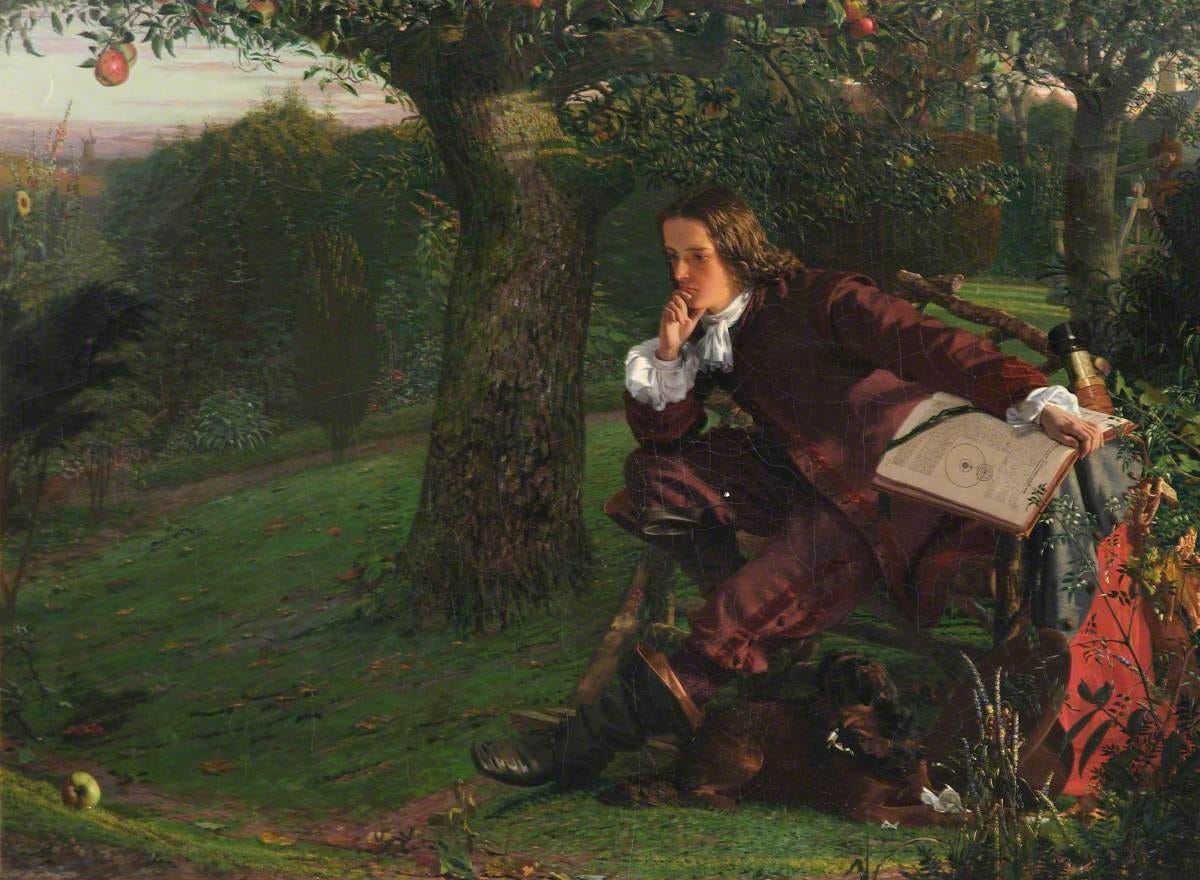
Newton Wrote Far More About Magic Than Science
Isaac Newton was born on Christmas Day in 1642, in the same year that Galileo died in Florence. He may have been somewhere on the autism spectrum. Newton kept to himself, had few friends, and remained a virgin until his dying day, possibly in emulation of Jesus Christ, who was also supposed to have been born on December 25th.
But perhaps the most remarkable thing about Isaac Newton was his obsession with alchemy. He secretly wrote over a million words on the subject, a larger body of work than all his writings on physics and mathematics combined. The most significant contributor to the Scientific Revolution took magic very seriously.
Alchemy became widely popular during the Renaissance, which—at its core—was a revival of Platonism. Like Newton, the Medici of Florence had been obsessed with alchemy. That banking family financed new translations of Platonic literature, which had been lost to Christendom since the Fall of Rome. The writings of the Hermeticists dated back to Rome’s twilight, and Renaissance alchemy was based on that Platonic school of thought.
Plato was Aristotle’s mentor, and he insisted that ideas exist independently of the thinker in a place he called the “Realm of Ideals”. Plato claimed that the observable universe is not bedrock reality at all. Instead, he argued that our minds create the reality we experience, just as we create the dreamscapes we experience while asleep.
The basis of Renaissance magic was the notion that because the observable universe is a projection of the mind, it must also admit of manipulation by the mind. The experiments of Renaissance alchemists were supposed to reveal the nature of the observer as much as they were designed to reveal the nature of the observable universe.
Today, magic is considered the domain of children. But Sir Isaac Newton’s eyebrow-raising biography illustrates how the ancient dichotomy between Platonism and Aristotle’s empiricism was an integral part of the Scientific Revolution.
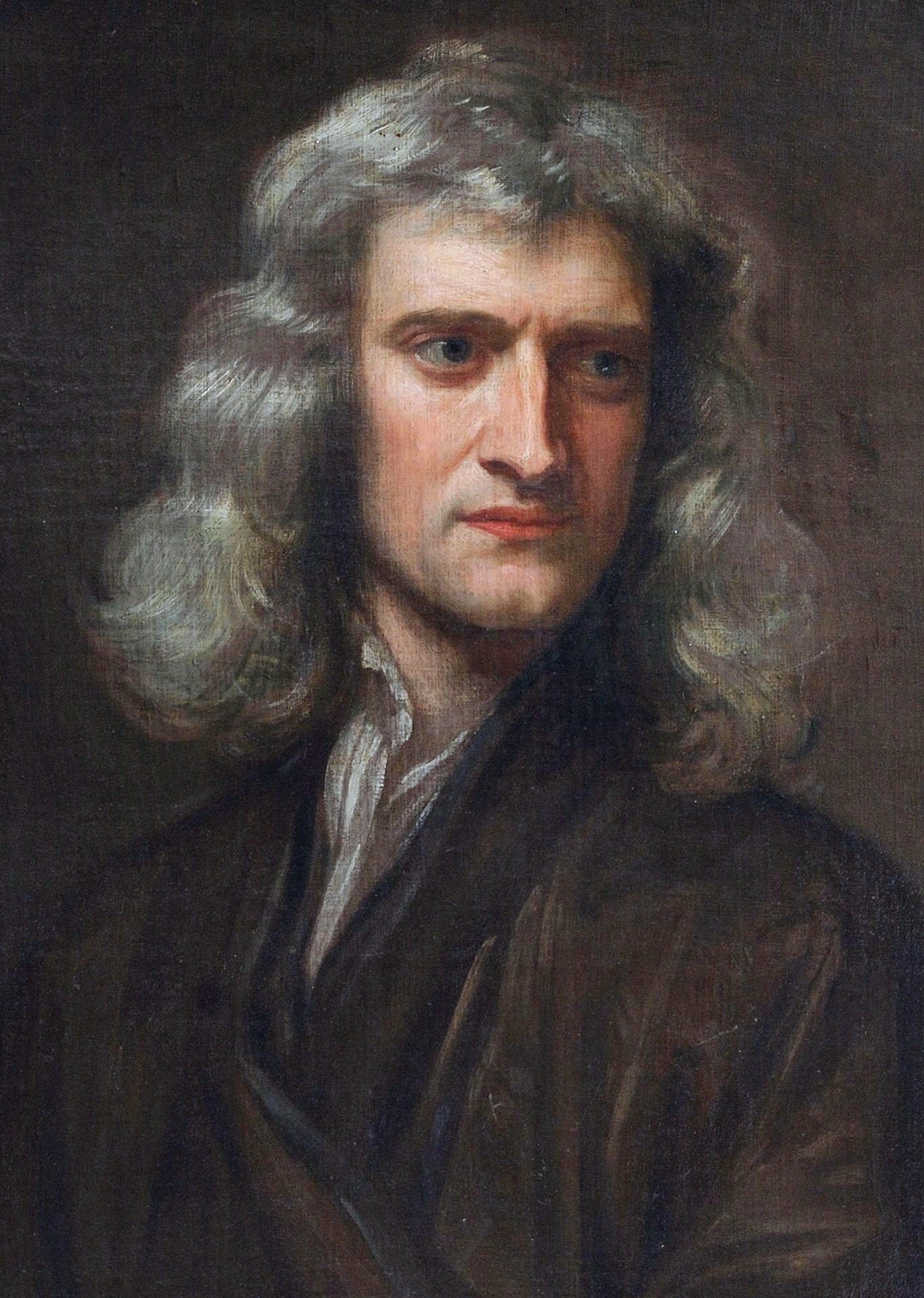
Isaac Newton Accidentally Created the Gold Standard
As the Renaissance wore on and gave way to the Enlightenment, alchemists developed a reputation for charlatanry and hucksterism. Many a financial scam was perpetrated by “alchemists” who claimed to have discovered the secret of transmuting base metals into gold.
As an alchemist, Isaac Newton was no charlatan or huckster. But he did play a pivotal role in the adoption of the gold standard.
On Christmas Day in 1699, Newton became the Master of the Royal Mint. The job was supposed to be cushy and ceremonial, but he took it deadly seriously. It was Newton who popularized “reeding”—or ribbing—the edges of coins to prevent people from shaving off bits of precious metal before spending them at face value.
In those days, both silver and gold were used as currency. But silver began disappearing from circulation during the Age of Exploration. Because China mandated the use of physical silver, European merchant fleets carried the precious metal all the way to the Orient and there exchanged it for commodities like tea and silk.
Isaac Newton proposed setting a favorable exchange rate with gold to encourage the repatriation of silver. But his plan backfired. By setting the relative value of gold too high, Newton accidentally incentivized enterprising individuals to bring cheap foreign gold to London to buy undervalued British silver, which they exported abroad for a quick profit. As a result, even more silver left England, and gold became the de facto coin of the realm.
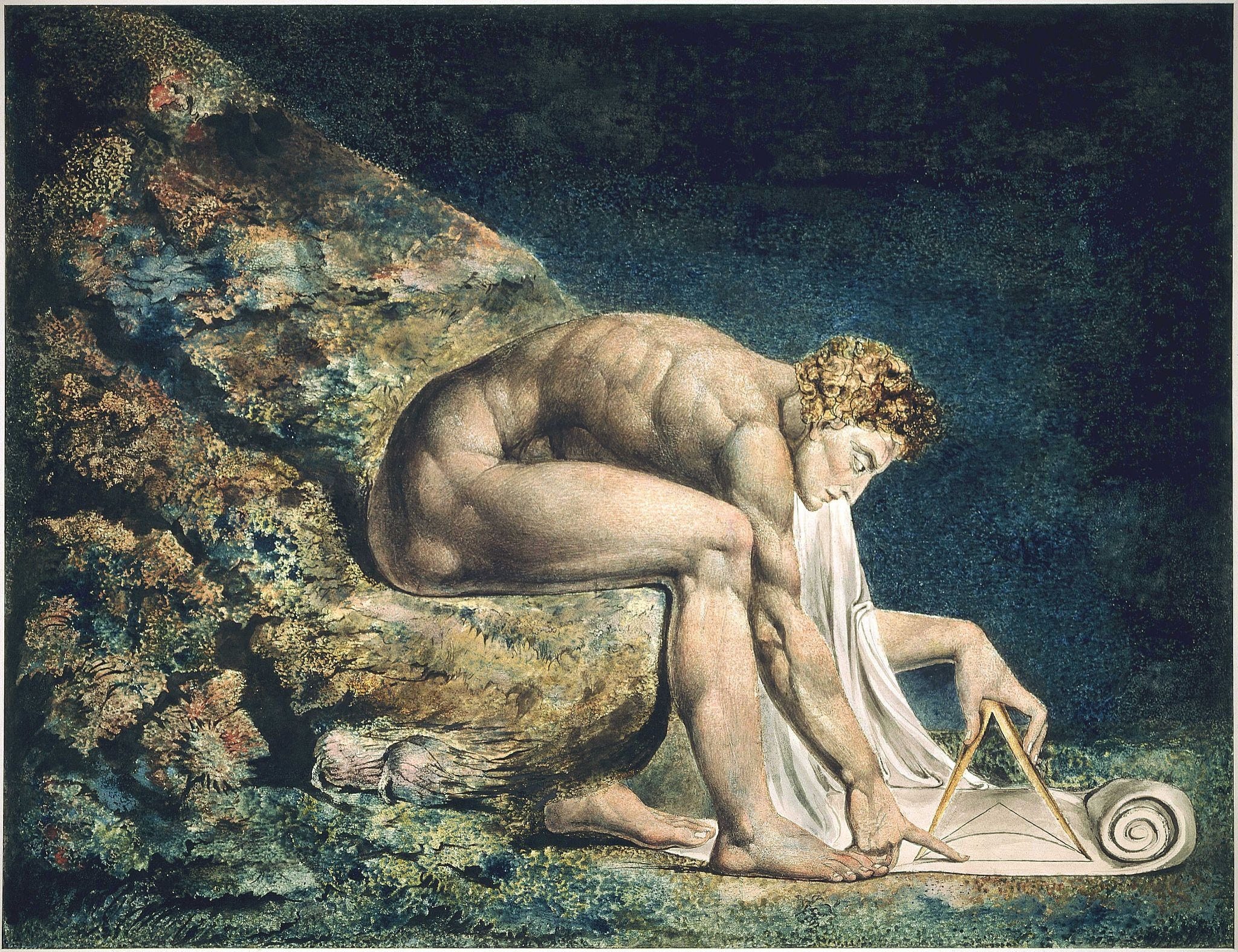
Conclusion
The life story of Sir Isaac Newton is like a roadmap illustrating the philosophical currents which transported humankind from the Renaissance into the Industrial Revolution. Because empiricism is today fashionable, Newton is widely renowned for revolutionizing the sciences. His closeted work as an alchemist is broadly overlooked, even though it was far more voluminous than his work on science. Furthermore, Isaac Newton invented calculus, which is the mathematics of rates, and of rates of rates. This type of calculation is critical to modern finance, where rates of return on investment are paramount. Coupled with his groundbreaking work on currency as Master of the Royal Mint, Isaac Newton was also a titan in the history of money and establishment of the gold standard. The significance of gold to alchemy leaves the thoughtful historian to ponder whether Newton’s lifelong obsession with alchemy was really as misguided as our modern scientific paradigm suggests.
Since you made it this far, curious reader, kindly consider hitting the ❤️ button above or below; it really helps!
Further Materials
[Newton] made many experiments, mainly in alchemy, “the transmuting of metals being his chief design”; but also he was interested in the “elixir of life” and the “philosopher’s stone.” He continued his alchemist studies from 1661 to 1692, and even while writing the Principia; left unpublished manuscripts on alchemy totaling 100,000 words or more…Boyle and other members of the Royal Society were feverishly engaged in the same quest for manufacturing gold. Newton’s aim was not clearly commercial; he never showed any eagerness for material gains; probably he was seeking some law or process by which the elements could be interpreted as transmutable variations of one basic substance. We cannot be sure that he was wrong.
Will & Ariel Durant, The Age of Louis XIV, 1963, page 531

There is a Mind-Only school of Buddhism with koans, but I never paid much attention. What I know is that the way people think determines their physical reality. Wander around San Diego, California, then go to Tijuana, Mexico. Different cultures, different reality. Another instance is the rigid belief in private property that allows a neighbor to cut down an old oak tree so he has a better view out his kitchen window. Now that is a strange idea!
I would point out that the Calculus has far more uses than just figuring out financial rates of return. The same process can calculate any physical process that is exponential or in motion. For the final exam in my Calculus 1 class, we were presented the dimension of a complex tank with a drain. Given the flow rate of the drain, we calculated the time to empty the tank. Probably in Calculs 2, we would have variable flow rates depending on the volume of water at any instance. This is also calculable. The Calculus is great!