


Quick Summary
Compound Interest WITHOUT Debt Forgiveness Caused The Fall of Rome & The Rise of Platonism
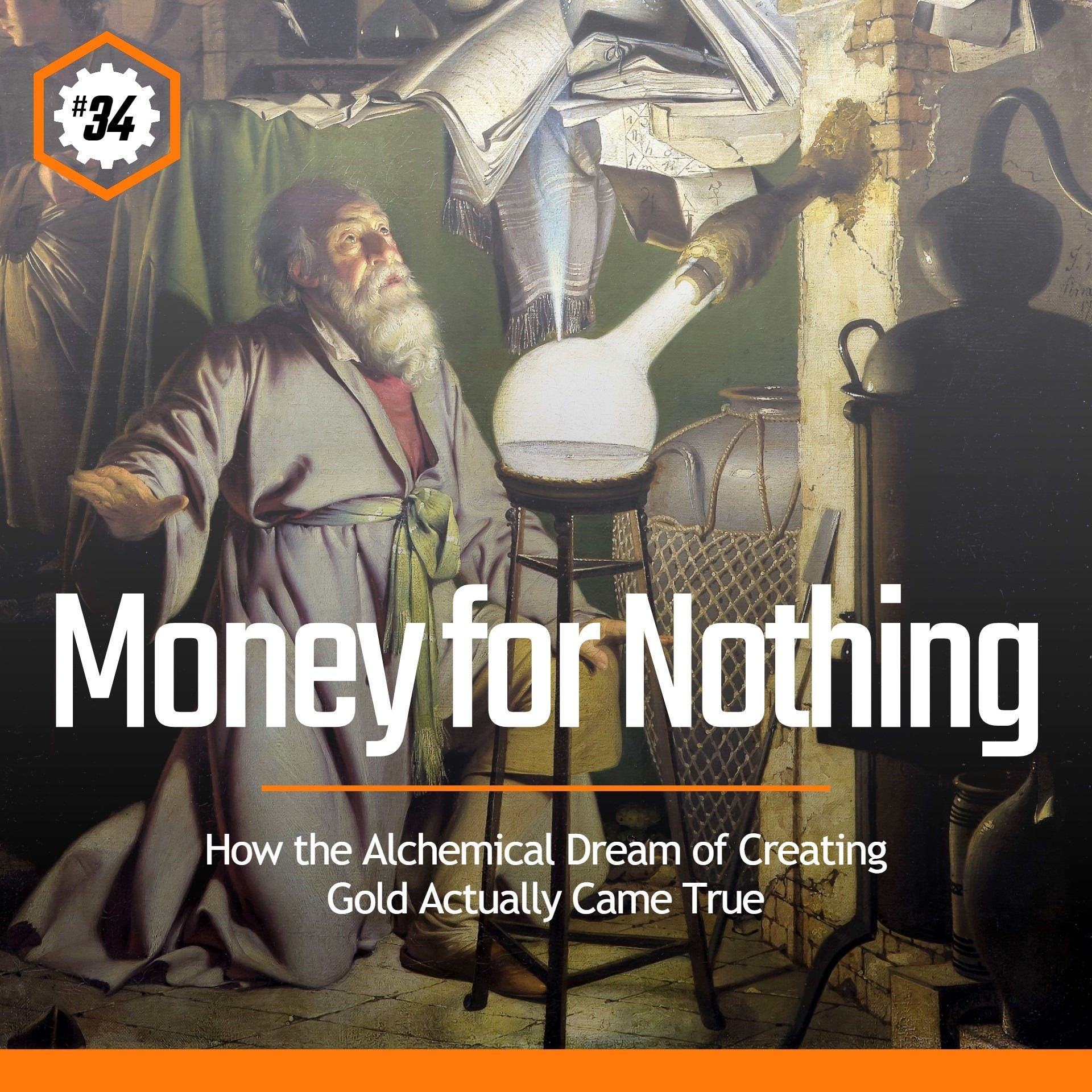
The Alchemical Dream of Creating Gold Came True With Fractional Reserve Lending
Central Bankers Became Modern Caesars & Popes by Applying Fractional Reserve Lending to State Finance
Compound Interest WITHOUT Debt Forgiveness Caused The Fall of Rome & The Rise of Platonism
Platonism is the idea that we inhabit a false reality—like the characters in the 1999 film The Matrix. This way of thinking always becomes fashionable during times of economic collapse, when material conditions deteriorate and despair sets in.
The Greek philosopher Plato was more popular during the twilight of the Roman Empire than he had ever been during his own lifetime. During those dark times, various schools of Platonic thought whispered of a hidden realm waiting beyond their dismal reality.
Those dark times were the direct consequence of using compound interest WITHOUT the guardrails of periodic debt forgiveness. The kings of Bronze Age Mesopotamia traditionally reset their economic scoreboards at regular intervals. Solon of Athens had set the stage for his home city’s Golden Age with a mass debt forgiveness.
But the Romans broke with this long-standing tradition and chose the sanctity of private property over economic stability. Christianity was one of many Platonic reactions to that, but Neoplatonism and Hermeticism are other examples.
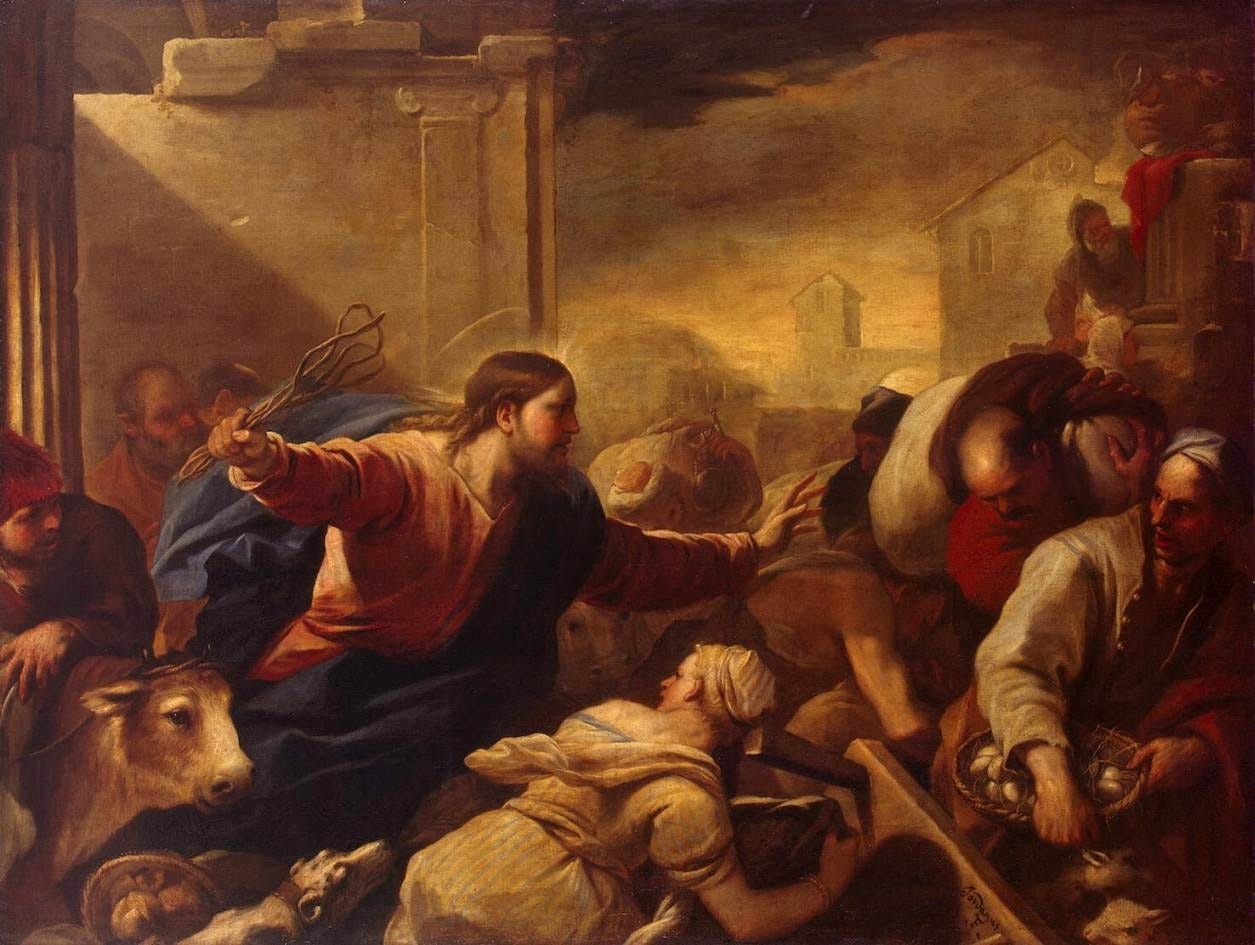
For Christians, Plato’s hidden realm of ideal perfection became the Kingdom of Heaven. They insisted that God had intervened from that realm to restore an equitable distribution of wealth through debt forgiveness. Early Christians left no doubt that debt was the cause of earthly woes; the Jesus of the New Testament goes so far as to physically assault moneylenders.
But in the 4th century, a former Neoplatonist reinterpreted the forgiveness commanded by Jesus as forgiveness for personal moral failings. He went on to become St. Augustine, because he didn’t threaten the wealthy with canceling debts owed to them by the working class.
The Roman aristocracy seized on Augustine’s version of Christianity and made it the state religion of their dying empire. The last emperors of Rome banned all rival interpretations of Christianity and schools of Platonic thought as heresies, rendering them powerless to reverse Rome’s economic fortunes. The Empire’s fate was sealed.
The Alchemical Dream of Creating Gold Came True With Fractional Reserve Lending
A thousand years after the Fall of Rome, the feudal economy of the Middle Ages began to unravel in the wake of the Black Death. As economic conditions deteriorated, Platonism reemerged as Renaissance Magic.
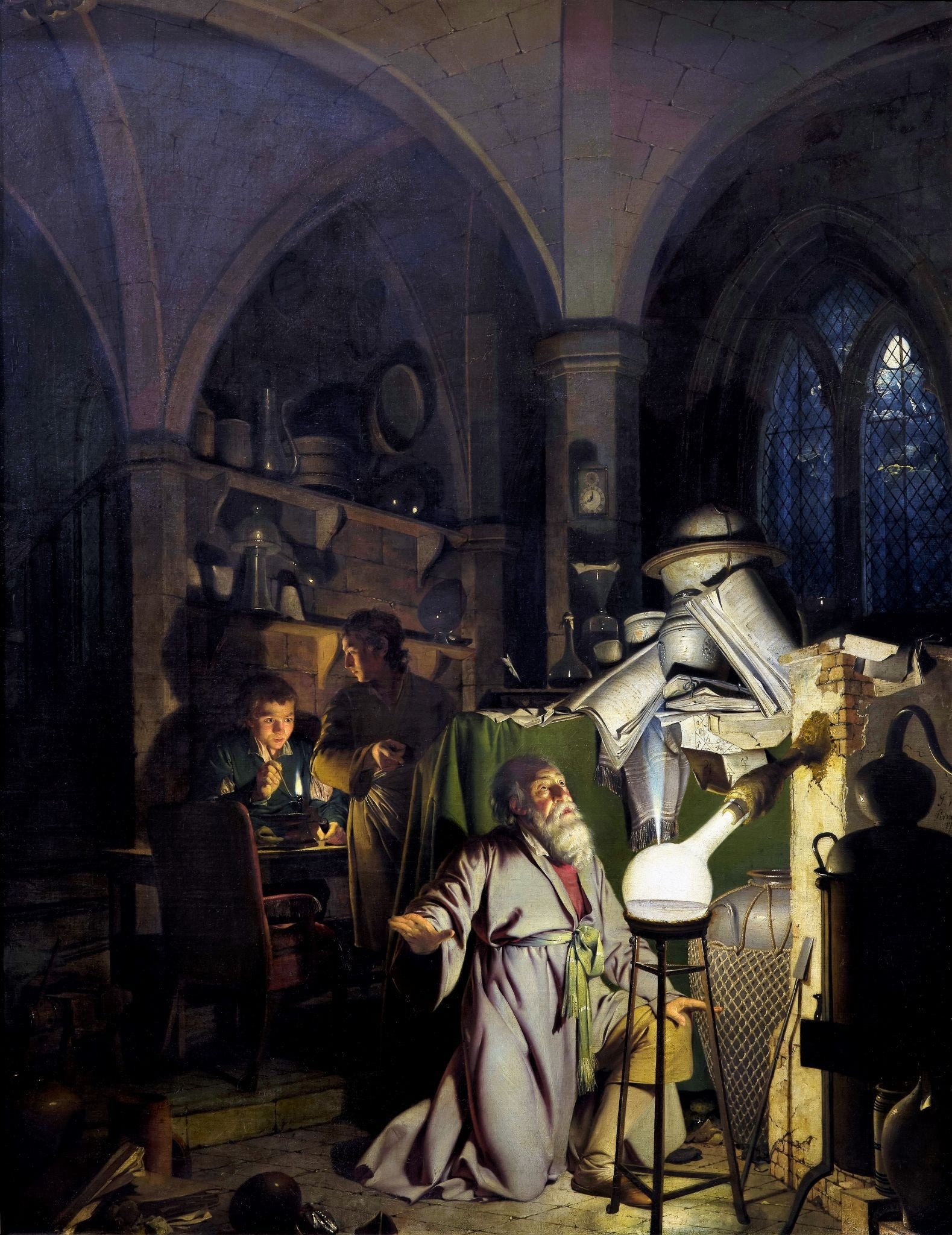
Early Christianity was a branch of Platonism where miracles proved the existence of a hidden realm. As Renaissance magicians, Alchemists dreamed of transmuting base metals into gold to prove that we are living inside an illusion, as the Greek philosopher Plato claimed. The superpowers of the character Neo play a similar role in the film The Matrix.
But as the Renaissance wore on, Alchemy devolved into the domain of hucksters and charlatans. By the 1600s, English goldsmiths had discovered that they could create gold on the pages of a ledger instead of in the Alchemical fires of a crucible.
In those days, people stored their coins at their local goldsmith because they were the only ones who had the heavy vaults needed to keep it safe. Goldsmiths issued receipts in return for these deposits, which worked like claim checks for specific amounts of gold.
Trading the goldsmiths’ paper receipts was far more convenient than carrying around heavy gold coins. When people needed to make a payment, they simply handed over a claim check for the right amount and it was accepted. Those receipts circulated as the earliest form of paper money.
The goldsmiths soon noticed that only a small fraction of depositors ever actually traded their notes back in for physical gold coins. Most paper receipts kept circulating endlessly as currency without ever being redeemed.
The goldsmiths gave in to temptation by issuing extra receipts for more gold than they actually had in their vaults. Unlike gold itself, paper IOUs could be easily manufactured. As long as their customers didn’t try to redeem more gold than was actually in their vaults, goldsmiths could run this scheme indefinitely.
This practice of Fractional Reserve Lending later became our modern banking system. We expect our bank to loan out our deposits because interest is how they make their money. But we’d be livid if our debit card was ever declined for anything less than the full balance in our checking account.
Like the goldsmiths of 17th-century England, modern banks work on the principle that everyone doesn’t empty their checking account every day. Therefore, they can get away with issuing far more credit than they have actual deposits. And bank credit is money when merchants accept credit cards.
Modern banks are licensed by the state to conjure money out of thin air—and charge the public interest to rent their manufactured product. But perhaps the most magical thing about this fulfillment of the Alchemical Dream is that the rapid expansion of bank credit financed the Industrial Revolution. That dazzling miracle made humankind forget about Plato.
Central Bankers Became Modern Caesars & Popes by Applying Fractional Reserve Lending to State Finance
Only an Emperor with supreme political power could forcefully bind together the warring economic classes within Roman society. After the Fall of Rome, popes ruled Medieval Europe from the Eternal City instead of the Caesars—often invoking the same imperial rituals, symbols, and clothing from the Roman period.
But in 1648, the dominance of the popes over European politics came to an end. The Treaty of Westphalia established nation-states with sovereign borders, which the Pope was no longer allowed to reach across. States that wished to be Protestant rather than Catholic were permitted to do so by international agreement, free from influence by the Vatican.
Less than 50 years later, central bankers rushed in to fill the power vacuum left by the popes atop the hierarchy of European geopolitics. The Bank of England was founded in 1694 with the simple idea of transplanting the magic of Fractional Reserve Lending onto state finance.
At the time, King William III was desperate for cash for his war against France. A small group of London and Edinburgh bankers bailed him out with a Faustian Bargain he couldn’t refuse. They paid for the right to issue claim checks on the King’s future tax receipts, which he now owed to them.
Within a century, this paper money became the only medium accepted by the English government to satisfy tax obligations. Central bankers directly controlled the nation’s currency from that point forward, granting them immense political power. Similar banks now control the currencies of virtually every country in the world. These have been connected by the Bank for International Settlements in Basil, Switzerland since 1930.
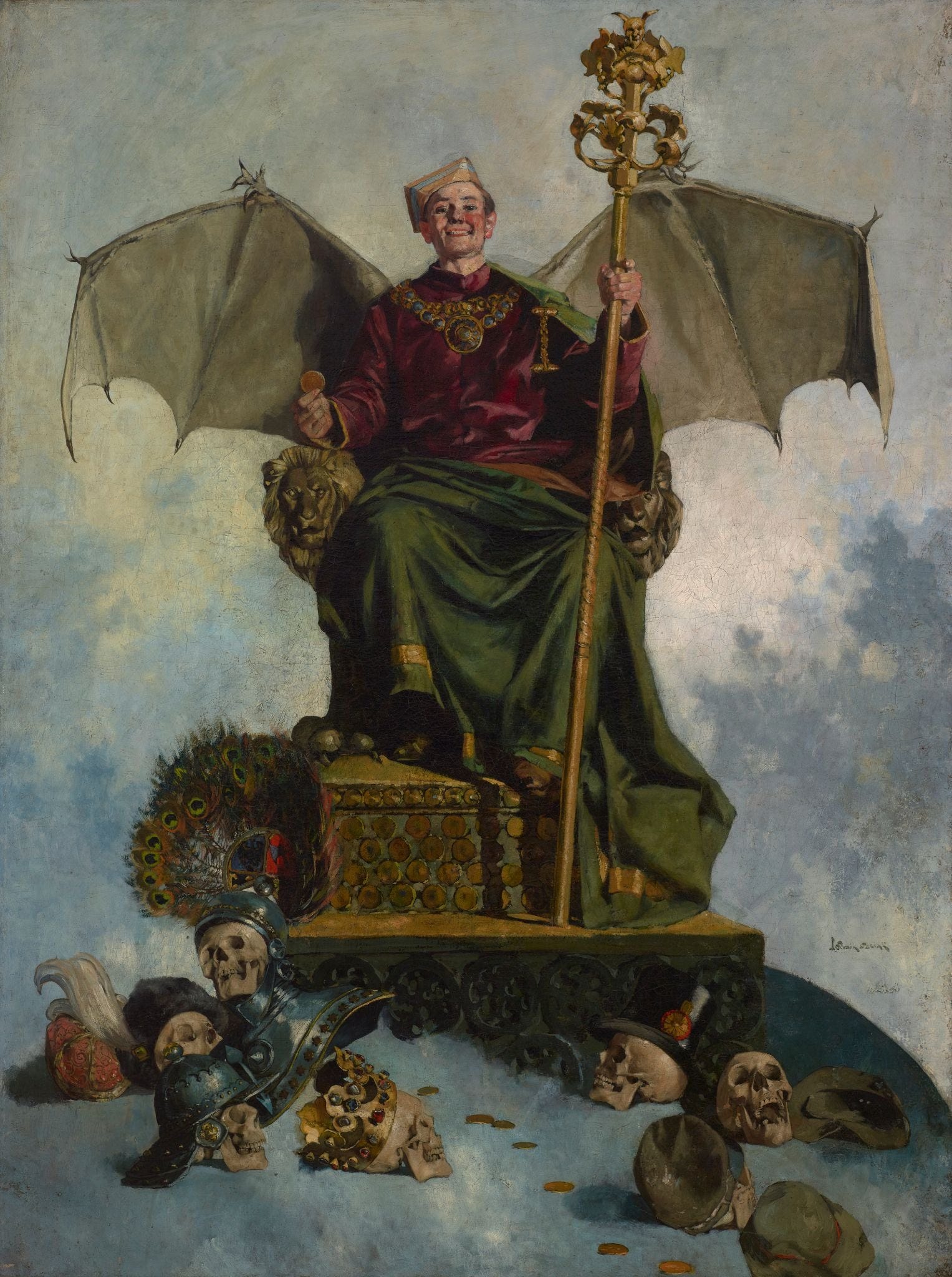
Central bankers now enjoy near total control over international geopolitics. They determine which political actors gain access to liquidity in global financial markets. Our nominal heads of state must operate within boundaries set by unelected central bankers, just as the Roman emperors used to dominate client kingdoms, and the popes once inflicted their will on the crowned heads of Christendom during the Middle Ages.
Conclusion
The fundamental question that drives human history is whether the observable universe exists within our minds, or whether our minds exist within the universe. The miracles of Jesus and the magic of alchemy are supposed to be demonstrations that our minds create the reality we experience, just as it creates the convincingly vivid dreamscapes we experience while we sleep. Whether real or legendary, these demonstrations arouse suspicion that Plato was right about the observable universe being an illusion—and therefore rankle temporal authorities who wish to rule over said universe. Christians were once thrown to lions in the Colosseum. Practitioners of Renaissance magic met grisly fates in the dungeons of the Inquisition. And anyone professing a belief in magic is still marginalized and dismissed today. But as central bankers drive our modern capitalist economic system toward the end of its lifecycle, Platonism is once again bubbling up in the collective subconscious, just as it did during the Fall of Rome and the Renaissance. Look no further than the 1999 release of The Matrix to witness humankind again confronting the age-old question of whether or not we live in a world of magic and miracles.
Since you made it this far, bold reader, kindly consider hitting the ❤️ button above or below; it really helps!
Further Materials
Just consider what might happen if mortgage holders realised the money the bank lent them is not, really, the life savings of some thrifty pensioner, but something the bank just whisked into existence through its possession of a magic wand which we, the public, handed over to it.
David Graeber, The Truth Is Out: Money Is Just An IOU, And The Banks Are Rolling In It, 2014

Their problem is that very lack of accountability, as the impulse to go overboard overwhelms the knowledge of the consequences. The feedback turns from positive to negative at the crest of the wave, where we are most intoxicated.
Eventually we will come to see that money and banking, like government, is fundamentally a public utility. One day private banks will seem as obtuse as monarchy does today.
A much earlier example of the same economic dynamic, was in the Ancient Middle East, where clay receipts for how much grain one put in the communal granary were traded around.
Which then lead to the practice of loans and compounding interest, which then required those debt jubilees to sustain a functional state.
In the Zen tradition, the Heart Sutra (Prajña Paramita Hridaya Sutra) posits "Form is Emptiness" and "Emptiness is Form" which seems to reconcile conundrums about reality.