


Key Takeaways:
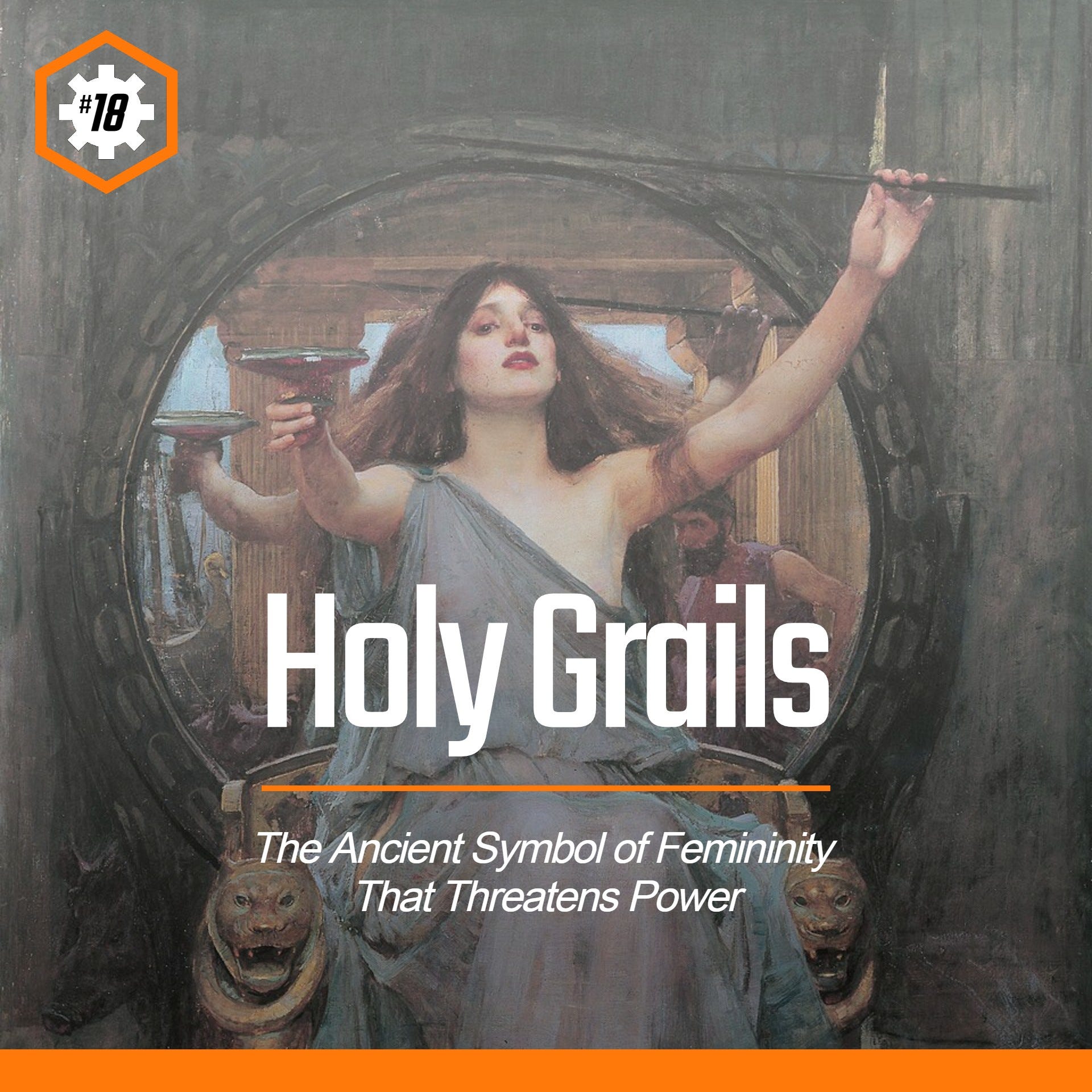
1. Magic Cups: Many Greco-Roman religions were centered around mystical chalices with magical properties like the Holy Grail.
2. Class Struggle: The history of Greco-Roman religions is tied up with the class wars that consumed those societies.
3. Femininity: The magic cups in Greco-Roman religions contained psychoactive substances that induced ego death, an experience symbolized by femininity and later by mystical chalices.
Magic Cups
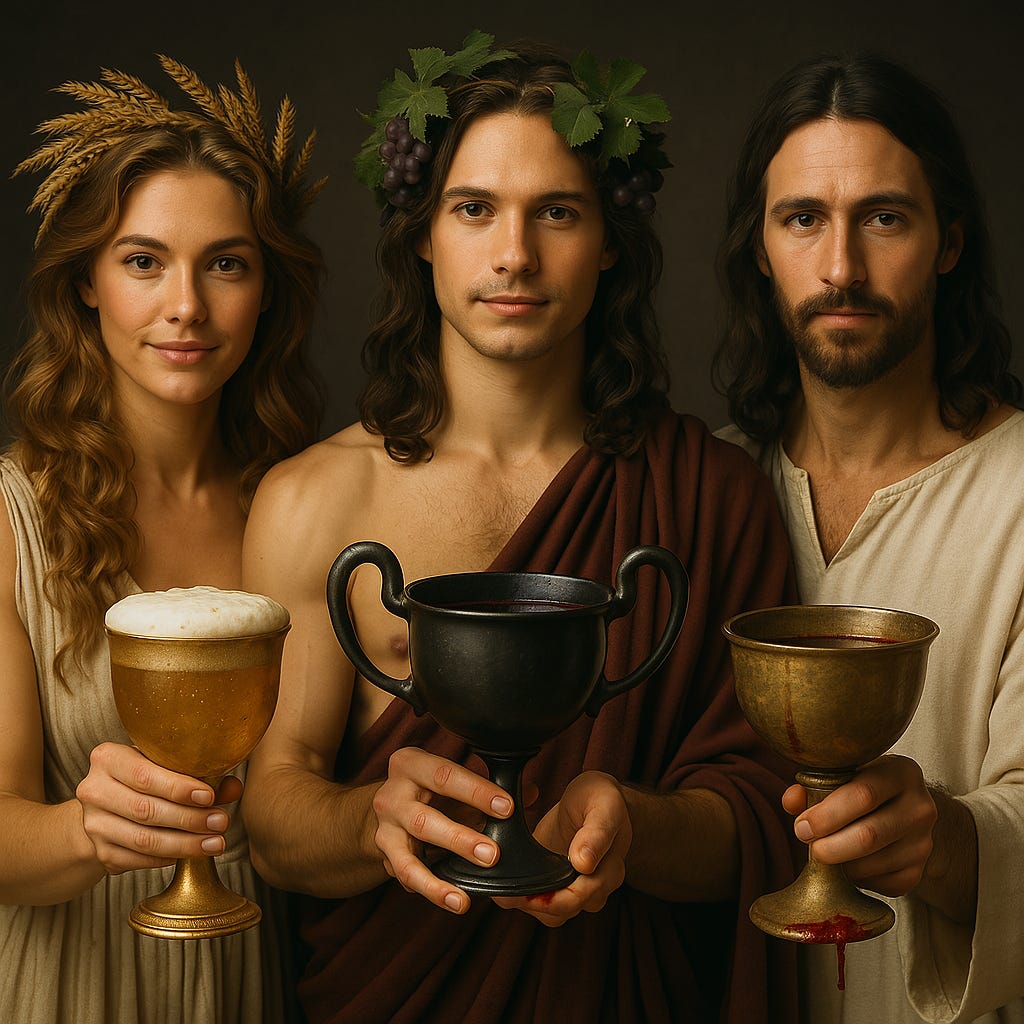
The concept of a “sacred vessel” or a “transformative drink” was a major archetype in ancient Mediterranean spirituality. The Kykeon of Demeter, the Kantharos cup of Dionysus, and the Holy Grail of Christianity are all variations on the same magical cup theme.
In his 2003 thriller The Da Vinci Code, author Dan Brown wove an intricate plot around the notion that the Holy Grail symbolizes the lost bloodline of Jesus. The Grail turned out to be an allegory for the person of his pregnant wife, Mary Magdalene. She was the literal vessel carrying the blood of Christ, as allegorized by the magic cup.
In The Da Vinci Code, the existence of Jesus’s child threatened the control of church fathers over the early Christian movement. Fearing for their safety, Mary Magdalene fled to France after the Crucifixion. The Holy Grail became an underground symbol for referring to this secret bloodline of Christ without arousing the suspicion of jealous Christian authorities.
But in reality, the magic cup theme is much older than Christianity. The Crater of Hermes was a symbolic cup mentioned in Hermetic, Orphic, and Platonist philosophy. It was often associated with divine oneness and spiritual transformation. Other examples include the Patera of Mithras and the Cyathus of Sabazius.
The magic cup religions of ancient Greece and Rome were intertwined with the class struggles that consumed those societies. Some of these cults were pressure valves that relieved class tension, while others were exclusive clubs that reinforced it. That’s how the Holy Grail became a symbol of opposition to entrenched power structures, as observed by Dan Brown in The Da Vinci Code.
Class Struggle
Before Christianity, the spiritual center of the Greco-Roman world was Eleusis, a small town just outside Athens where the rites of Demeter were observed. Over the centuries, everyone from Plato to Julius Caesar visited Eleusis and drank from the mysterious Kykeon.
Though Eleusis was run by priestesses, the cult was ultimately endorsed and controlled by the ruling families of Athens. But in the 6th century BC, the fortunes of those elite families declined after a debt crisis ravaged the Athenian economy and Solon of Athens resolved it by canceling all debts and outlawing debt slavery.
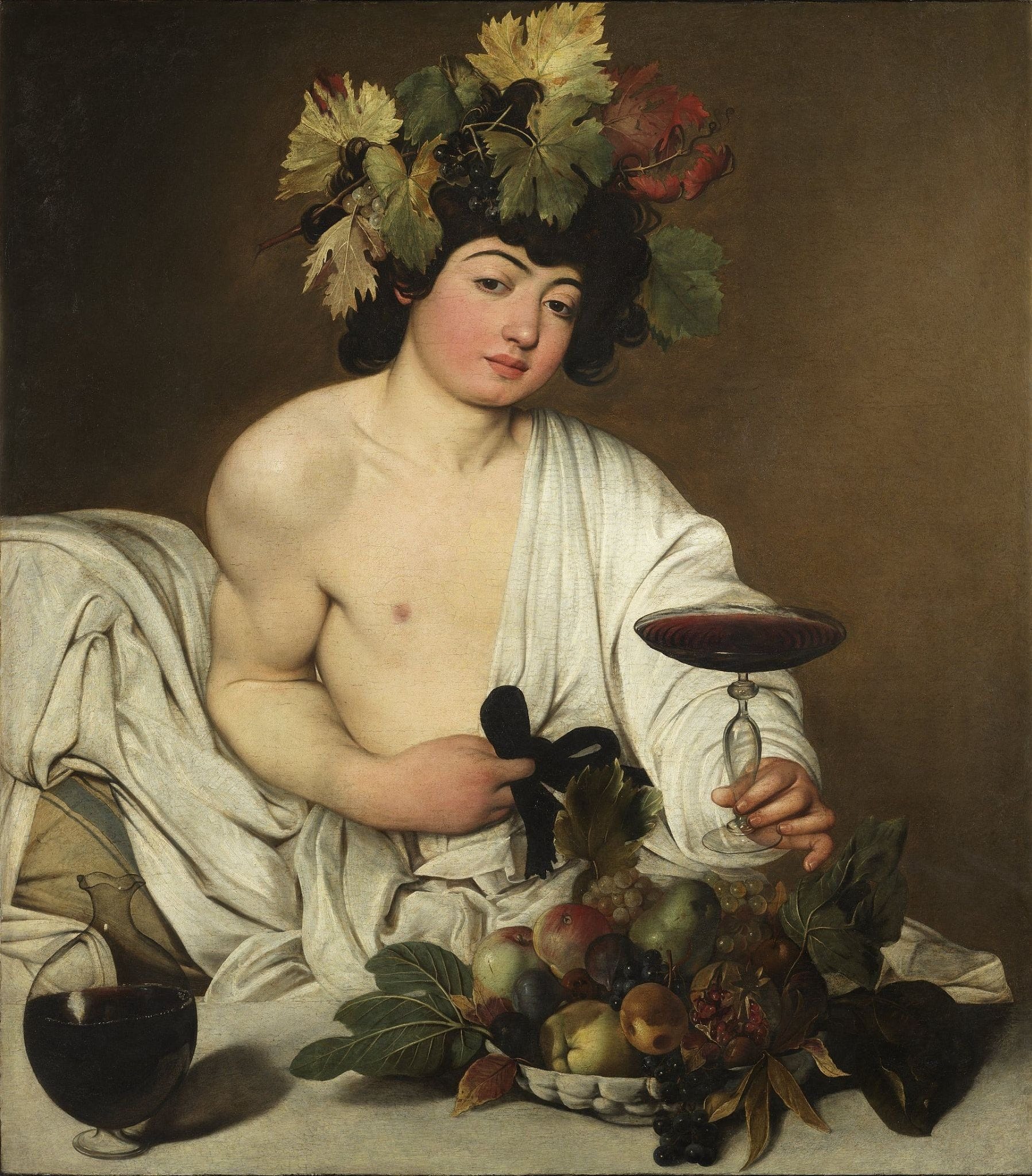
Afterwards, worshipping the wine god Dionysus by drinking from his Kantharos cup became a working class reflection of the cult of Demeter. As Michael Hudson notes in his 2018 book …and Forgive Them Their Debts:
Solon’s successors, the Peisistratids, sponsored social reforms as secular leaders, building up the Dionysus festival and Homeric recitations as counterweights to the Eleusan religion controlled by the old aristocratic families.
Three centuries later, a disgruntled Roman working class began worshipping their own version of Dionysus, whom they called Bacchus. Wild nighttime observances of the Bacchic rites disturbed the Roman elite so much that the Senate put thousands of cultists to death and brought the cult under state control.
By the time Jesus was born two centuries later, Roman society had plunged into a bloody civil war among economic classes. The chaos was such that only an autocrat wielding supreme power could stop the fighting. Just 27 years before the birth of Christ, an exhausted Roman Republic finally accepted the rule of emperors and became the Roman Empire.
The Roman emperors used their unprecedented political power to forcibly bind Roman society together. But, being members of the aristocracy, they consistently failed to address the underlying wealth inequality that ignited civil strife in the first place. Because Christianity advocated for the interests of the working class and castigated the rich, it rapidly rose in popularity within the newly-minted Empire.
Early Christians augmented the popularity of their new faith by reviving the familiar symbols of existing religious movements, like the magic cups of Demeter and Dionysus. These symbols were references to the countercultural movements like the one quashed by the Roman Senate two centuries before. Recycled Dionysian symbology—like turning water into wine—advertised to potential converts that Christians opposed the cruel economic hierarchy of Rome, as Bacchic cultists once opposed the economic status quo during the Republican period.
Femininity
The connection between magic cups and class struggle lies in the psychedelic contents of those sacred chalices. Recent archeobotanical evidence reveals that the mystical experiences had at Eleusis resulted from ergot mixed into the Kykeon of Demeter.
The Greek physician Dioscorides devoted one-fifth of his famous pharmacopeia to the various psychoactive ingredients Greeks and Romans combined with their wine. The wine consumed by initiates into the cult of Dionysus was merely a mixer for potent ingredients like henbane or mandrake.
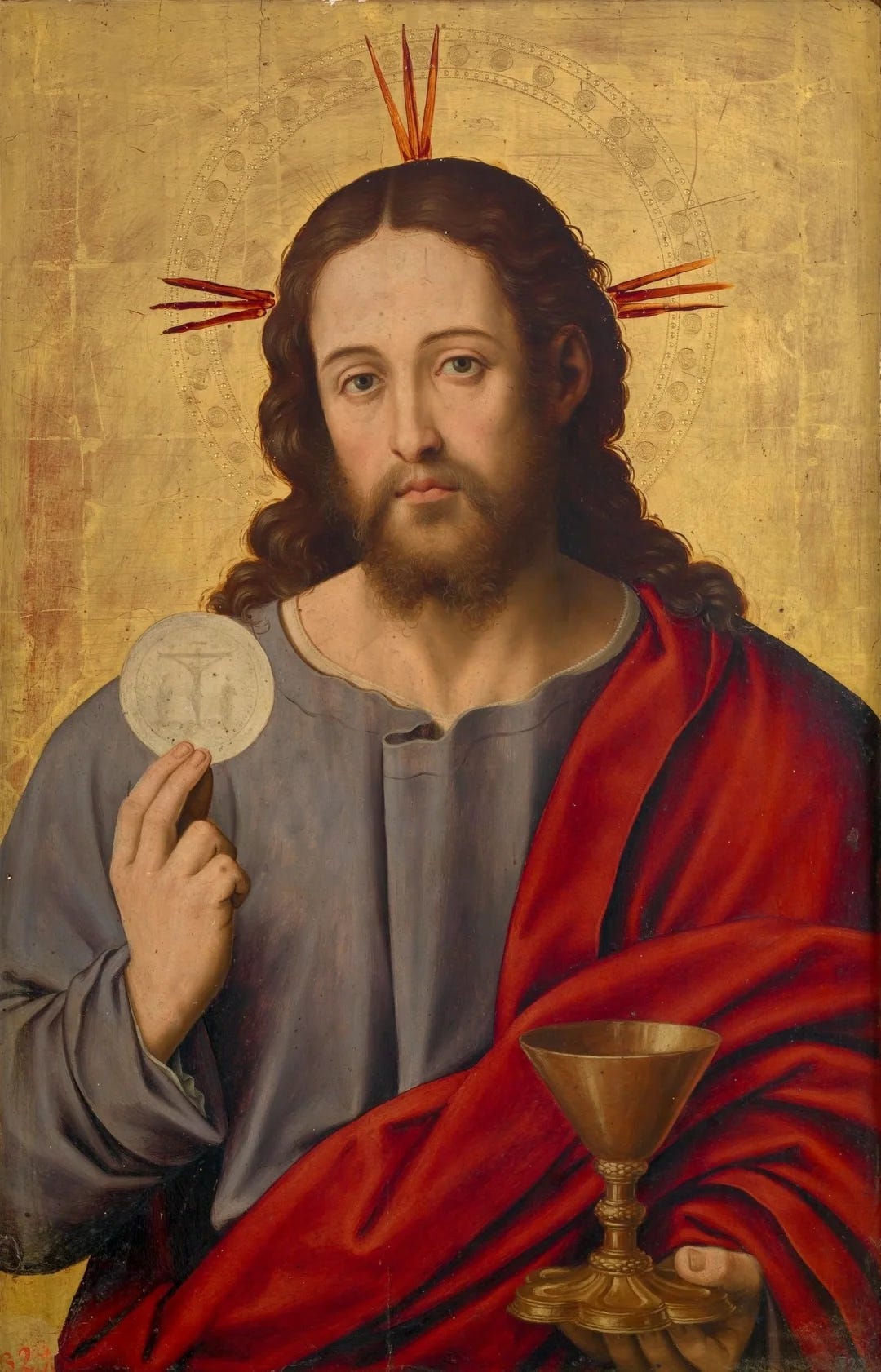
Though direct evidence of psychoactive compounds in Christianity remains elusive, the fact that early Christians borrowed so heavily from existing traditions of theophagy, or god-eating, makes it very likely that the Christian Eucharist was also originally psychoactive, being composed of the wine of Dionysus and the bread of the grain goddess Demeter combined.
Sacred vessels containing psychedelic drugs induced an experience called “ego death” that revealed reality to be an illusion. It dissolves the sense of a separate self, exposing the fact that the boundaries between self and world, or between subject and object, are mental constructs rather than inherent features of existence. The ego organizes experience. Without it, time, space, and identity lose their usual coherence, and the mind directly perceives reality as a fluid, interconnected field.
The dissolution of ego feels exactly like a personal death and a rebirth. Because women experience childbirth, femininity came to symbolize birth, death, and renewal in this sense. That’s how the insight that our individual identities are mere illusions came to be characterized as feminine, and represented by the symbol of a magic cup.
Femininity was a major theme at Eleusis, where the cult of Demeter was run by priestesses who passed down the secret recipe for brewing the Kykeon from generation to generation. It was also a major theme in the worship of Dionysus, who was portrayed as a gender-bender with long hair and effeminate features. His cult was led by women called maenads, and when the Roman authorities cracked down on the Bacchic cult, they found the ringleader to be a woman named Paculla Annia. And today, Christians still pray to the figure of Mary almost as often as they address her son, Jesus, who inherited the long hair of Dionysus.
Conclusion
Dan Brown recognized the Holy Grail as an underground symbol hidden from authority in The Da Vinci Code. But attributing this to an internecine power struggle within the early church misses the fact that ruling classes have every incentive to control or limit ego death experiences long symbolized by femininity. They don’t want their subjects waking up to the fact that reality is an illusion. Instead of achieving transcendence, they’d rather we all wake up and report to work, where we make them money. That’s why authorities have a long history of banning certain drugs as contraband while sanctioning others as medicine. Concern for public health is always the pretext, but political expedience is the real motive. Protecting a political monopoly surrounding the Christian Eucharist eventually led church authorities to demonize femininity itself as witchcraft. They wanted the public to pay the church for sin remission, not find their own path to God using substances growing wild in the forest. The Da Vinci Code is a fascinating read, but in reality the Holy Grail predates Christianity. It’s a symbol layered with themes of ego dissolution, femininity, and, above all, class struggle.
Since you’ve made it this far, loyal reader, kindly consider hitting the ❤️ button above or below; it really helps!
Further Materials
When Solon of Athens and Sparta’s semi-mythical Lycurgus liberated their populations from debt bondage, they did so as authors of a new civic order, not as drawing on an ancient covenant. Solon’s successors, the Peisistratids, sponsored social reforms as secular leaders, building up the Dionysus festival and Homeric recitations as counterweights to the Eleusan religion controlled by the old aristocratic families.
Michael Hudson, …and Forgive Them Their Debts, 2018, page 267
