


Key Takeaways
Ancient Secret Societies called “Mystery Schools” Informed Christianity
The Knights Templar Carried On a Tradition of Secret Societies into the Middle Ages
Secret Societies Flourished in the Wake of the Protestant Reformation
Secret Societies called “Mystery Schools” Informed Christianity
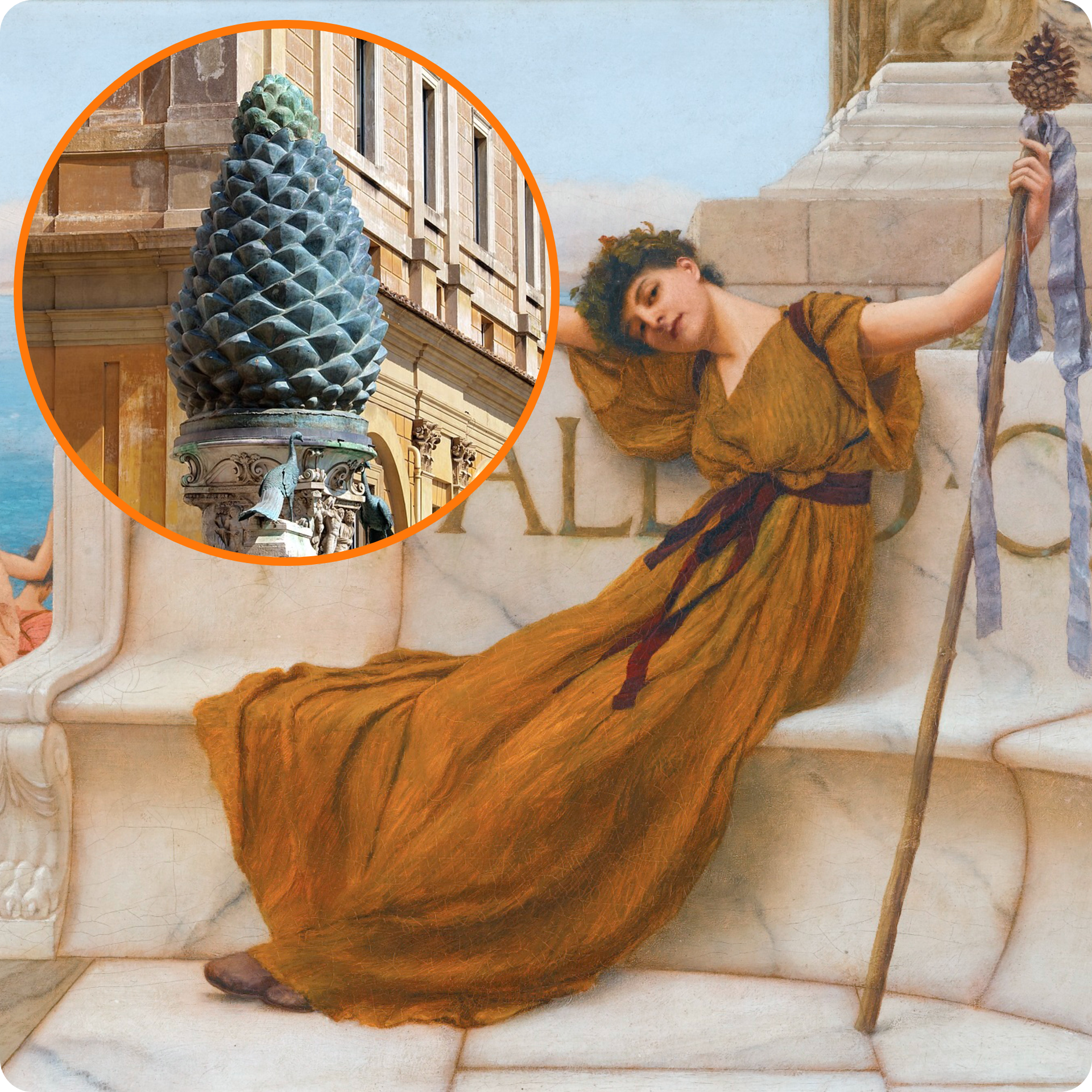
Mystery Schools were major cultural influences in Classical Greece. These secret societies hid their core teachings from new initiates, and gradually revealed them as members swore oaths and performed sacred rituals. Famous examples included the Eleusinian Mysteries, the Pythagorean School, and the Cult of Orpheus.
During Roman times, the Mystery School of the wine god Bacchus became such a cultural phenomenon that the Senate was threatened by it. In 186 BC, a Senatorial decree outlawed the Bacchanalia except under conditions of strict state supervision.
Two hundred years later, a new movement became all-the-rage in the Roman Empire. This new Mystery School was eerily similar to the Bacchic cult. It borrowed many of the symbols of that wine god, and it was also centered around a divine figure from the Near East who had long hair, turned water into wine, and was resurrected from the dead.
Having executed thousands of Bacchic cultists during the crackdowns two centuries before, the Roman authorities dusted off the same playbook to deal with Christianity. Thanks in no small part to the fact that they organized themselves into a secret society, early Christians proved resilient in the face of brutal political repression. They used secret greetings and symbols to evade the authorities, and covertly gathered in grisly underground burial chambers—away from prying eyes but surrounded by bones and rotting flesh.
In the end, the Roman state co-opted Christianity just like its Bacchic predecessor. But it was forced to accomplish this through conversion rather than repression. And after the Fall of Rome, the Roman Catholic Church remained the highest political authority in Europe.
During the Middle Ages, the Church revived another classic tenet of the old Mystery Schools. Because virtually every literate person was a member of the clergy in those days, Christians were forced to accept whatever they were told about the contents of the Bible. The Medieval Church recreated the old Mystery School hierarchy in which secret knowledge was reserved for inner circles.
The Knights Templar Carried On a Tradition of Secret Societies into the Middle Ages
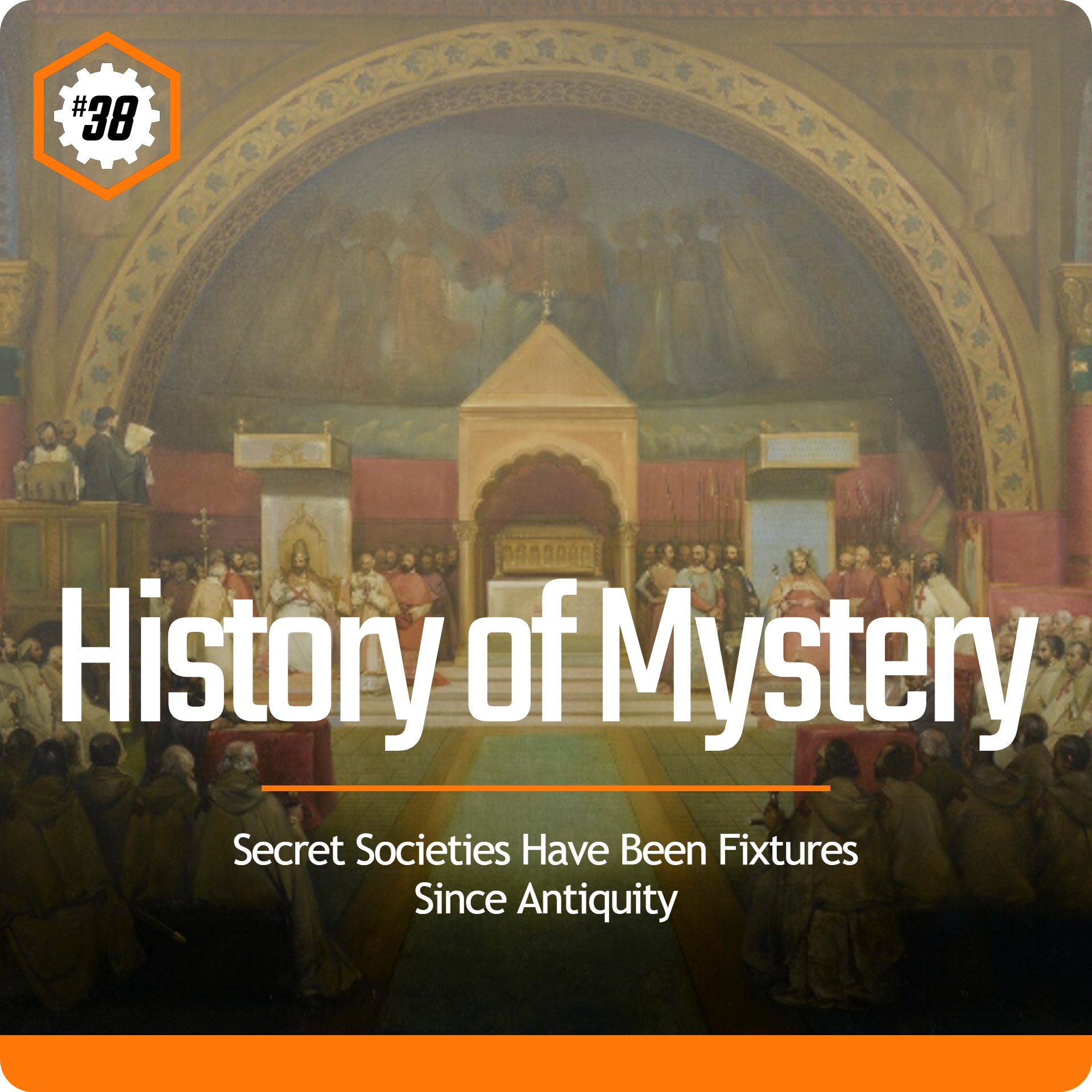
During the Crusades, the Knights Templar emerged as a Medieval secret society. They performed rituals and swore oaths like the Greco-Roman Mystery Schools that had so influenced early Christianity. And like those ancient secret societies, the Knights also found themselves targets of persecution.
By acting as proto-bankers for travelers between Europe and the Holy Land, the Knights amassed a fortune so vast that it threatened established power structures. After the Knights were arrested and tortured, Pope Clement V officially disbanded their order in 1312.
Though Clement’s decree made them outlaws, rumors of the Knights Templar persisted long after their downfall. Whispers abounded that they were hiding out in Scotland—geographically distant from the Vatican—and that they fought alongside Robert the Bruce at Bannockburn in 1314.
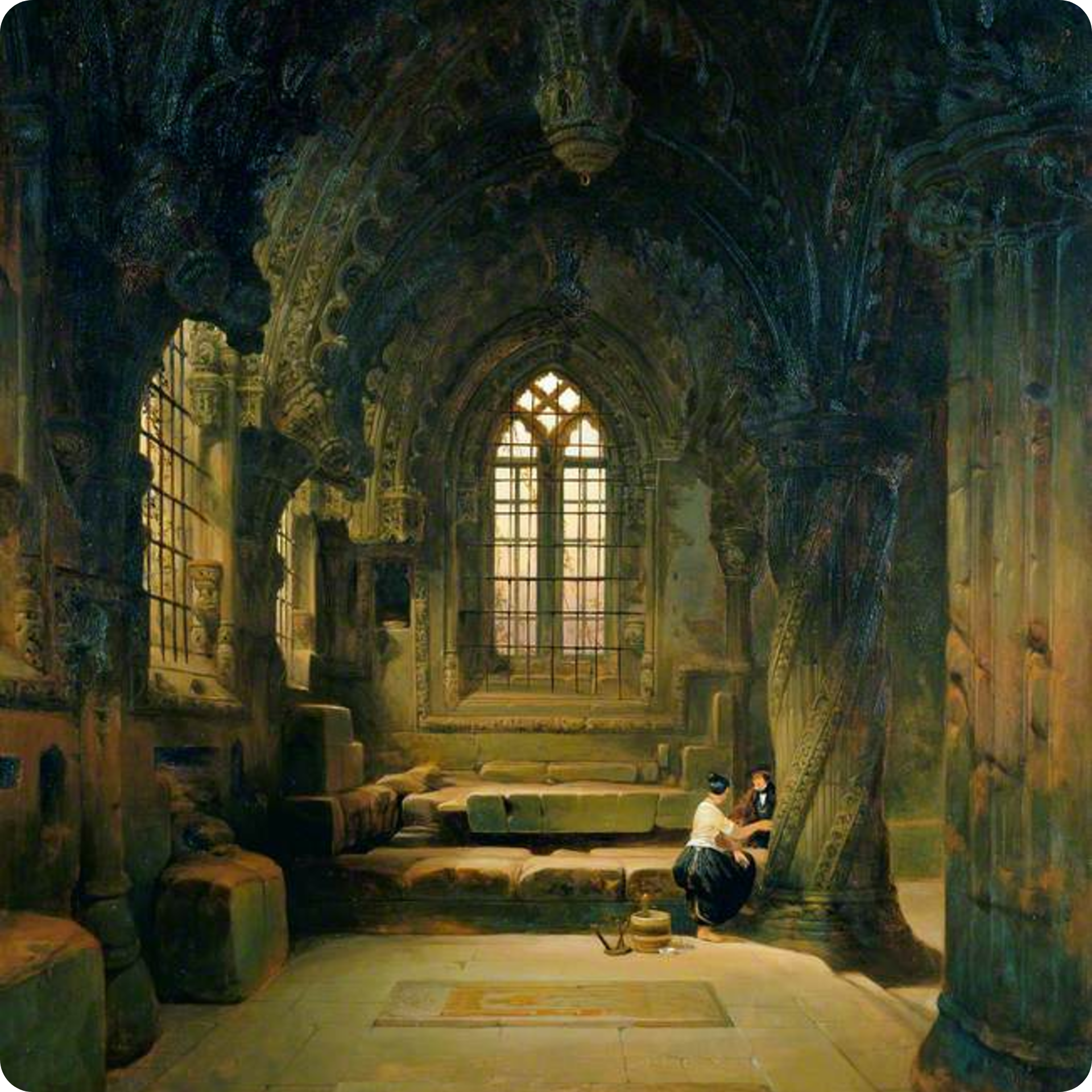
Prior to their political persecution, the Knights Templar had counted the Sinclair family of Scotland among their major supporters. More than a century after their persecution, Sir William Sinclair financed the construction of Rosslyn Chapel just a few miles south of Edinburgh and adorned it with Templar symbols.
Rosslyn Chapel’s overall layout features two prominent pillars called the Apprentice Pillar and the Master’s Pillar. These are said to reflect the twin pillars—named Jachin and Boaz in Bible—that supported the roof of the Temple of Solomon in Jerusalem during Biblical times, the very same site where the Templars had been headquartered during the Crusades.
In addition, a pillar cap depicts two figures sharing a single horse. This same icon had served as the famous seal of the Knights Templar during their heyday. Furthermore, Rosslyn Chapel is garnished with “engrailed” crosses with distinctive indented edges. These heraldic crosses were associated with the both Sinclair family and the famous Cross Pattée of the Knights Templar.
Today, the gift shop at Rosslyn Chapel is bursting with Templar-themed souvenirs. The abundance of old Templar symbology evident at Rosslyn demonstrates how secret societies similar to the Mystery Schools of Antiquity remained fixtures throughout the late Medieval period.
Secret Societies Flourished in the Wake of the Protestant Reformation
The Thirty Years War was the final culmination of the Protestant Reformation. It was a bitter struggle that claimed up to 8 million lives. By the time the last blood had been spilled and the dust settled in 1648, the Pope had forfeited his position of political dominance over Europe.
In 1717, the Freemasons publicly announced themselves in London. Documents such as the 1390 Halliwell Manuscript and the 1598 Scottish Schaw Statutes prove that these fraternal lodges existed well before 1717. But the deposition of the Popes a half-century before made it safe for them to emerge from the shadows without fear of reprisal from the Vatican.
Just as early Christianity borrowed symbols from the Mystery Schools that preceded it, the Freemasons adopted and adapted the trappings of the Knights Templar. There is a Masonic degree explicitly called the “Knight Templar.”
Furthermore, the Temple of Solomon—from which the Knights derived their name—is also a common theme in Freemasonry. Its Apprentice and Master pillars form the basis of the foundational Masonic allegory of Hiram Abiff, where a master Mason is killed by jealous apprentices.
Rosslyn Chapel in Scotland is famous for Templar symbology like the Master and Apprentice pillars. But its various relief carvings also depict the square and the compass, the same mason’s tools featured in the emblem of Freemasonry. The architecture of Rosslyn Chapel stands a tantalizing clue about the continuity of secret societies during the late Middle Ages.
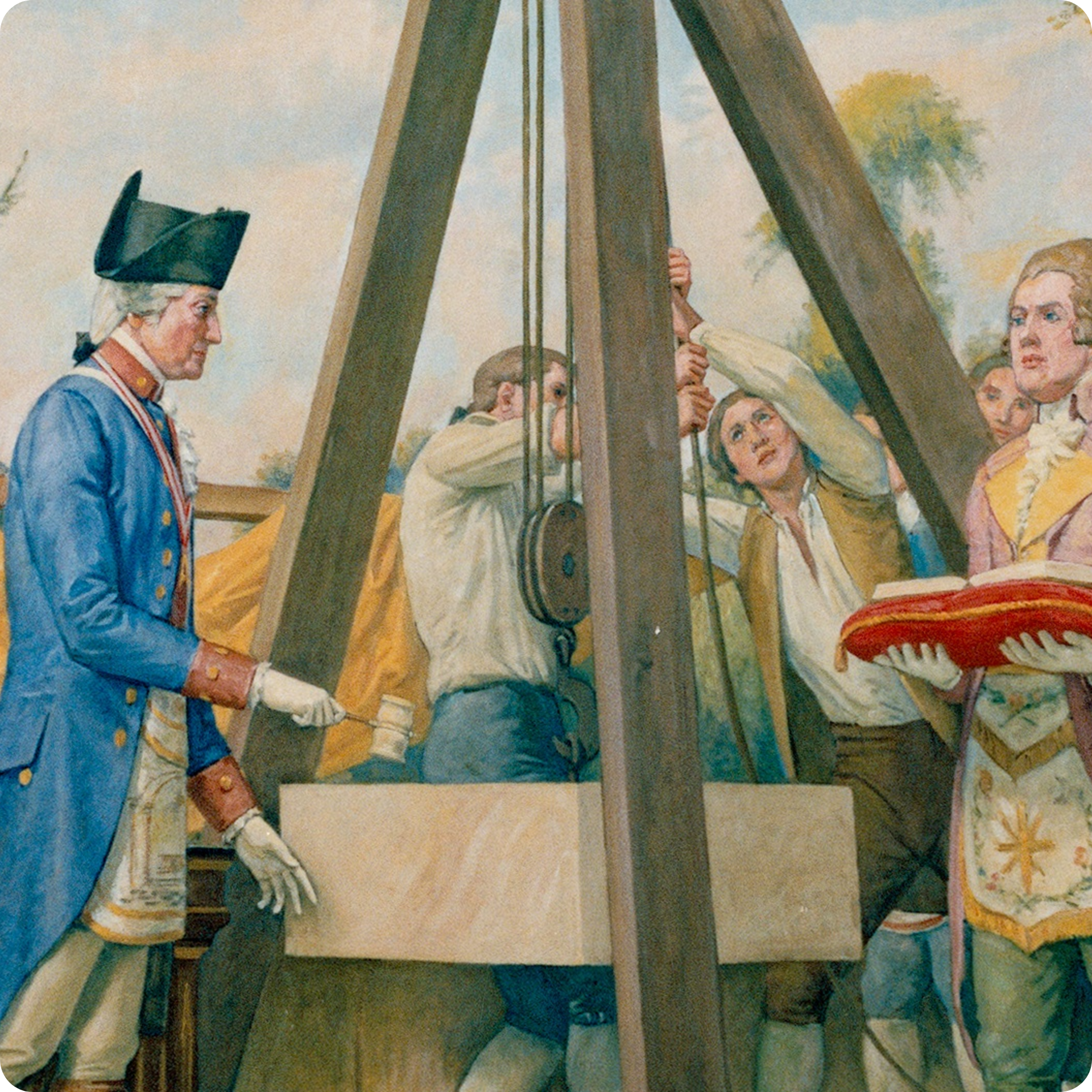
After 1717, Freemasonry exploded in popularity. Prominent figures in banking and government—including many of the Founding Fathers of the United States—were members of that secret society.
Today, we’re encouraged to regard notions of secret societies operating in our modern world as baseless conspiracy theories. But the Mystery Schools of Antiquity, Christianity, the Knights Templar, and Freemasonry are historically linked by a shared genealogy of secret rituals and symbols. The modern world was largely built by people carrying forward this tradition of secrecy.
Conclusion
Markets are a key component in the modern economic paradigm that arose in the aftermath of the Protestant Reformation. Under such a system, knowledge is money. Because he’d received word of Napoleon’s defeat in 1815 a day early, British banker Nathan Rothschild was falsely accused of using that information to buy up huge swathes of the London Stock Exchange at massive discounts. The fact that insider trading is today considered such a serious crime reflects how lucrative knowledge can be when a small group knows something that the broader market doesn’t. Secret societies compartmentalize knowledge by definition, and we live in an era where secret knowledge is highly profitable. That idea that secret societies belong exclusively to bygone eras is impossible to countenance when the structure of our modern economy so heavily incentives them.
Since you made it this far, perspicacious reader, kindly consider hitting the ❤️ button above or below; it really helps!

Further Materials
When the pope’s orders to arrest the Templars arrived at the English court, young Edward II took no action at all. He protested to the pontiff that the Templars were innocent. Only after the pope issued a formal bull was the English king forced to act. In January, 1308, Edward finally issued orders for the arrest of the Knights Templar in England, but the three months of warning had been put to good use. Many of the Templars had gone underground, while some of those arrested managed to escape. Their treasure, their jeweled reliquaries, even the bulk of their records, had disappeared. In Scotland, the papal order was not even published. Under those conditions England, and especially Scotland, became targeted havens for fugitive Templars from continental Europe, and the efficiency of their concealment spoke to some assistance from outside, or from each other.
John J. Robinson, Born in Blood, 1989, page 3
In 1810 Nathan Rothschild (1777-1836) established in London a branch of the firm that his father, Meyer Amschel Rothschild, had founded in Frankfurt-am-Main. Nathan seems to have been the ablest of the financial geniuses who distinguished the family through several centuries and in many states. He became the favorite intermediary of the British government in its financial relations with foreign powers; it was he or his agents who transmitted from England to Austria and Prussia the subsidies that enabled them to fight Napoleon; and he played a leading role in the industrial and commercial expansion of England after 1815.
Will & Ariel Durant, The Age of Napoleon, 1975, page 360