


Key Takeaways:
A HORRIFYING Betrayal of the Knights Templar Made “Friday the 13th” Unlucky
Secret Societies Transformed England With a SHOCKING Peasants’ Revolt
Secret Societies Played a CRUCIAL Role in The Protestant Reformation
A HORRIFYING Betrayal of the Knights Templar Made “Friday the 13th” Unlucky
The Knights Templar were an order of warrior monks who made a name for themselves during the Crusades. These Knights served as protectors to the pilgrims who began making their way to Jerusalem after that city was captured by Crusaders during the scorching summer of 1099.
Like virtually all monastic orders, the Templars took vows of extreme poverty. They were permitted neither money nor land. The Knights’ symbolized this lack of ownership by using the image of two knights riding the same horse as their signature.
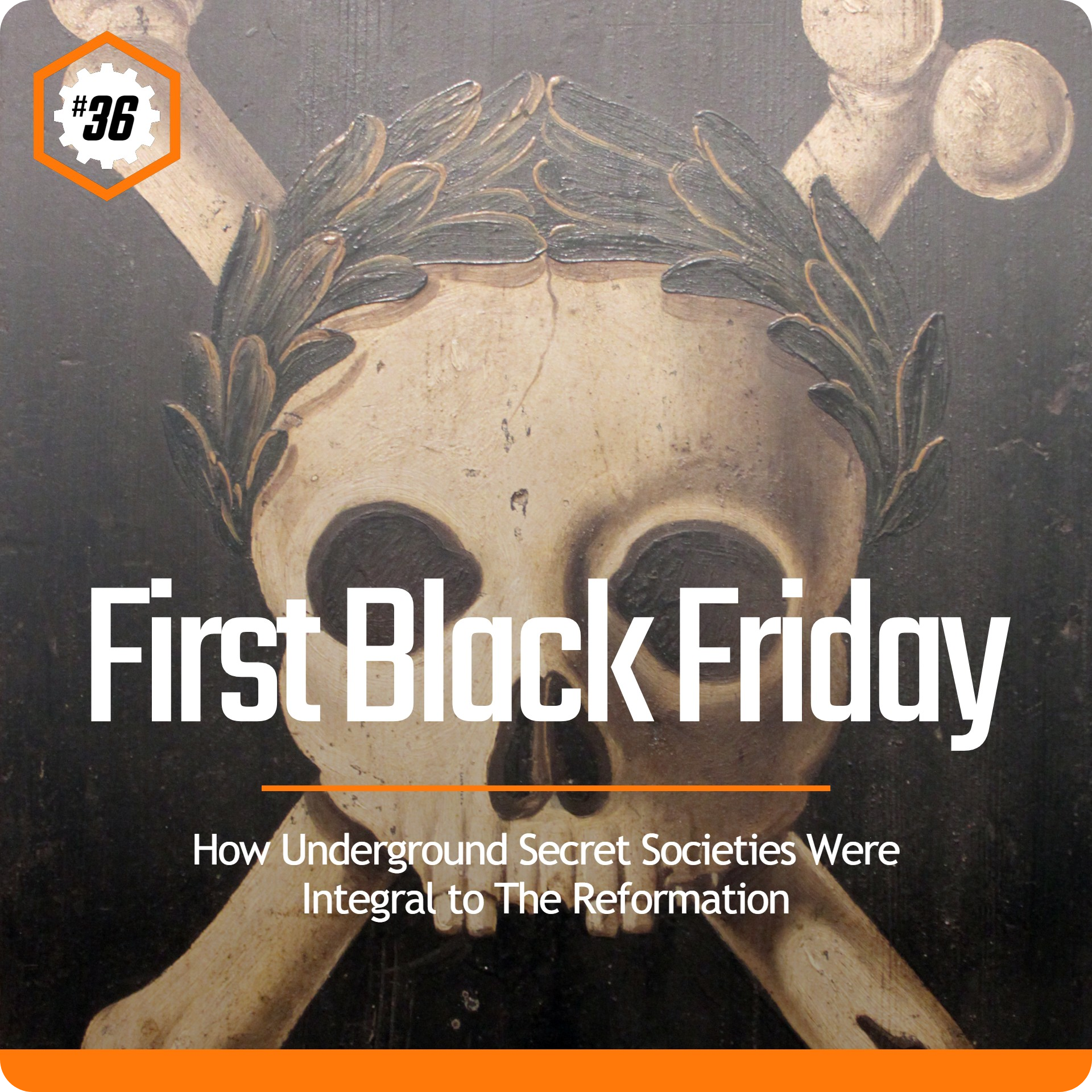
Because they were said to have been buried with their legs crossed, legend also associates the grisly symbol of the skull-and-crossbones with the Knights Templar.
Despite vows of poverty, the Templar order grew immensely wealthy during two centuries of Crusades. By the time those holy wars drew to a close in the late 1200s, King Philip IV of France found himself deeply indebted to the warrior monks. So he prevailed on the Pope to help him outlaw the Templar Order.
On Friday, October 13th, 1307, Frankish authorities unsealed simultaneous orders to arrest the Knights Templar. At the crack of dawn, Philip’s Inquisitors burst into the Knights’ Paris headquarters. They arrested Grandmaster Jacques de Molay along with hundreds of his men.
The Knights stood accused of blasphemy and sexual perversion. The Templar symbol of two knights riding a single horse became evidence of their sodomy. Deep in Philip’s dank dungeons, his Inquisitors brutally tortured the prisoners until they screamed confessions.
These coerced confessions gave Philip the legal pretext he needed to cancel the debts he owed to the Templars. The proceedings were complete by 1312, when Pope Clement V formally dissolved the Order of the Knights Templar.
But their story was far from over. During the interrogation, a knight named Jean de Châlons testified that a senior Templar commander had fled the port of La Rochelle just before the October 1307 arrests—with 18 galleys carrying treasure, arms, and men.
Rumors persisted that the Knights carried on after 1312 as an outlaw secret society, possibly on the high seas. We’ll never know if there is any truth to those rumors, because underground organizations intentionally cover their tracks to evade the authorities.
All we have are the legends. And in the popular imagination, the chilling skull-and-crossbones symbol used by the Knights Templar became a maritime symbol on the very first “Friday the 13th” in 1307. That combination of day and date still bears an unlucky connotation in modern times.
Secret Societies Transformed England With a SHOCKING Peasants’ Revolt
Two years after Pope Clement V outlawed the Knights Templar, the English King Edward II marched on Scotland to face-off against Robert the Bruce in the First War of Scottish Independence. But the English army suffered a catastrophic defeat at Bannockburn in 1314.
Some accounts of the Battle of Bannockburn mention an unexpected cavalry charge that tilted the fortunes of war against the English. Legend has it that this cavalry was none other than the former Knights Templar, who were still operating as an underground secret society after the Pope officially disbanded their order. These accounts were fueled by the fact that the Pope had also excommunicated Robert the Bruce.
35 years after Bannockburn, the Black Death struck Europe like a detonating bomb. The pandemic killed almost half the peasantry who populated the English countryside. With so many formerly productive fields lying fallow for lack of laborers, the surviving peasants realized they finally had their feudal lords over a barrel.
Instead of swearing fealty to any particular lord—as was the custom at the time—the remaining peasantry began playing one lord off against another in bidding wars for their labor. The labor shortage destabilized the entire feudal economic system of peasants and lords. Former peasants began demanding the freedom to sell their labor to the highest bidder, and the modern production roles of employer and employee began to emerge.
But the nobility was accustomed to making demands, not listening to them. They prevailed upon King Edward III and the English parliament to freeze maximum wages at pre-plague levels, making it illegal for laborers to refuse work, and imposing stiff fines on employers who dared to offer higher wages.
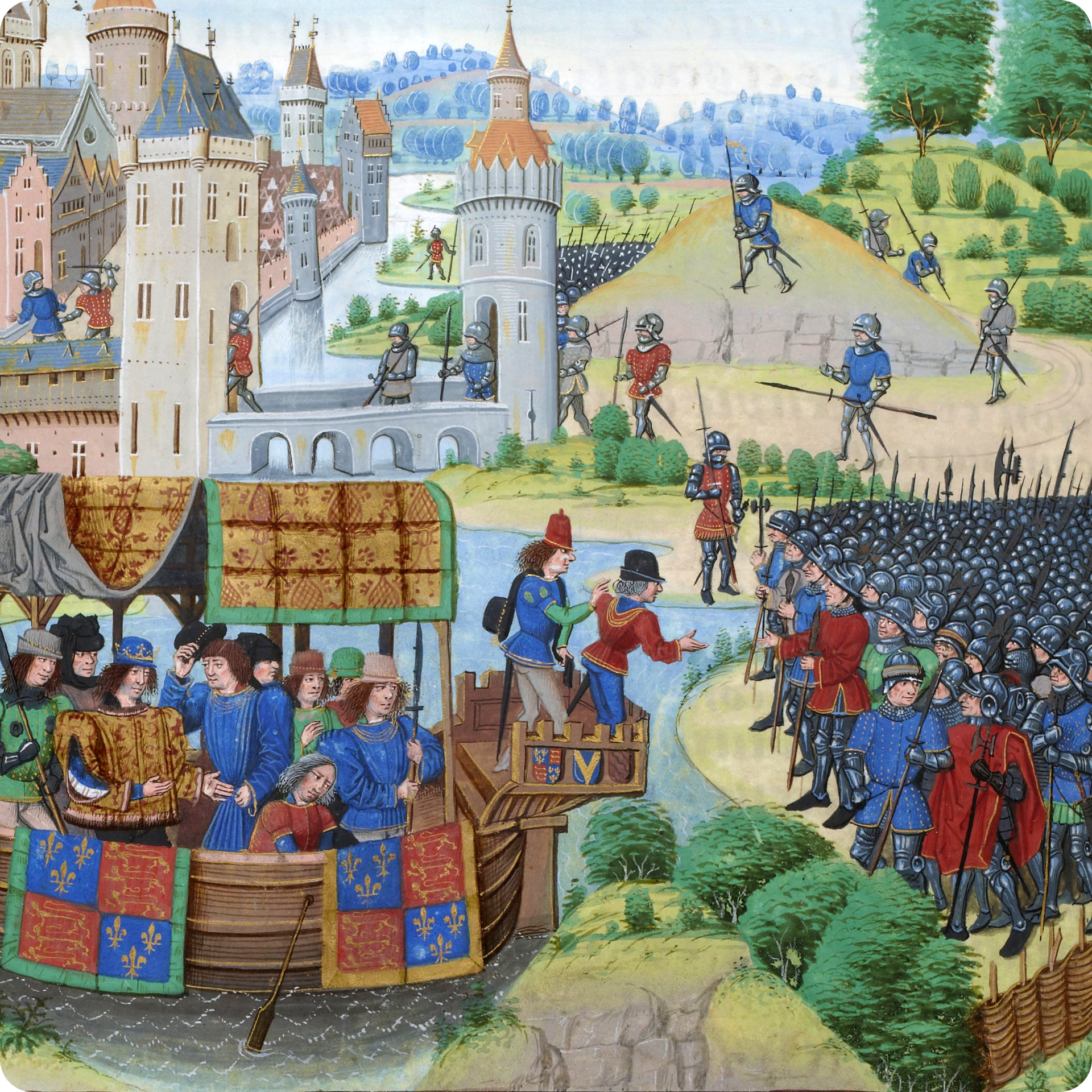
This attempt to preserve feudalism by legal decree ripped English society apart. In the summer of 1381, a hundred thousand aggrieved peasants marched on London, led by a mysterious figure known as Wat Tyler. Barbara Tuchman, in her classic history of the 14th century entitled A Distant Mirror, wrote that this rebellion spread “with some evidence of planning.”
In his capacity as a historian, Winston Churchill wrote in The Birth of Britain, “Throughout the summer of 1381, there was a general ferment. Beneath it all lay organization. Agents moved round the villages of central England, in touch with a ‘Great Society’ which was said to meet in London.”
Because secret societies intentionally conceal their activities, their histories are nearly impossible to unravel. There’s no historical evidence directly linking the whispers of surviving Knights Templar in the British Isles to rumors of an underground “Great Society” fomenting the Peasants’ Revolt of 1381. But the significant role played by secret societies in the English transition from feudalism to capitalism is beyond dispute.
Secret Societies Played a CRUCIAL Role in The Protestant Reformation
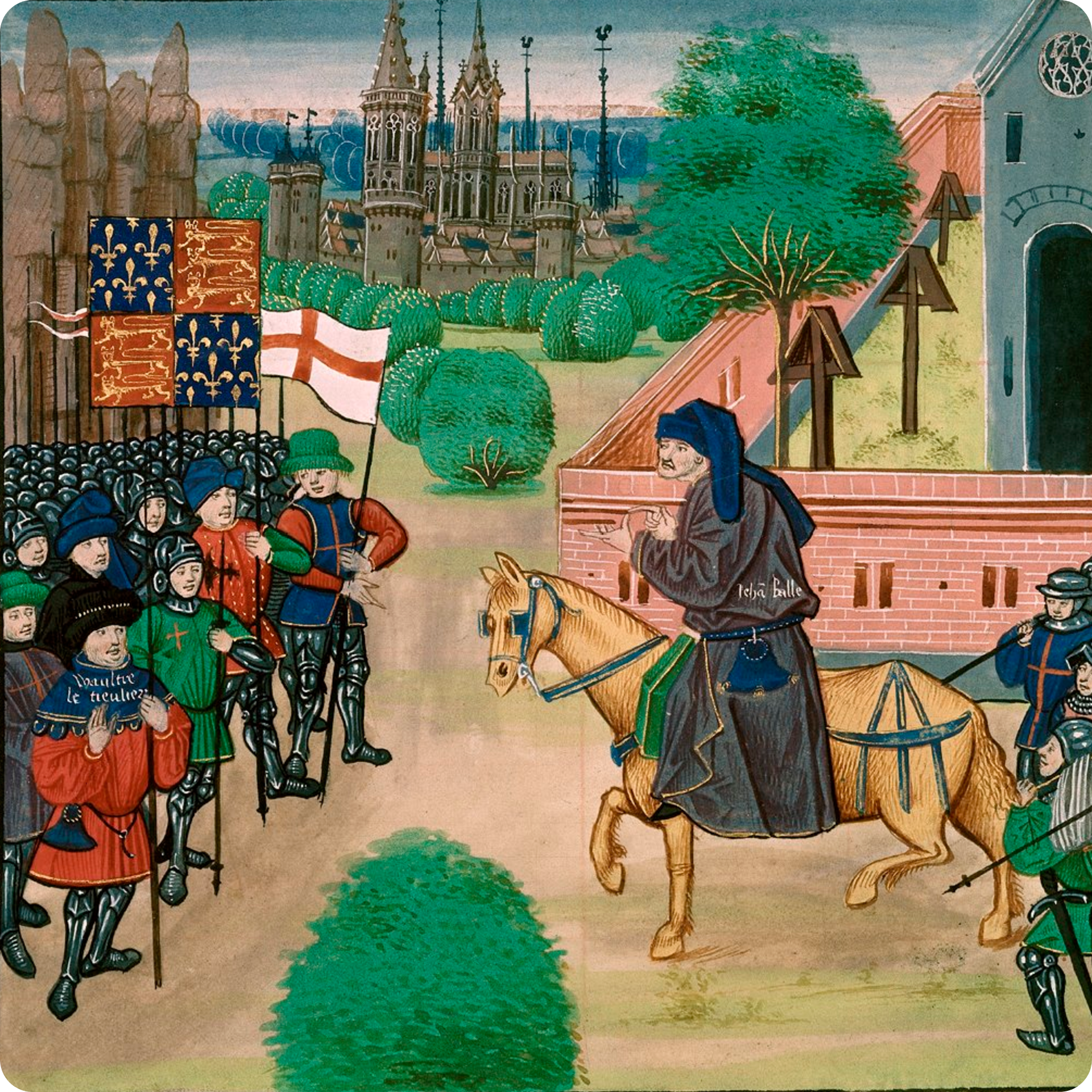
During the 1370s, a firebrand Oxford preacher named John Wycliffe defied the Vatican by publishing the first English translations of the Bible, and railing against the ostentatious wealth of the Catholic Church. Itinerant so-called “poor preachers” delivered Wycliffe’s message from academic lecture halls to the surrounding countryside. The most famous of these was John Ball, who used Wycliffe’s critiques to provoke the Peasants’ Revolt that finally boiled over in 1381.
During the summer of that year, a hundred thousand enraged peasants descended on London. They beheaded the Archbishop of Canterbury, and smashed Church property wherever it could be found. Because the Peasants Revolt was a wholesale rejection of wealth accumulation, looters were murdered alongside church officials.
Amidst the chaos, a 14-year-old King Richard III had no choice but to meet with the angry mob and to hear their demands. Initially, he agreed to the abolition of serfdom. But violence soon erupted during negotiations, and a member of the King’s retinue crippled the rebel leader Wat Tyler with a sword stroke.
Richard went on to hang Tyler and renege on all the concessions he’d made during negotiations. The young king mobilized his army and systematically rooted out remaining rebel forces wherever they hid.
Though a horrified John Wycliffe publicly condemned the Peasants’ Revolt, his political opponents successfully laid the blame for the incident on his doorstep. His followers, the Lollards, were forced underground to evade the law. For over a century-and-a-half, secret networks of weavers, merchants and artisans kept English Bibles hidden in their homes and privately rejected papal authority.
When King Henry VIII finally broke with the Catholic Church a century-and-a-half later in 1534, his success was thanks to the existence of the underground Lollard movement. Henry’s own Lord Chancellor opposed the break and complained that the new Protestant movement was just the old Lollard heresy resurfacing.
The Reformation was the most significant challenge to authority since the rise of Christianity itself during the Late Roman Empire. And like the early Christians of that period, early Protestants were forced to live underground as outlaws. Far from being baseless conspiracy theories, secret societies have been key ingredients in the sweeping political changes that punctuate human history.
Conclusion
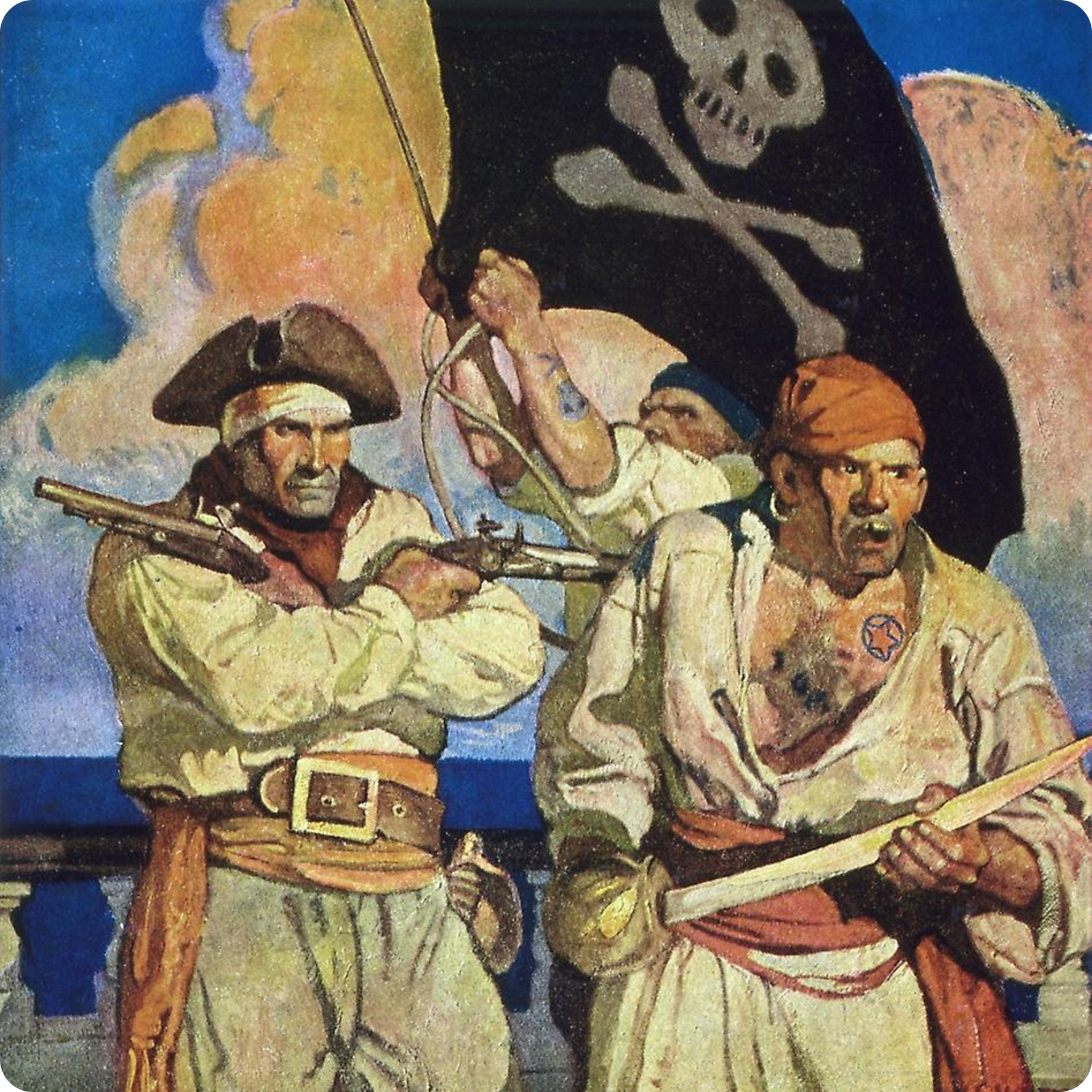
The Peace of Westphalia ended the pope’s political dominance in 1648 by establishing international borders around sovereign states. These countries were afforded the legal right to choose for themselves between Catholicism and Protestantism. Except as an act of war, the agreement forbade the plunder of sailing ships flying the colors of newly-created nation-states. But it took European powers almost a century to impose this new international order across the Atlantic. During that time, the skull-and-crossbones associated with the Knights Templar instead marked the stateless pirate vessels who preyed upon the merchantmen of the Spanish Main. The same symbol was later taken up in occult circles during the Victorian Era, and from there inspired the Skull and Bones Society of Yale University. Ever since the very first “Friday the 13th” in 1307, the icon of the skull with crossed femur bones has been the symbol of underground secret societies operating in the shadows.
Since you made it this far, perceptive reader, kindly consider hitting the ❤️ button above or below; it really helps!

Further Materials
Throughout the summer of 1381 there was a general ferment. Beneath it all lay organisation. Agents moved round the villages of Central England, in touch with a “Great Society” which was said to meet in London. In May violence broke out in Essex. It was started by an attempt to make a second and more stringent collection of the poll-tax which had been levied in the previous year. The turbulent elements in London took fire, and a band under one Thomas Faringdon marched off to join the rebels. Walworth, the mayor, faced a strong municipal opposition which was in sympathy and contact with the rising. In Kent, after an attack on Lesnes Abbey, the peasants marched through Rochester and Maidstone, burning manorial and taxation records on their way. At Maidstone they released the agitator John Ball from the episcopal prison, and were joined by a military adventurer with gifts and experience of leadership, Wat Tyler.
Winston Churchill, The Birth Of Britain, 1956, page 301
In the year 1312 the Knights Templar had been attacked and destroyed by the King of France, Philippe Le Bel, in connivance with his puppet Pope Clement V of Bordeaux. Their vast fortune in bullion and land was confiscated by the Crown, and most of them were tortured and burned at the stake. However, warned by their allies, the Templar mariners slipped their moorings in the French channel harbours and stood out to sea. They steered for England, and sought the protection of King Edward II. Since then, they had opened their lodges in Scotland and England under new names, but with the basic tenets of the Order intact.
Wilbur Smith, Birds of Prey, 1996, page 73


