


Key Points:
Roman Wealth Addiction Shaped the Middle Ages
Wealth Addiction Undermined the Medieval Church
Feudalism Collapsed Along With Church Power
Roman Wealth Addiction Shaped the Middle Ages
Pleonexia (rendered in Greek as πλεονεξία) is a term from Plato’s Republic that he used to describe wealth addiction. Gluttony and drunkenness have natural limits because there’s only so much food one can eat and so much wine one can drink. But the acquisition of wealth, observed the Greek philosopher, instantly sparks a desire for more wealth with no hangover period to interrupt the spiral of addiction.
Plato identified this human weakness as the principal driver of the great cycles of civilization. The universal temptation is for the powerful to enrich themselves at the expense of the powerless. But the poor are the ultimate source of that wealth, and they lose all incentive to participate in society when they’re squeezed too much.
Several centuries after Plato’s death, the Fall of Rome proved his point. As that society reached a tipping point and began to decline, the Roman historian Livy wrote, “in the sweetness of private gain men lost their feeling for the wrongs of the nation.”
The greed of the ruling elite drove the Roman working class so deeply into poverty that they couldn’t afford to have children. Birth rates plummeted. Deadly pandemics further exacerbated population decline so that an acute labor shortage gripped both the military and the civilian workforce.
But when civilian laborers clamored for higher compensation, the Emperor Diocletian fixed wages through imperial decree. His Edict on Maximum Prices required workers to fill jobs previously held by their parents. This piece of legislation would later shape the hereditary labor roles typical of the Middle Ages.
Meanwhile, German mercenaries filled out the thinning ranks of the Roman military. The Empire fell slowly at first through commercial stagnation, and then violently when those mercenaries betrayed their masters and sacked Rome.
The aristocracy fled mounting urban chaos by hiding out in fortified homes at the centers of their vast rural estates. The poor could only escape by accepting work as tenant farmers. Medieval feudalism—with its characteristic castles, lords and peasants—grew on the bones of the dead Roman Empire.
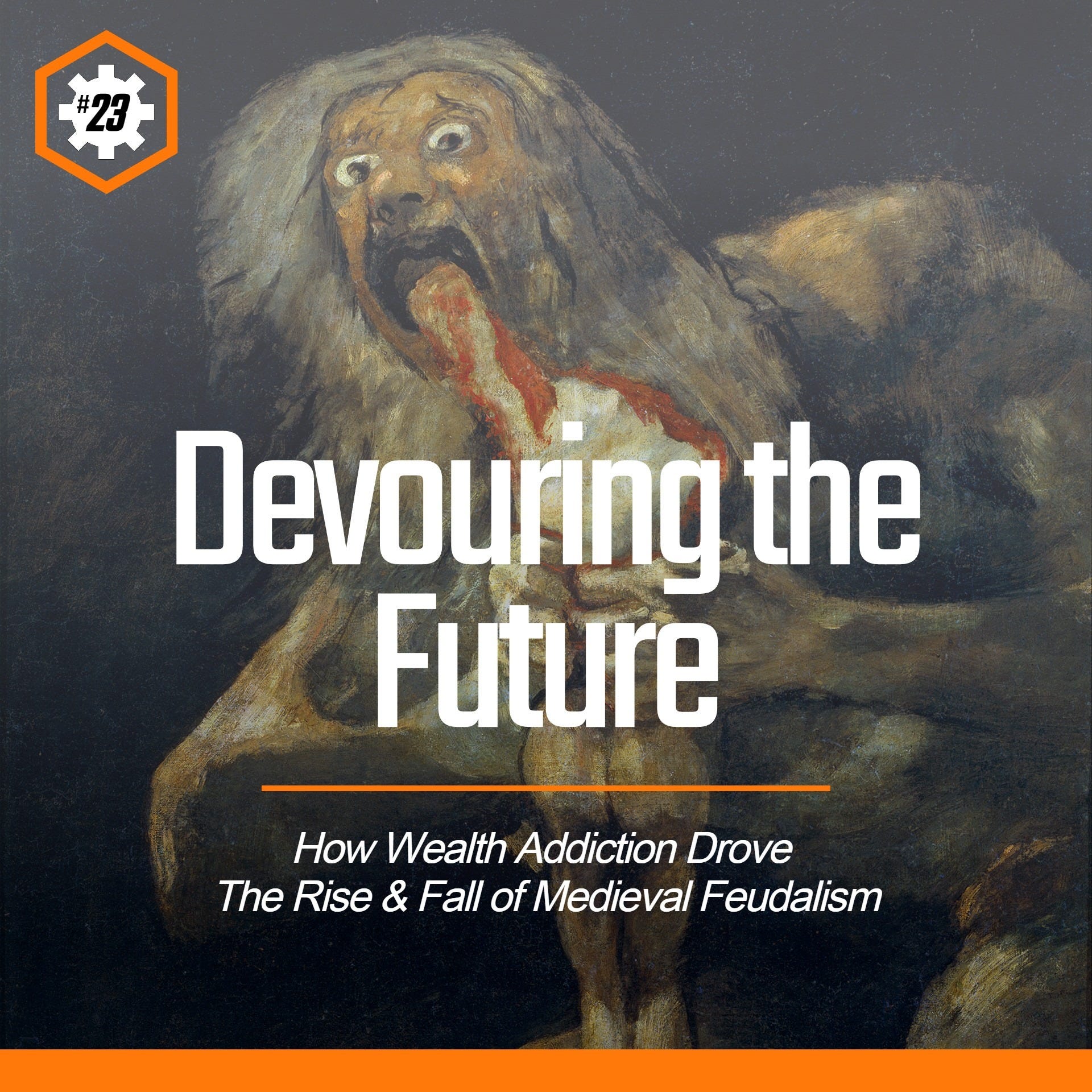
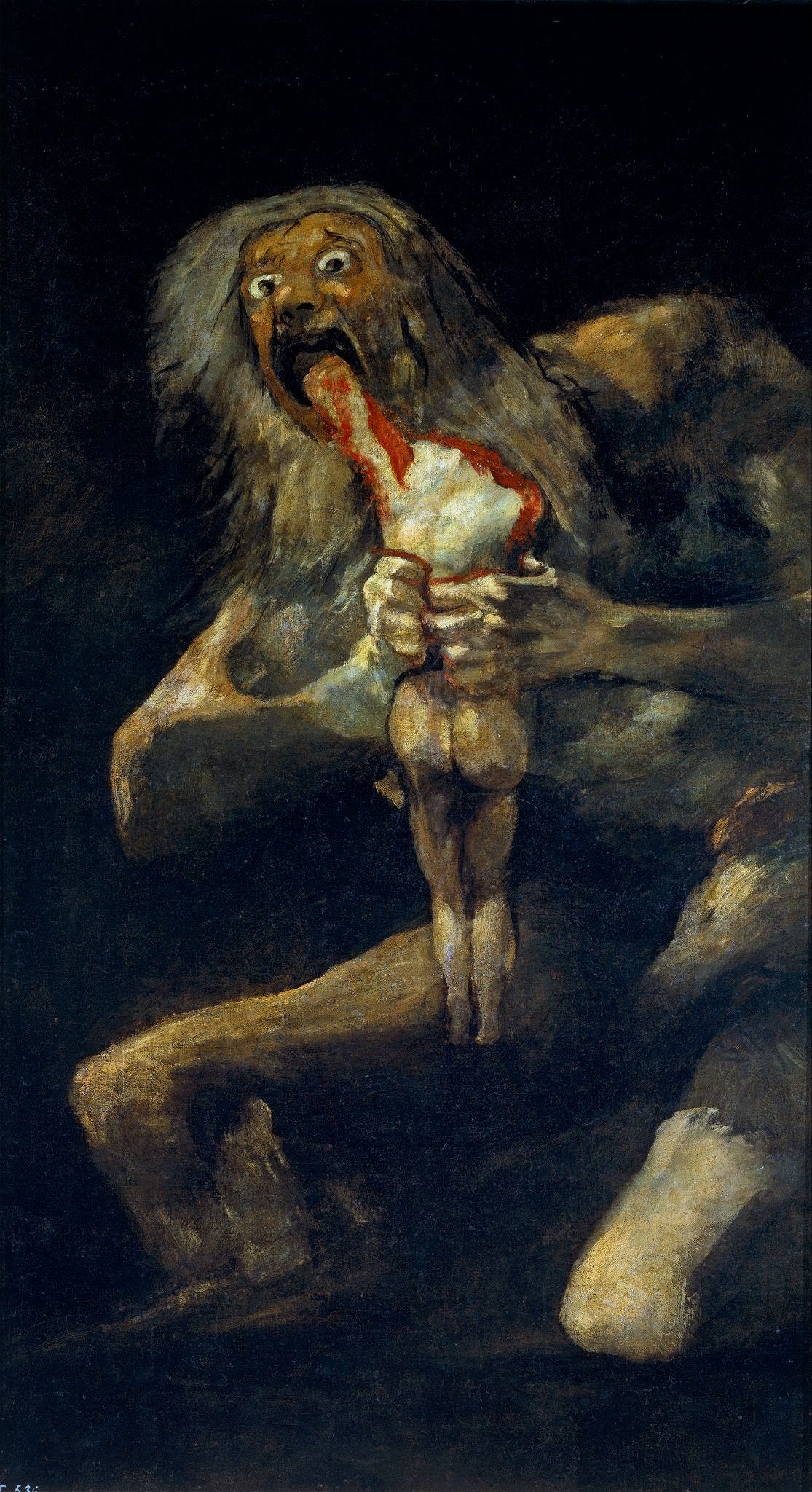
In the early 1820s, the Spanish painter Francisco de Goya holed himself up in his house during a bout of madness. He painted the Roman god Saturn devouring his own child directly onto one of the walls. It is a disturbing depiction of sacrificing the future; Saturn was the god of time. Though Plato hated mythology, this overall theme was cited by him as the perennial problem in governance. The same theme was then lived out by a Roman Empire that sacrificed sustainability in the name of wealth accumulation.
Wealth Addiction Undermined the Medieval Church
In addition to hereditary labor roles, lords, peasants and castles, the Middle Ages was also defined by the political dominance of the Church. That institution came about when the last emperors of Rome converted to Christianity and made it the state religion of their dying empire.
But the Church was not immune from Plato’s diagnosis of pleonexia. As the Medieval period wore on, Church Fathers began accumulating great wealth by taking advantage of their flock. The Roman Catholic Church was doomed to the same fate that had consumed the Roman Empire.
By the end of the Middle Ages, the Church began the corrupt practice of selling remission from sin. These infamous Sales of Indulgences were so transparently corrupt that it pierced the aura of divine infallibility enjoyed by the Vatican.
Even more serious damage to the Church’s credibility came during the mid-1300s, when the Black Death killed half the population of Europe. At that time, the ability to read and write was a rare skill; the only literate person in any given town was usually its priest. But the priestly duties of administering Last Rites disproportionately exposed them to the pathogen, making them much more likely to become plague victims themselves. Every city and village in Europe lost its most intelligent and literate citizens at the same moment.
The Church hurriedly trained replacements, but the new recruits were dramatically less educated than their fallen predecessors. A precipitous decline in the quality of the clergy further foreclosed on the reputation of the Church, at a time when its obvious failure to stop the dying was already fomenting doubt about its claimed connection to God.
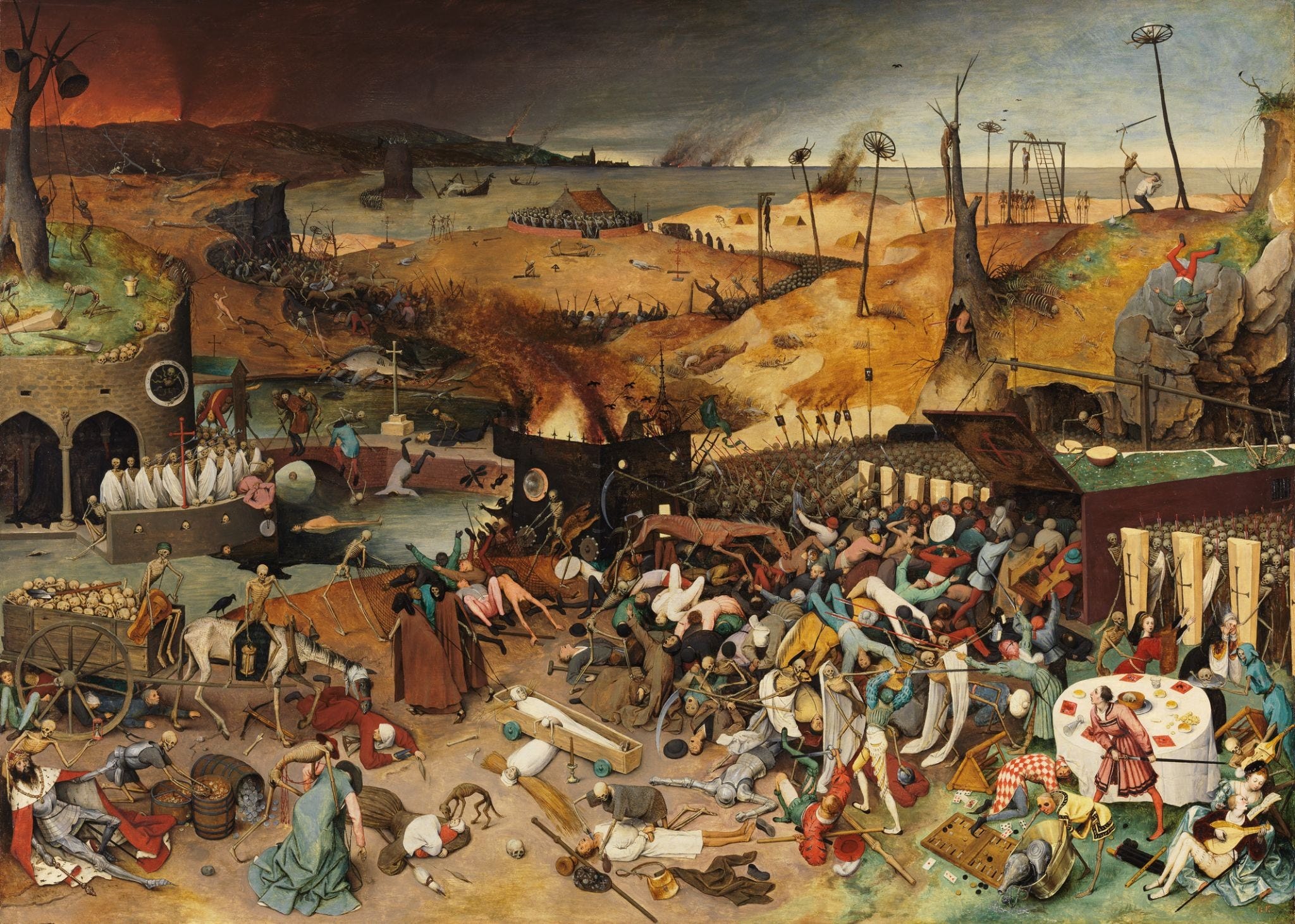
Up until that time, Medieval artwork was mainly focused on themes of divinity and the afterlife. But the sudden loss of half the population prompted an artistic shift toward themes of mortality and decay. The art movement was called Danse Macabre, which much later culminated with Pieter Bruegel the Elder’s The Triumph of Death. That bizarre painting hangs in the Prado in Madrid. It’s not far from Goya’s painting of Saturn, which was transferred from the wall of his home to canvas, and placed in the same museum.
Feudalism Collapsed Along With Church Power
The corrupt Sales of Indulgences tarnished the credibility of the Church, but the Black Death undermined it completely. But the plague also dealt a mortal blow to the economic model of the Middle Ages, where peasants swore loyalty to feudal lords.
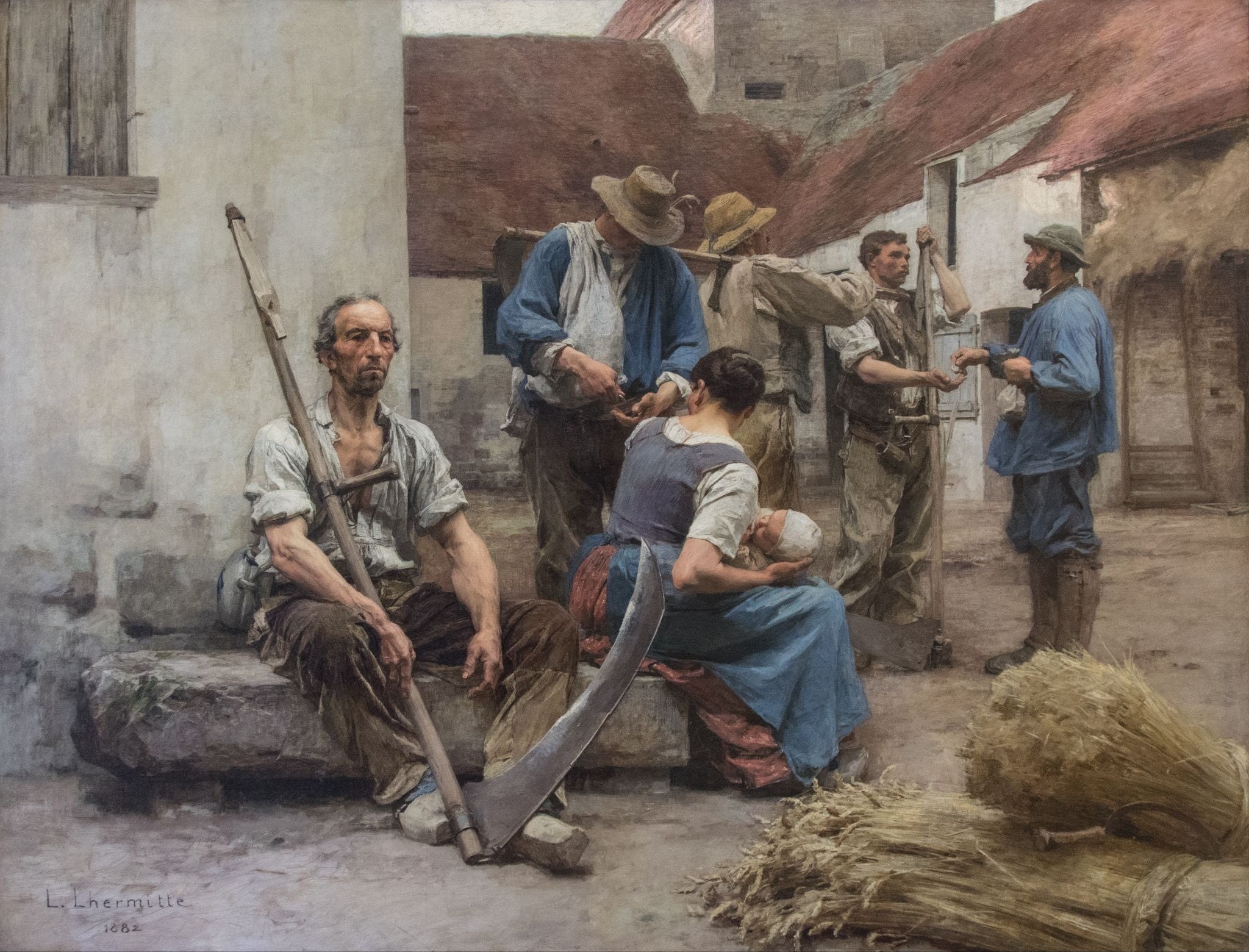
Peasants generally worked for three days a week on behalf of their masters, and three days for themselves. And on Sundays, the peasantry sat on hard church pews to hear about God’s sanction of this arrangement. The widespread loss of faith after the Black Death was the crumbling of a crucial pillar that supported Medieval feudalism.
Furthermore, with half of European peasants moldering in early graves, the fields formerly plowed by the dead lay fallow with no one to till them. The surviving peasantry quickly realized they could play one lord off against another in bidding wars for their labor. So they stopped swearing fealty to any particular feudal lord, instead demanding the right to work for whoever paid the most.
But in 1351, the English Parliament attempted to fix the wages of the peasantry by law, just as the Roman Emperor Diocletian had done a thousand years before in response to the plagues that ravaged the Roman Empire. This attempt by the English aristocracy to fix class divisions through legislation resulted in a massive popular uprising. By 1381, tens of thousands of enraged peasants were marching on London, demanding the right to sell their labor to the highest bidder. These events heralded the birth of our modern economic system, and the death of the feudal economic system of the Middle Ages.
Just as Plato would have foreseen, neither the Church nor the nobility could resist the temptation to exploit the lower economic classes. Like the dread god Saturn, they sacrificed the future for material gain in the present. As modernity dawned in the aftermath of the Black Death, the Medieval ruling classes went over the falls in the same wealth-addicted barrel as the Roman elite. The erosion of Church power soon thereafter opened the door to the tumultuous Protestant Reformation.
Conclusion
Aesop lived a century before Plato, and is credited with the parable of the farmer who kills the goose that lays golden eggs. Like the myth of Saturn, that fable illustrates the same universal human tendency that Plato warned us about. He observed that wealth addiction bends history into dramatic arcs of rise and fall, because our nature compels us to sacrifice the future on the altar of greed. It is our fatal flaw, straight out of a Greek tragedy. Pleonexia brought about the Fall of Rome, and its glowing embers became the foundation for the feudal economic system of the Middle Ages. But the ruling classes of that era also succumbed to wealth addiction in turn, and our own modern era was born from the resulting struggle. Today, wealth addiction is again threatening the stability of our global financial system. The great drama of history is reaching another climax, and it’s our turn to play a part.
Since you’ve made it this far, curious reader, kindly consider hitting the ❤️ button above or below; it really helps!
Further Materials
The epidemic had effects in every sphere of life. As the poor died in greater proportion than the rich, a shortage of labor followed; thousands of acres were left untilled, millions of herring died a natural death. Labor enjoyed for a while an improved bargaining power; it raised its wages, repudiated many surviving feudal obligations, and staged revolts that kept noble teeth on edge for half a century; even priests struck for higher pay.
Will & Ariel Durant, The Reformation, 1957, page 64

Wealth addiction is simply greed directed at gold (or equivalent). The Buddha long ago explained how grasping and pushing away, greed and hatred, were the causes of suffering. Of course, any sentient being survives by grasping what sustains it and pushing away what harms it. But this nature can be distorted to the extremes we call greed and hatred. So, Buddha's answer to the cause of suffering was training in what he called The Eightfold Path, eight qualities to cultivate which would bring about liberation. Perhaps the Buddha's Way is too simple for modern man…