


Quick Summary
The bustling port city of Alexandria was an intellectual crossroads of the late Roman Empire.
Christianity began as a revolt against Roman authority, but the Roman oligarchy co-opted one specific strain as their state religion.
During the Middle Ages, the Church became remarkably similar to the Roman authority it once arose in opposition to.
Alexandria
The city of Alexandria was an intellectual crossroads of the late Roman Empire. Founded on the Nile Delta by Alexander the Great, the city expanded into a bustling trading port during Roman times. The Pharos Lighthouse guided merchant ships into its harbor, while the famed Great Library of Alexandria housed the accumulated wisdom of the ancient world.
Alexandria was an intellectual free market, where ideas cross-pollinated between diverse schools of thought. Neoplatonists, Gnostics, and Hermeticists brushed shoulders with Christians in its crowded streets. While the broader Roman Empire slid into decline during the 2nd and 3rd centuries AD, Alexandria enjoyed an intellectual renaissance.
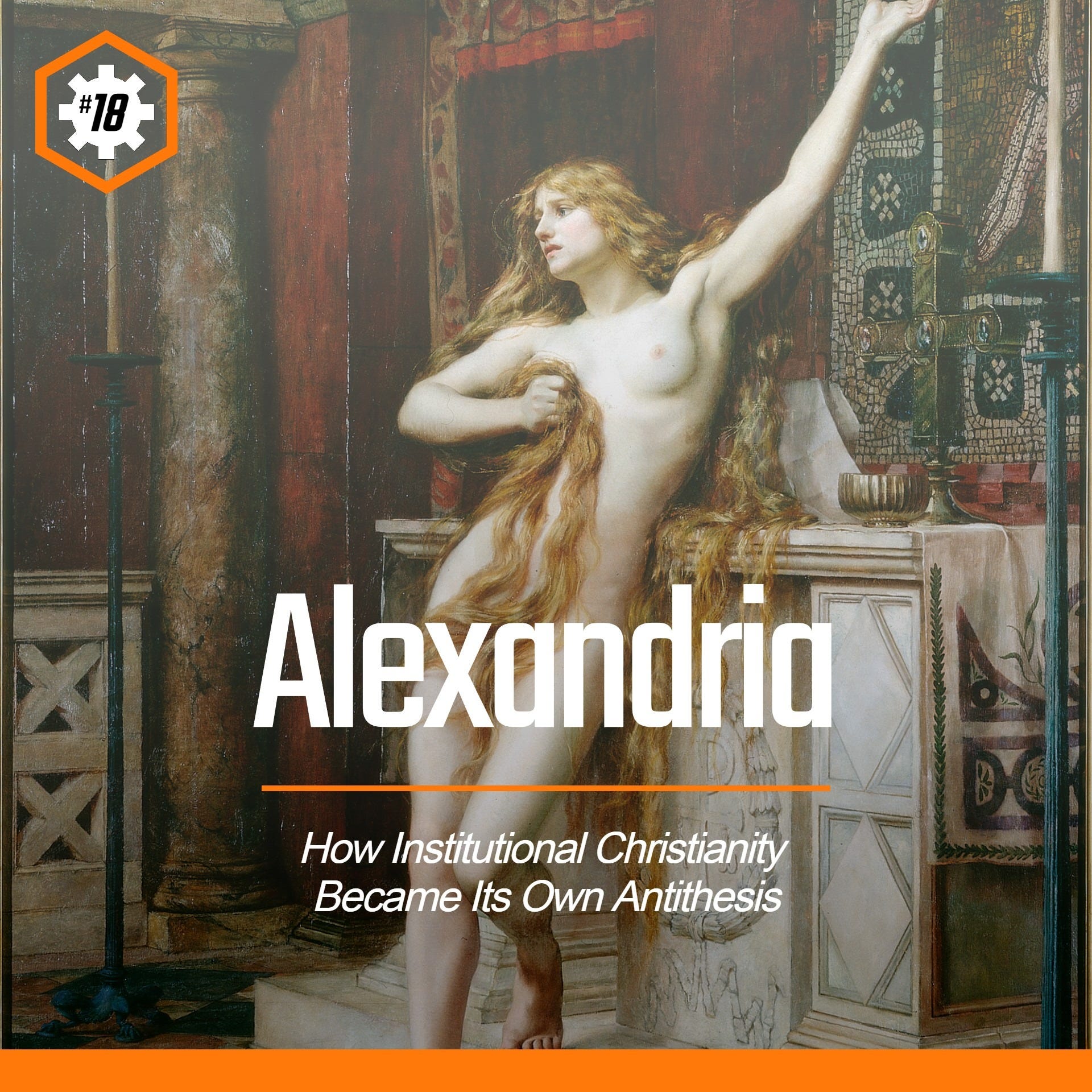
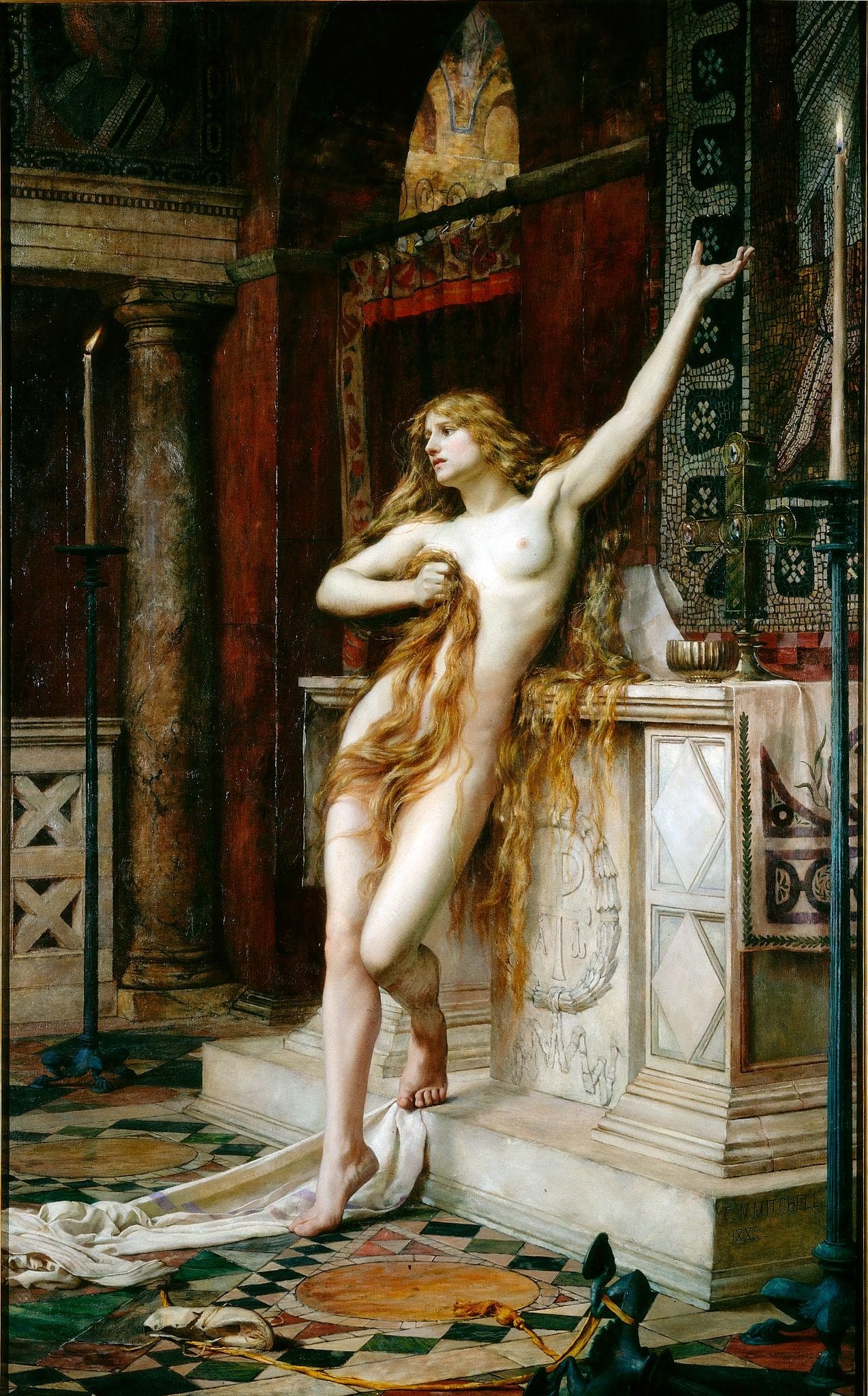
During that period, the renowned Greek philosopher and mathematician Hypatia called Alexandria home. She rose to prominence as a skilled lecturer and became a significant figure in the Neoplatonist school of philosophy. A wild story about Hypatia comes down to us from the 10th-century Byzantine encyclopedia called the Souda. When one of her students fell in love with her, it says, she lifted her skirt and told him, “This symbol of unclean generation is what you are in love with, and not anything beautiful.” This anecdote leaves us with an amusing insight into the unusual nature of Hypatia’s character.
Alexandria was a Greek city that got folded up into the Roman Empire by conquest. Accordingly, its various schools of philosophy were heavily influenced by Plato. That Greek philosopher is best known for his idea that the world we perceive with our senses is merely an illusion derived from a transcendent reality we can detect only with our minds. Christians recognized Plato’s hidden, idealized realm as their concept of heaven.
The intellectual landscape of Alexandria during Late Antiquity was a kaleidoscopic blend of Plato’s many offshoots, Christianity included. The 1945 discovery of writings by Gnostic Christians of that era vividly illustrates the point. So, too, does the biography of St. Augustine, from that other North African port city of Hippo. He began his career as a devoted Neoplatonist, just like Hypatia. Legendary historian Will Durant wrote of Augustine that, “he disliked Greek, and never mastered it or learned its literature; but he was so fascinated by Plato that he called him a ‘demigod’, and did not cease to be a Platonist when he became a Christian.”
Revolutionary Christianity
St. Augustine’s contribution to history was his monumental interpretation of Christianity. For its first few centuries, debt forgiveness was a central tenet of that faith. Jesus warned of an impending apocalypse and preached forgiveness as the only hope of salvation. The Lord’s Prayer reads, “Forgive us our debts, as we forgive our debtors.”
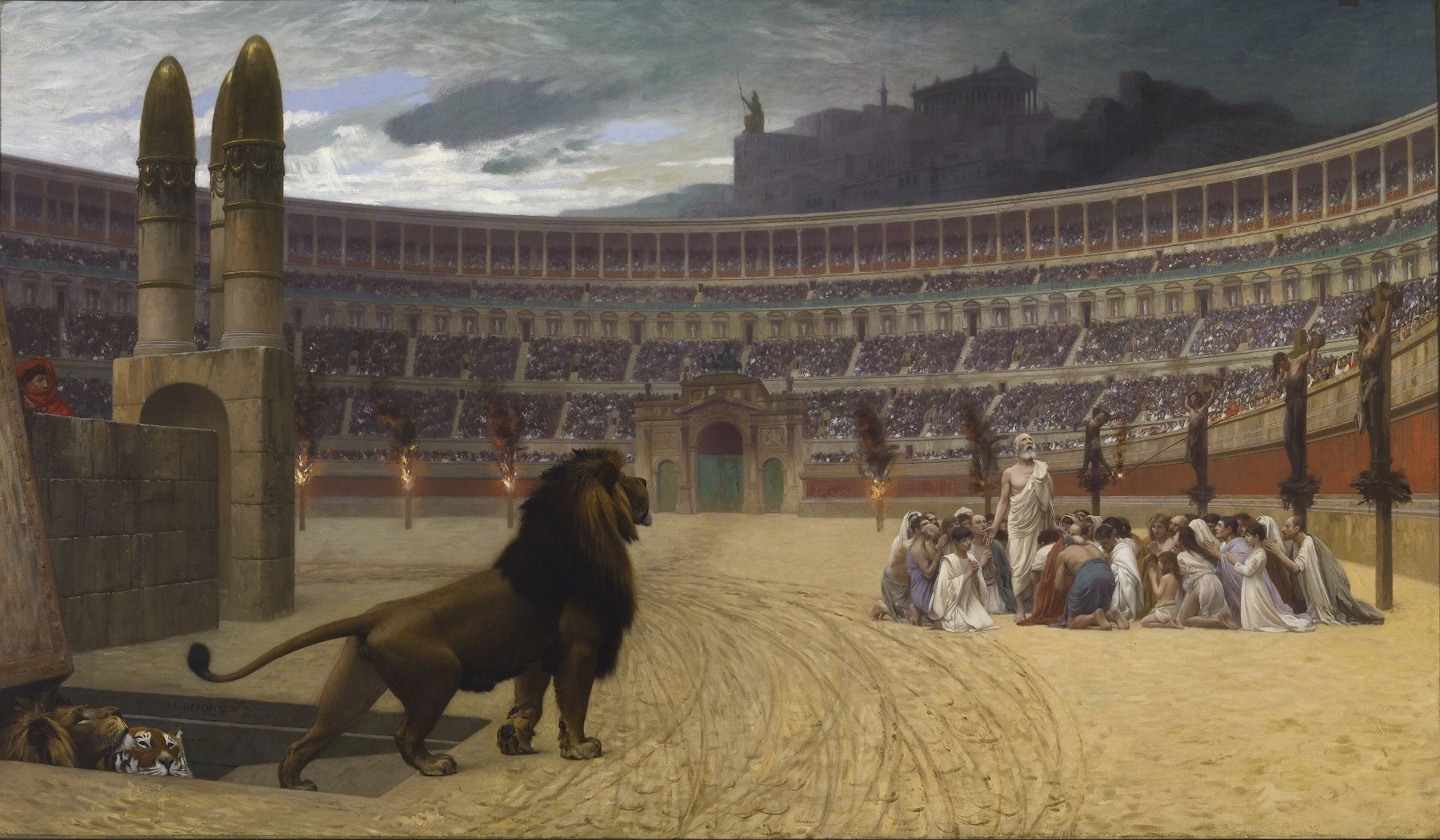
Early Christianity was a rejection of the cruel economic hierarchy of the Roman Empire, where a tiny oligarchy hoarded for themselves the vast majority of the Empire’s wealth. This opposition made Christians into enemies of the state, who faced grim persecution at the hands of Roman authorities. Despite violent repression, its economic message resonated so mightily with the downtrodden Roman working class that Christianity exploded in popularity.
The economics of debt forgiveness could have prevented Rome’s economic collapse by softening the wealth inequality that tore it apart. But that solution would have come at a significant cost to the oligarchy, which would have been obliged to forgive massive debts owed to it.
The Roman oligarchy was financially incentivized to seize upon Augustine’s alternative interpretation of Christianity. Because he had lived a wild life in his youth, Augustine considered the forgiveness offered by Christ to be the antidote to the sexual incontinence that plagued his conscience. His version of Christianity was not the solution to Rome’s dangerous maldistribution of wealth. Rather, he saw it as a vehicle for personal moral redemption. This concept of forgiveness was much more economically convenient for the Roman oligarchy, who eventually installed Augustine’s reinterpretation of Christianity as the state religion of their dying Empire.
Authoritative Christianity
A great irony of history is that after Augustinian Christianity became the state religion of Rome, the new Roman Church turned around and began persecuting other forms of Christianity. Emperors like Theodosius also outlawed rival schools of Platonic thought. The Roman oligarchy established a spiritual monopoly by banning any and all competitors to their new state religion.
Nowhere was the crackdown more apparent than in Alexandria. There, crowds of enthusiastic Christians attacked those who refused to accept the new state faith. Hypatia was cut to ribbons on the streets of her city by shards of pottery.
The mob also tore down the edifices of Alexandria’s vibrant intellectual scene. The demolition of the Great Library was, “a tragedy of some moment,” wrote Will Durant, “for it was believed to contain the complete published works of Æschylus, Sophocles, Polybius, Livy, Tacitus, and a hundred others, who have come down to us in mangled form; full texts of the pre-Socratic philosophers, who survive only in snatches; and thousands of volumes of Greek, Egyptian, and Roman history, science, literature, and philosophy.”
During the crackdown, the works of Plato himself were lost in the chaos. They wouldn’t be reintroduced to Europe again until the time of the Italian Renaissance. As the Middle Ages began, the Roman Catholic Church forcibly established itself as the exclusive way for Europeans to access the divine.
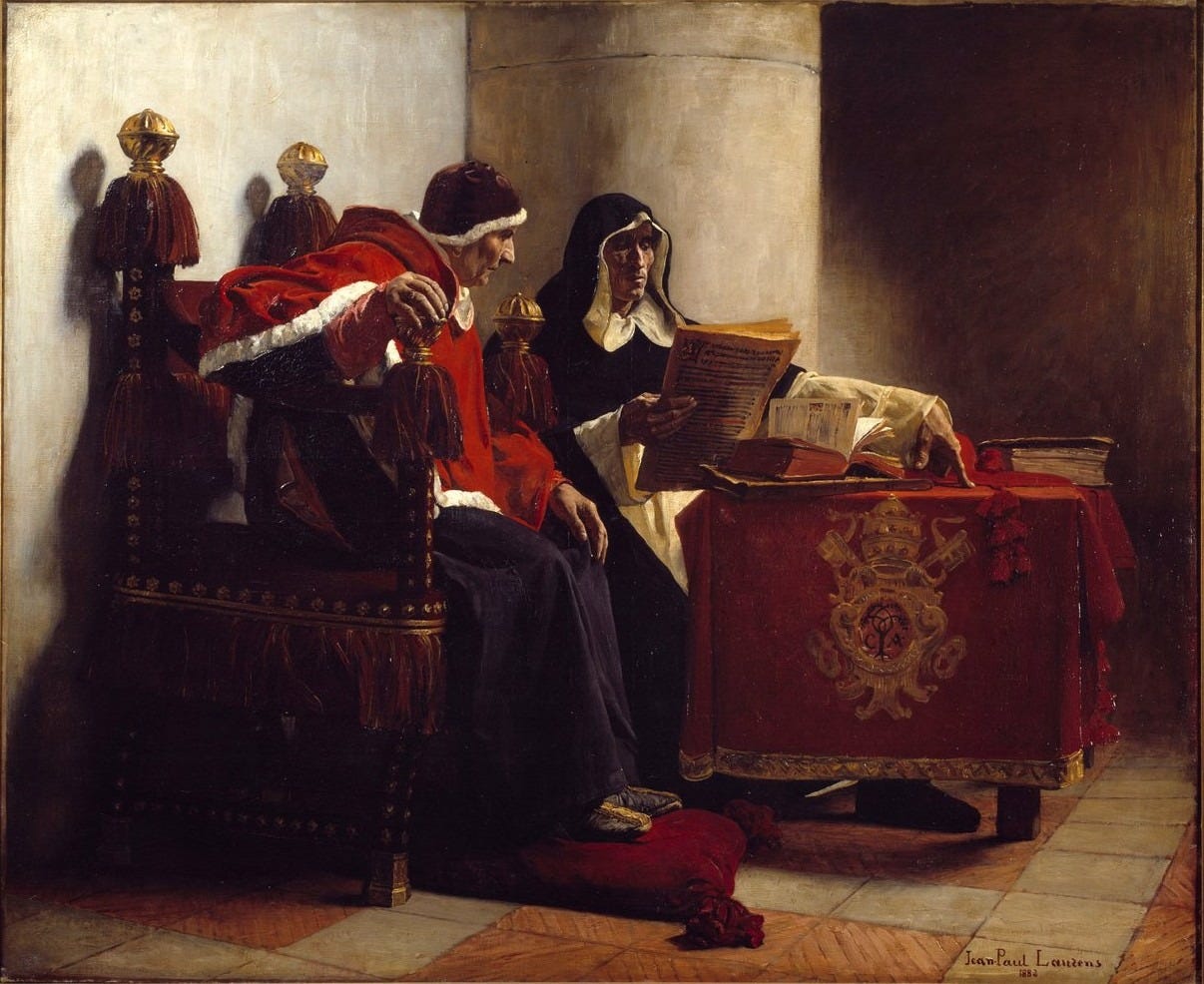
This absolute authority of the Roman Church persisted throughout the Middle Ages. Just as the Roman elite corruptly enriched themselves during Classical Antiquity, the Church gradually became more and more corrupt during the Medieval period.
The infamous Sales of Indulgences is a prominent example. The Medieval church promoted a conception of reality based on St. Augustine, where people could remit their sins by transferring wealth to the Church. By the time it began this practice during the Late Middle Ages, Christianity had ossified into a corrupt authority very similar to the one early Christians had opposed during Roman times.
Conclusion
In the mid-1300s, the horror of the Black Death raised serious public doubts about the Church’s exclusive claim to being the sole voice of God on Earth. Europeans became insatiably curious about the pre-Christian ideas banned a thousand years before by the Christian emperors of Rome. The authority of the Church was broken as Europeans began to explore the lush bouquet of ideas that once perfumed Alexandria’s intellectual landscape. That city’s Neoplatonist, Gnostic, and Hermetic schools of thought resurfaced as Renaissance magic. Alchemy arose directly out of a resurgence of Hermeticism and, as chemistry, played a major role in the Scientific Revolution. Like early Christianity during Roman times, science emerged as a major challenge to ecclesiastical authority during the Renaissance period and beyond. And similar to Romans being thrown to lions in the Colosseum, practitioners of Renaissance magic were subjected to the horrors of the Inquisition for the crime of heresy.
Since you’ve made it this far, virtuous reader, kindly consider hitting the ❤️ button above or below; it really helps!
Further Materials
In AD 392, the same year Emperor Theodosius outlawed the Mysteries, Bishop Theophilus of Alexandria led a rabid mob into “the most beautiful building in the world” and razed it to the ground. It’s unclear if Theophilus (Greek for “beloved of God”) and the Christians he urged on were really after the glimmering statue of the Greco-Egyptian god Serapis, or the vast library collection that was cached in his temple precinct. Either way, Catherine Nixey’s The Darkening Age: The Christian Destruction of the Classical World—which framed this investigation in the first chapter—lends exquisite detail to the annihilation of the “world’s first public library” and its “hundreds of thousands of volumes.”
Brian Muraresku, The Immortality Key, 2020, page 56

I may have written this on here in response to a previous post, but I have heard it said that "Augustine had a good time until he was 30, and then made sure no one ever had a good time again." After I quit believing, when I was 18, I read "The Confessions of St. Augustine," and I found it/them extremely moving. Having grown up with many of those same beliefs, I felt cleansed by having escaped them.
You're very welcome Nathan.
Your meditation might be aided by Epicureansim at the Origins of Modernity, Catherine Wilson, Clarendon, Oxford Press (2008). She reveals Epicurean thought in Descartes, Gassendi, Hobbes, Boyle, Locke, Leibniz and Berkeley.
I don't want you to get into the weeds on this. It is a difficult read.
You might already know, for centuries the introduction to Epicurus is On the Nature of Things by Titus Carus Lucretius. Now it is DeWitt's book.
Thanks for posting one of the most interesting and pertinent substacks. Love the illustrations!